
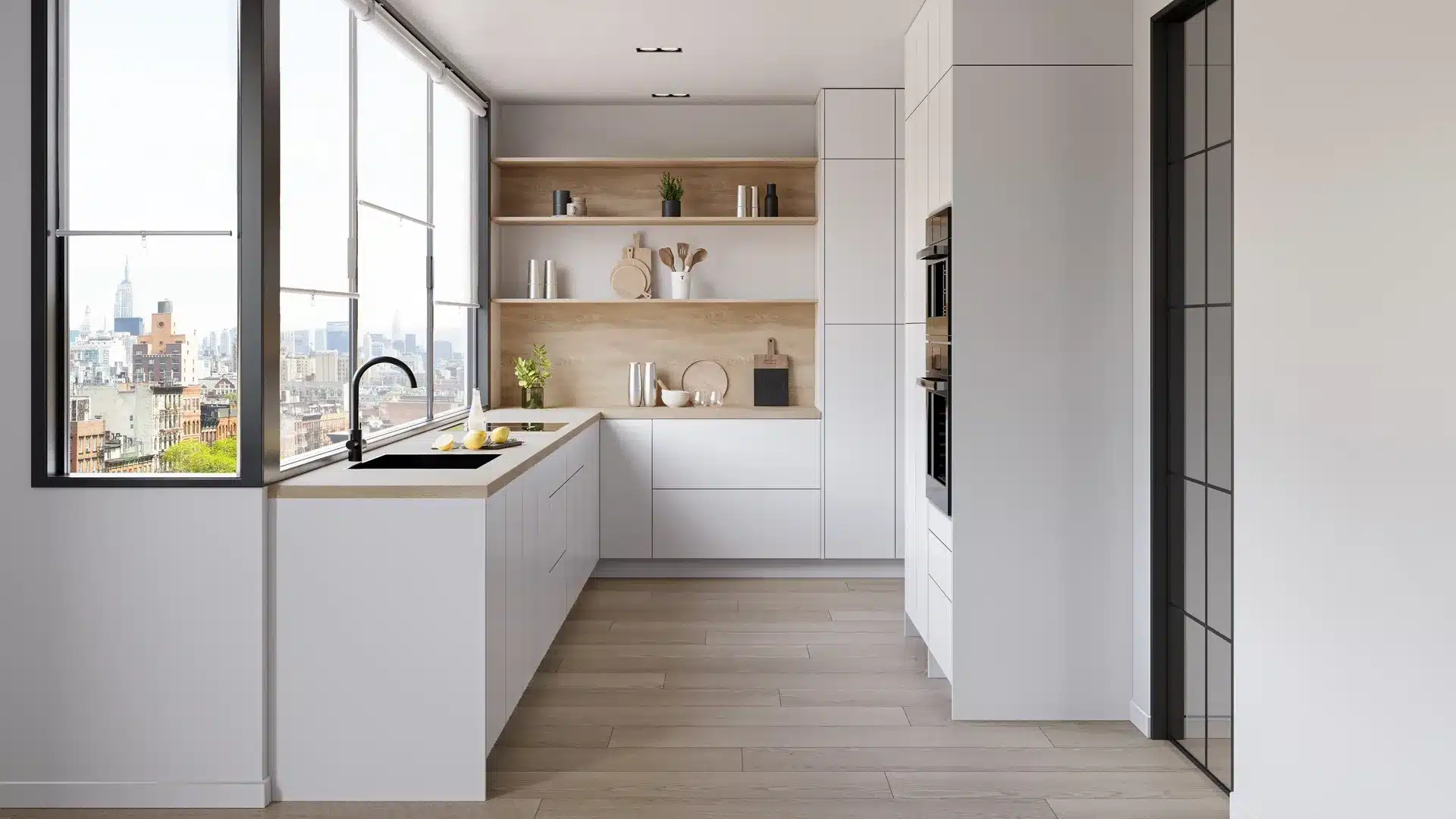
We sell Fabuwood. We do not sell Wolf. You should know that before you read another word, because it tells you which way this review is likely to lean, and it lets you discount us where we deserve it.
We start there because of something a homeowner posted while collecting cabinet quotes. Every design-build firm, every general contractor, every big-box store told him their own brand was the best in the industry. His response was the only sane one available: they cannot all be the best. Another shopper, bidding out a kitchen, said every designer insisted their line was superior to whatever else she had been quoted, and the pricing was scattered everywhere.
That is the actual problem with cabinet shopping. Not a shortage of information. A shortage of anyone with nothing to gain.
We have plenty to gain, so we are telling you upfront. What we can offer instead is that we went and read Wolf’s own published specifications and warranty documents rather than repeating what the rest of the internet says, and we are reporting what they say, including the two places where Wolf beats the brand we sell.
Because the Wolf cabinets reviews currently online are a mess. Some say soft-close comes standard. Some say it does not come at all. Some quote a five-year warranty, some quote a lifetime warranty, occasionally on the same page.
Short version for anyone shopping Wolf kitchen cabinets right now: the brand is better than its worst reviews and more complicated than its best ones.
Are Wolf cabinets good? The short answer
Yes. Wolf Classic cabinets are a genuinely good cabinet at their price, built with an all-plywood box, solid maple dovetail drawers, and assembly in the United States. The box joinery is arguably tighter than Fabuwood’s, and we will show you why.
The catch: Wolf Classic is not one cabinet. It is sold in tiers, and the entry tier has no soft-close hardware. Confirm which series your quote is written for, or you are not comparing what you think you are comparing.
Who owns Wolf cabinets, and where are Wolf cabinets made?
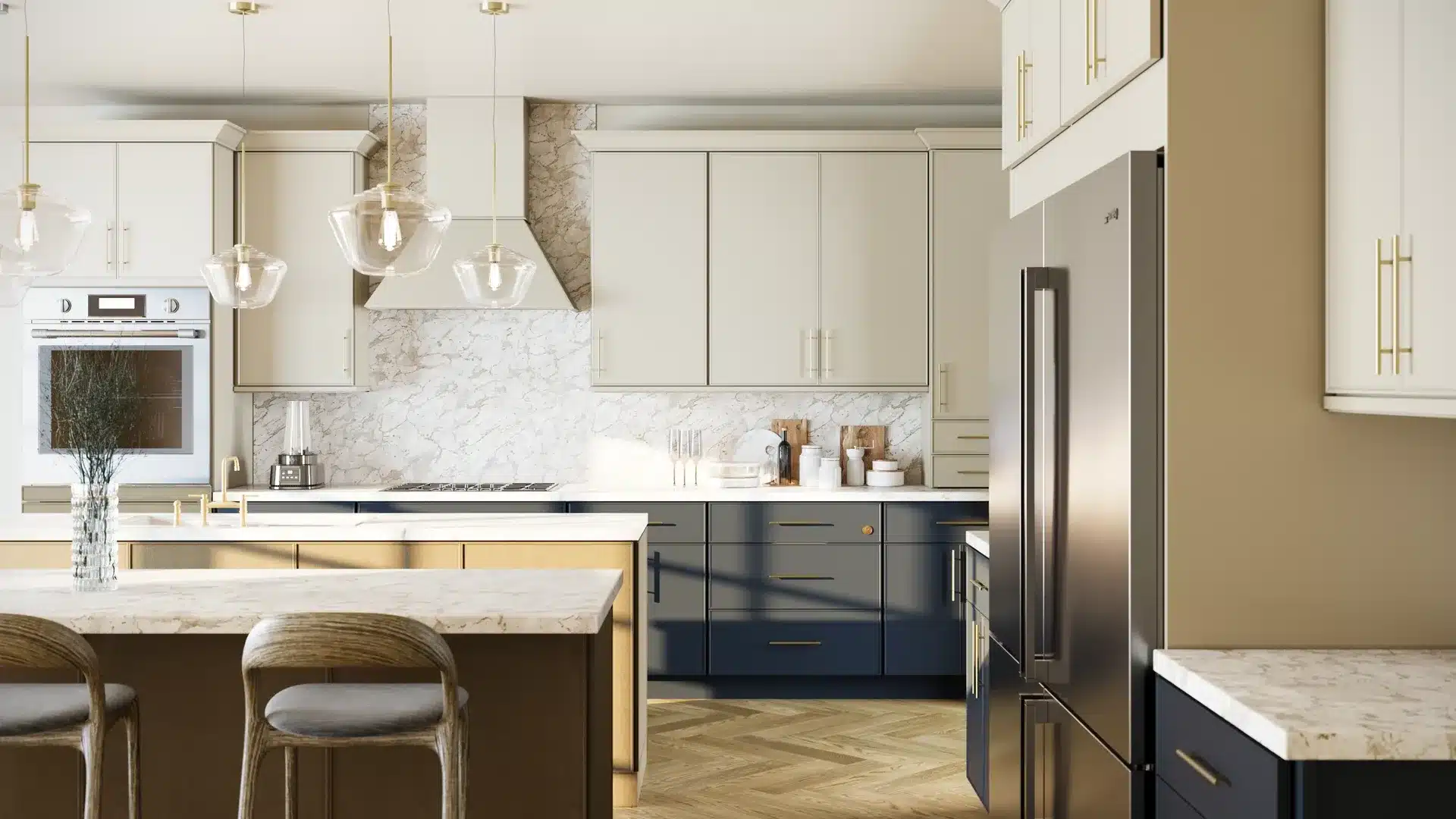
Wolf Classic cabinetry is made by Wolf Home Products, a building products company headquartered in York, Pennsylvania. The business dates back to 1843, when it started as a lumber and dry-goods operation, and it has been selling cabinets under its own name since around 2010. It sells through independent dealers rather than direct to the public.
Where are Wolf cabinets manufactured? This is the question the internet answers badly, so here is the careful version.
Wolf Classic cabinets are assembled in the United States. That part is true and it is not a marketing trick. One Wolf distributor puts the domestic material content at a minimum of 60%. But look at what that number quietly concedes: the other portion is not domestic. Wolf’s own December 2025 brochure states that its components meet its quality standards “regardless of their origin,” which is a polite way of confirming that some of them are imported.
So the accurate description is substantially American, not entirely American. That is still a real advantage in 2026, and we will come back to it when we get to tariffs. It just is not the absolute that some Wolf dealers imply.
Worth knowing: not every Wolf line is built by Wolf. Wolf Artisan cabinets are manufactured for Wolf by Cabinetworks Group, and Wolf Designer cabinets are manufactured by Norcraft. Wolf Classic is the line Wolf assembles itself, and it is the line this review is about.
The Wolf cabinet lines, explained
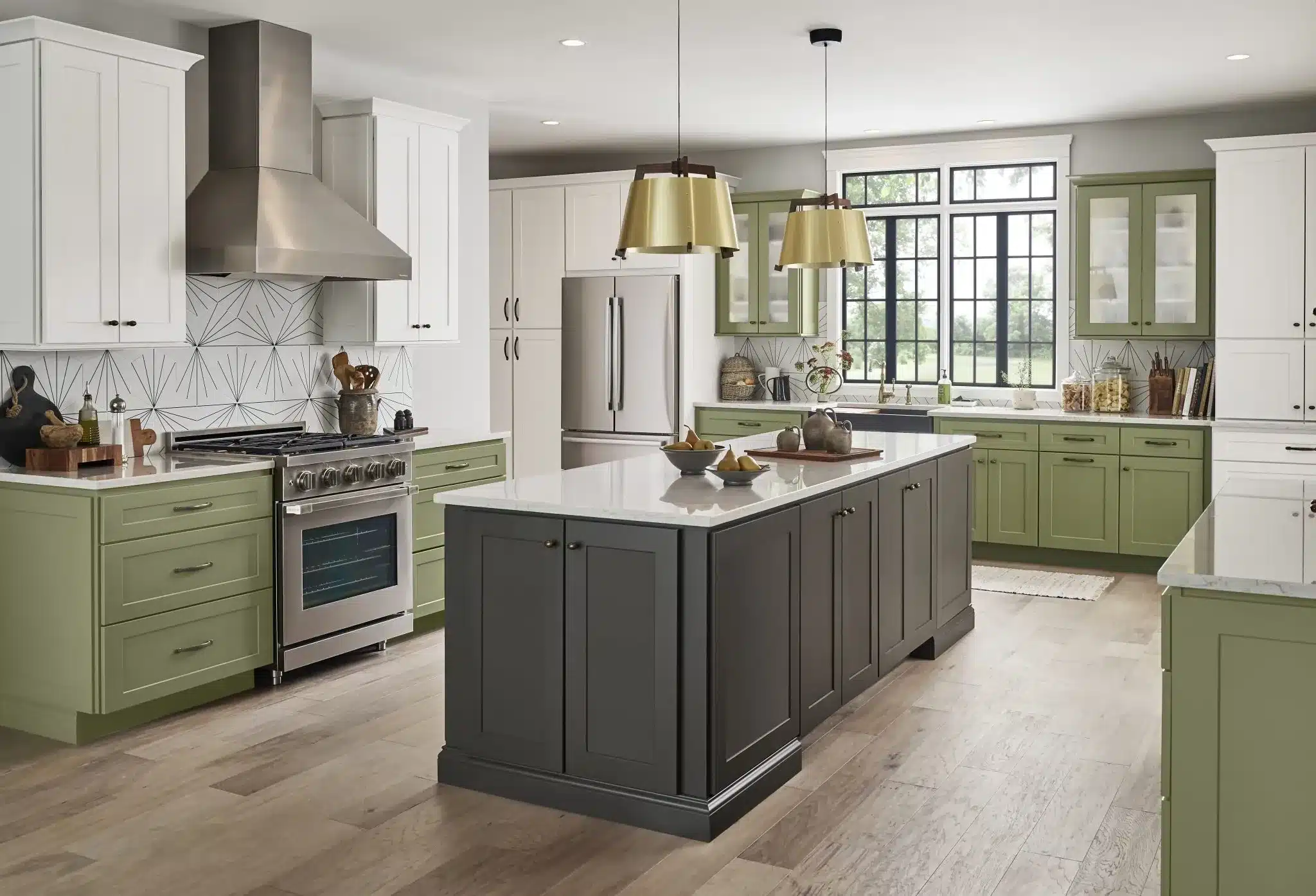
Before you can judge a Wolf quote you need to know which Wolf you are being sold. The company runs several separate cabinet lines, and they are not equivalent.
- Wolf Classic cabinets. The flagship and the most widely sold. Framed construction, all-plywood box, solid wood dovetail drawers, assembled by Wolf. This is the line most people mean when they say “Wolf cabinets.”
- Wolf Artisan cabinets. The near-custom line, with more door styles, more finishes, and multiple wood species. Built for Wolf by Cabinetworks Group. Carries a limited lifetime warranty.
- Wolf Designer cabinets. A step up from Classic, manufactured by Norcraft, also limited lifetime.
- Wolf Signature cabinets. A mid-tier offering sitting between the value and premium ends.
- Builders Mark. The budget line, aimed at contractors and developers. Industrial-grade furniture board rather than plywood, and a two-year warranty. Do not confuse this with Wolf Classic. It is a different animal at a different quality level.
Why Wolf Classic cabinets reviews contradict each other
Here is the thing almost nobody writing about this brand tells you, and it explains the chaos in the search results.
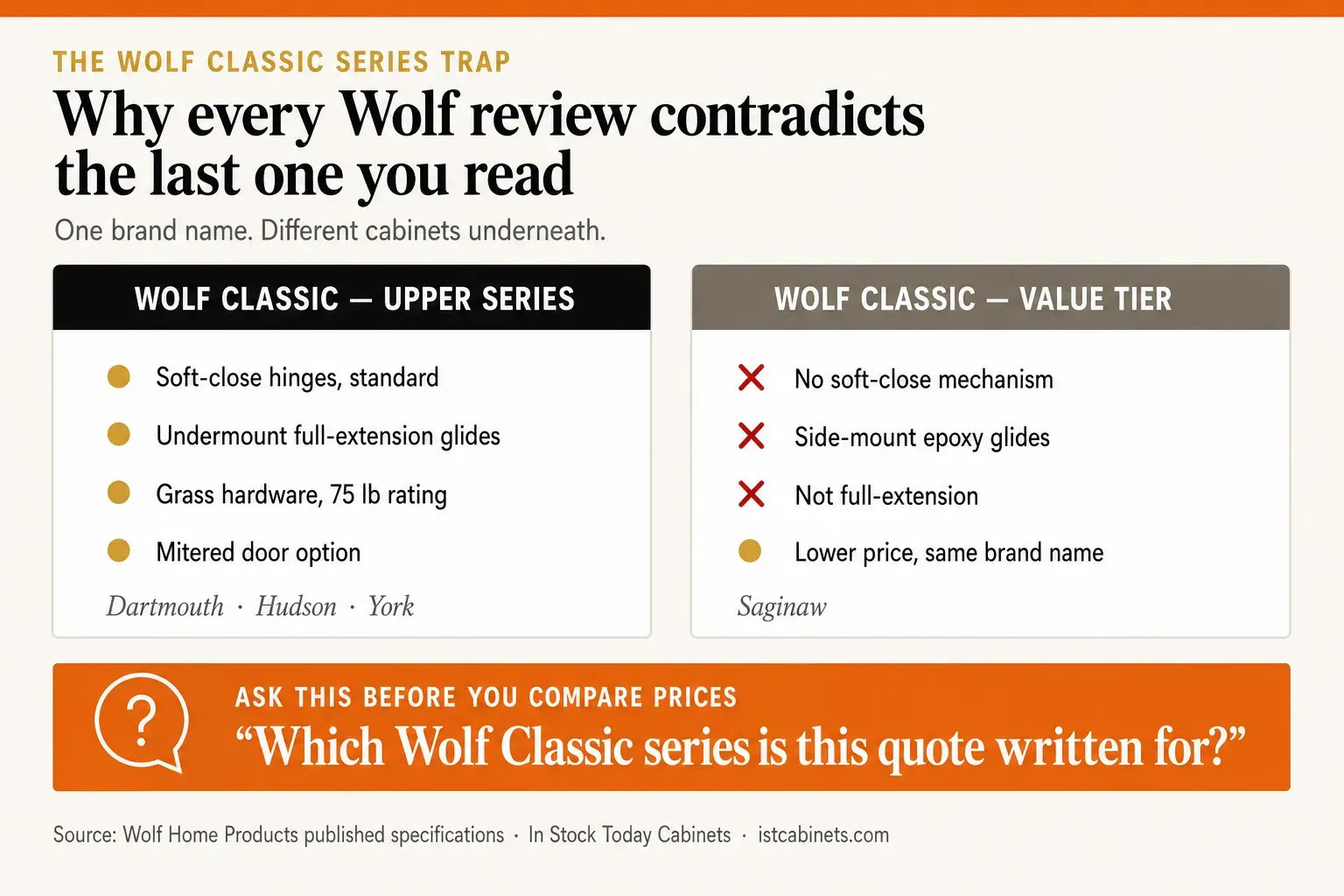
Wolf Classic is itself split into series. The upper series uses a mitered door, undermount full-extension glides with a soft-close mechanism, and hidden six-way adjustable soft-close hinges. Step down to the value tier and the hardware changes underneath you. The Saginaw door style uses side-mount epoxy glides and a hinge with no soft-close mechanism at all. Dartmouth, Hudson, and York get the full-extension undermount soft-close treatment. Saginaw does not.
Same brand. Same catalog. Same two words on the quote. Very different cabinet.
That is why one reviewer swears Wolf Classic has soft-close as standard and the next swears it does not. They are both telling the truth about the cabinet they saw. And it is why a Wolf Classic quote that comes in well under a comparable quote from another brand is usually not a better deal. It is a different tier.
If you have been collecting cabinet bids, you already know this feeling without having a name for it. Homeowners describe it constantly: heads spinning, no idea whether they are comparing apples to apples, one quote quietly including trim and moldings that another leaves out, another covering ready-to-assemble where its rival covers semi-custom. The complaint is always the same. The quotes are not describing the same thing, and nothing on the page tells you that.
The Wolf series split is that problem in its purest form. Two quotes. Same two words at the top. Different hardware inside. This is the apples-to-oranges trap that everyone senses and nobody can name, and now you can name it.
So take one thing from this review: the first question you ask a Wolf dealer is which Wolf Classic series the quote is written for. Get the answer in writing.
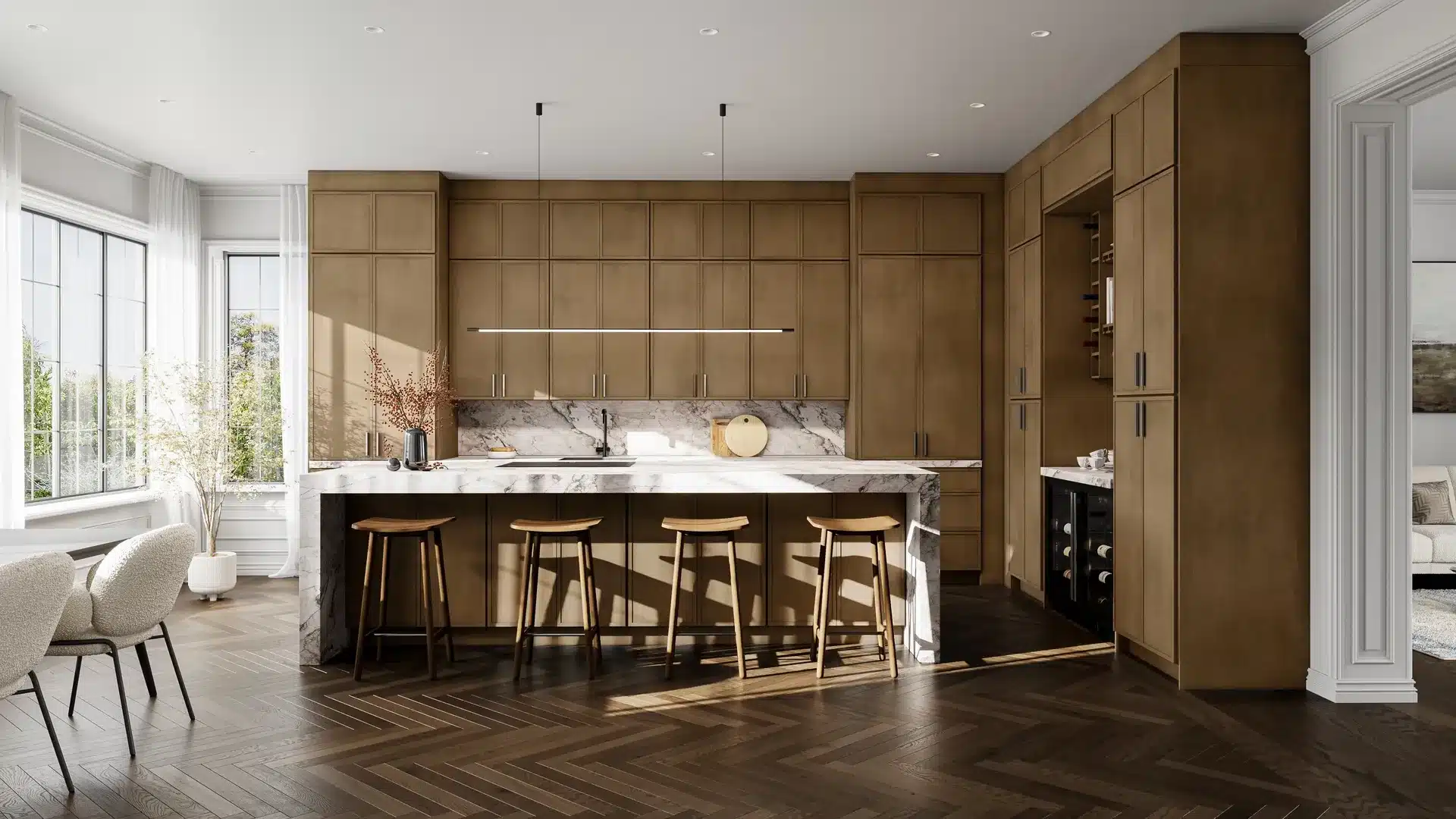
Wolf Classic cabinet construction: what you actually get
We are a competing dealer, so we would love to tell you the box is weak. It is not. This is good work.
Wolf Classic kitchen cabinets use a half-inch plywood box throughout: sides, back, top, and bottom. No particleboard where it counts, which already puts the line ahead of a lot of what gets sold at this price. Then look at how the panels go together.
- Face frame: three-quarter-inch by one-and-a-half-inch solid maple, pocket-drilled and pulled together with screws
- Side panels: half-inch plywood, glued and stapled into a half-inch dado in the front frame
- Back panel: half-inch plywood, glued and nailed into a dado, then stapled to the top and bottom
- Corner blocks: three-quarter-inch solid wood
- Shelves: three-quarter-inch adjustable plywood with bull-nosed front edges
- Drawer boxes: five-eighths-inch solid maple with dovetail joinery and a quarter-inch plywood bottom
A panel set into a glued dado resists racking far better than a panel that is simply stapled to an edge, and the solid corner blocks add another axis of resistance. If you have ever watched an installer wrestle a cabinet into a wall that is out of plumb, you understand why that matters more than it sounds like it should.
Wolf Classic also carries KCMA A161.1 certification and participates in the KCMA Environmental Stewardship Program. That certification is the industry’s baseline durability standard, and it is not a given at this price.
From the showroom floor
The inspection that predicts trouble is not the box. It is the delivery. In our experience the overwhelming majority of warranty headaches on any brand start as freight damage nobody photographed on arrival. Open every carton in front of the driver. It is the highest-value twenty minutes of the entire project.
Wolf Classic doors, colors, and finishes
Wolf Classic keeps a curated catalog rather than an enormous one. The recognizable door styles are Dartmouth, the modern shaker that carries most of the line’s volume, along with Hudson, York, Hanover, Grantley, Grove, Waverly, and Saginaw at the value end. Wolf cabinet colors run to a solid range of paints and stains, plus a set of accent shades intended for islands and vanities.
Now the specification that matters and that no Wolf dealer volunteers. On the painted Hanover, Dartmouth, and York doors, Wolf uses HDF stiles and rails with an MDF center panel. Not solid maple.
Wolf publishes the reasoning and it is sound: fiberboard will not expand or contract, it reduces the visible seams where pieces join, and it resists moisture. All of that is true, and an MDF center panel is the correct choice on any painted door from any manufacturer. Solid wood panels move with humidity, and when they move under paint they crack at the joints.
But the frame is a different question from the panel. A solid maple stile takes a knock from a cast iron pan better than a fiberboard stile does, and it can be repaired if it gets gouged. Paint your kitchen white, live in it for fifteen years, and that difference eventually shows up at the door corner nearest the dishwasher. On stained finishes the gap closes, because Wolf uses solid maple there.
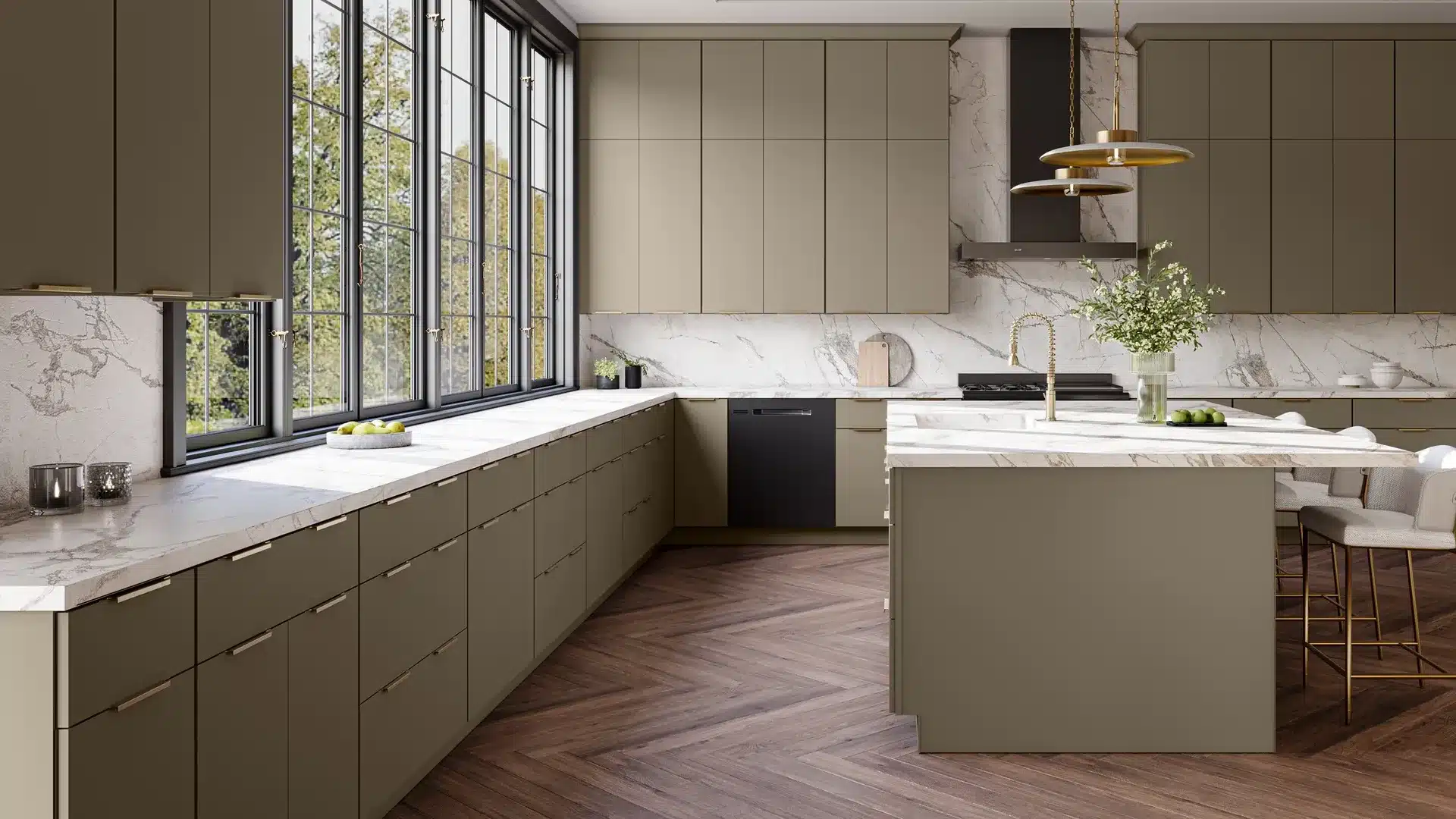
Hardware: Grass, and why we are not going to trash it
Wolf Classic’s upper series ships Grass hinges and Grass undermount glides rated to 75 pounds. Fabuwood, the brand we sell, ships Blum Compact Clip hinges and Blum Tandem Blumotion runners.
A lot of dealer pages would stop there and declare Blum the winner. That is lazy. Grass is a serious Austrian hardware manufacturer with American production, and a Grass undermount soft-close glide is a well-engineered part, not a no-name mechanism.
The test that actually matters is whether you can still buy the part in ten years. When one glide finally starts to drag, you want to walk into a supply house, say a brand name, and walk out with the replacement. You can do that with Grass. You can do that with Blum. You cannot do it with an unbranded hinge from a bargain import line, and that is the moment a cheap kitchen quietly turns into an expensive one.
On hinges and glides, both brands pass. We wrote that sentence, and then we found the thread that complicated it.
The accessories are a different story, and this is where Wolf hurt somebody
A landlord with Wolf Classic shaker cabinets lost the bins out of his pull-out trash unit when a tenant moved out. Cabinet BWB18. Ordinary problem. He ordered six different replacement bins. None of them fit.
So he called Wolf. Wolf was no help, and sent him back to the dealer he had bought from. That dealer had gone out of business.
He ended up on a cabinetry forum begging strangers for a part number. Someone eventually recognised it: the unit was not a Wolf part at all. It was an older Century Components pull-out, an unbranded original-equipment component, one of what a veteran in the same thread reckoned were 220 different varieties of trash pull-out on the market. Replacing the whole system outright would have run him around $350 for a comparable double-bin unit.
That is the ten-year parts test failing in real time, and it is not a hypothetical we invented to sell you something. It is a real person, on a public forum, this year.
Here is the distinction that matters. Wolf’s hinges and glides are Grass, and Grass parts you can source. Wolf’s interior accessories, the pull-outs and organizers and waste units, are not branded, and when your dealer closes there is no thread back to the manufacturer. Fabuwood’s accessories clip into the Blum standard, which is the entire reason they stay sourceable. The pull-outs, the knife blocks, the utensil organizers, the mixer lifts: same system, still in the catalog, still orderable by a stranger a decade from now.
We were happy to call the hardware a tie. On the parts you touch every day, it is. On the parts you will need to replace one day, it is not, and pretending otherwise would have been the polite lie rather than the useful truth.
The Wolf Classic warranty, and what almost everyone gets wrong
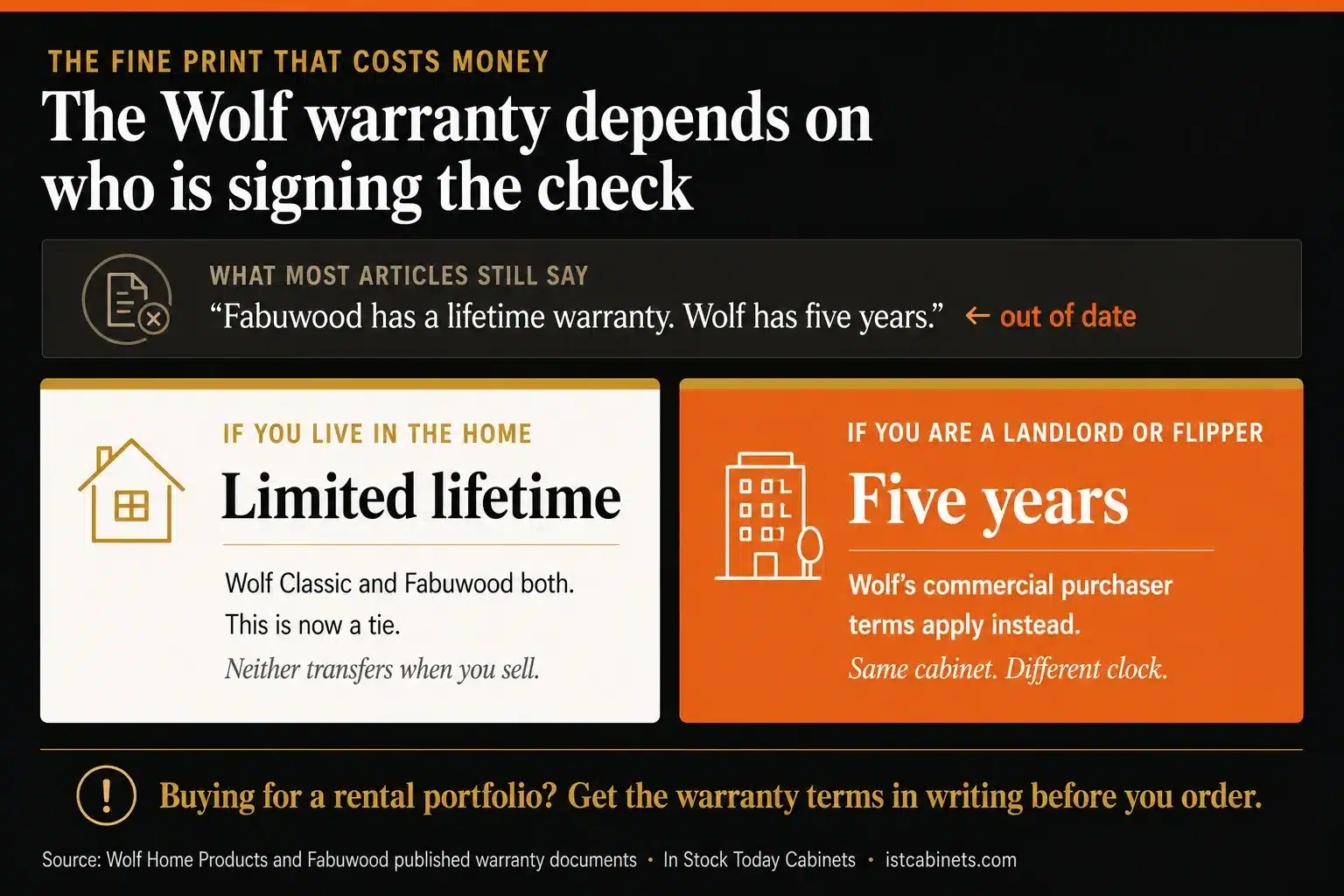
Search this brand and you will be told, repeatedly, that Wolf Classic carries a five-year warranty. That is out of date, and if you are a landlord it is out of date in a way that will cost you money.
Wolf upgraded Wolf Classic to a limited lifetime warranty for residential purchasers, announced alongside a line expansion and applying to material delivered from early 2024 onward. Fabuwood’s limited lifetime warranty covers Allure and Illume purchased since early 2023. So for a homeowner, the warranty comparison people keep repeating is now a tie. Two limited lifetime warranties, and neither one transfers when you sell the house.
Here is the fine print. Wolf’s lifetime coverage is written for the original residential purchaser. Commercial purchasers get five years. If you are buying cabinets for a rental portfolio or a spec flip, you are the commercial purchaser, and you are on a five-year clock while the homeowner down the street is on a lifetime one. Same cabinet. Different terms.
Read that twice if you own rentals. It is the most expensive sentence on this page and it is not in the reviews above us in the search results.
One caution that applies to Wolf and Fabuwood equally: neither warranty covers the thing homeowners complain about most. Hairline cracking at the joints of a painted door is classified by both manufacturers as normal wood movement, not a defect. That is standard across the industry, but it does mean a painted kitchen is a maintenance item rather than a permanent object.
Wolf cabinets pricing, and why the number shocked you
Before we get to Wolf’s pricing, we need to deal with the reaction people have to cabinet quotes in general, because it is the loudest sound in every remodeling forum right now. Homeowners describe getting quoted sixty thousand and up for a small kitchen in plain white shaker, and reasonably wondering whether a decent kitchen is affordable at all anymore.
Almost always, there is a category error buried in that number, and nobody points it out.
A sixty-thousand-dollar quote from a design-build firm is not a cabinet quote. It is demolition, cabinets, countertops, appliances, plumbing, electrical, flooring, tile, and several weeks of skilled labor. A cabinet quote is cabinets. When you put those two numbers side by side and conclude cabinets have gone insane, you are comparing a grocery bill to a restaurant bill.
This matters because it is the same trap as the series problem, on a different axis. Two numbers, wildly apart, and the sheet of paper does not tell you they are measuring different things. Before you panic about any figure, find out what is inside it.
With that cleared: Wolf Classic sits in the affordable mid-range, in the same bracket as Fabuwood, Forevermark, and the other value-tier plywood brands. Anyone quoting you a large gap between Wolf Classic and a comparable brand is almost certainly comparing across tiers rather than finding you a bargain. Go back to the series question.
Tariffs are also real and we are not going to pretend they are not. Cabinet prices across the whole category have moved since late 2025, and imported product carries a 25% duty. That pressure is genuine, and it is separate from the category error above.
Lead times
On speed, Wolf is genuinely strong. Stocked door styles ship from the York warehouse within days rather than weeks, which is one of the line’s real selling points. The trap is modification. The moment you add a special-order color or a custom size through Wolf’s Personalized Solutions program, the timeline can stretch toward five or six weeks.
So if your kitchen is torn out and a contractor is standing there charging by the day, ask one question before you fall in love with a finish: is this exact configuration stocked, or is it special order? That question saves more remodels than any specification on this page.
Fabuwood vs Wolf cabinets: spec for spec
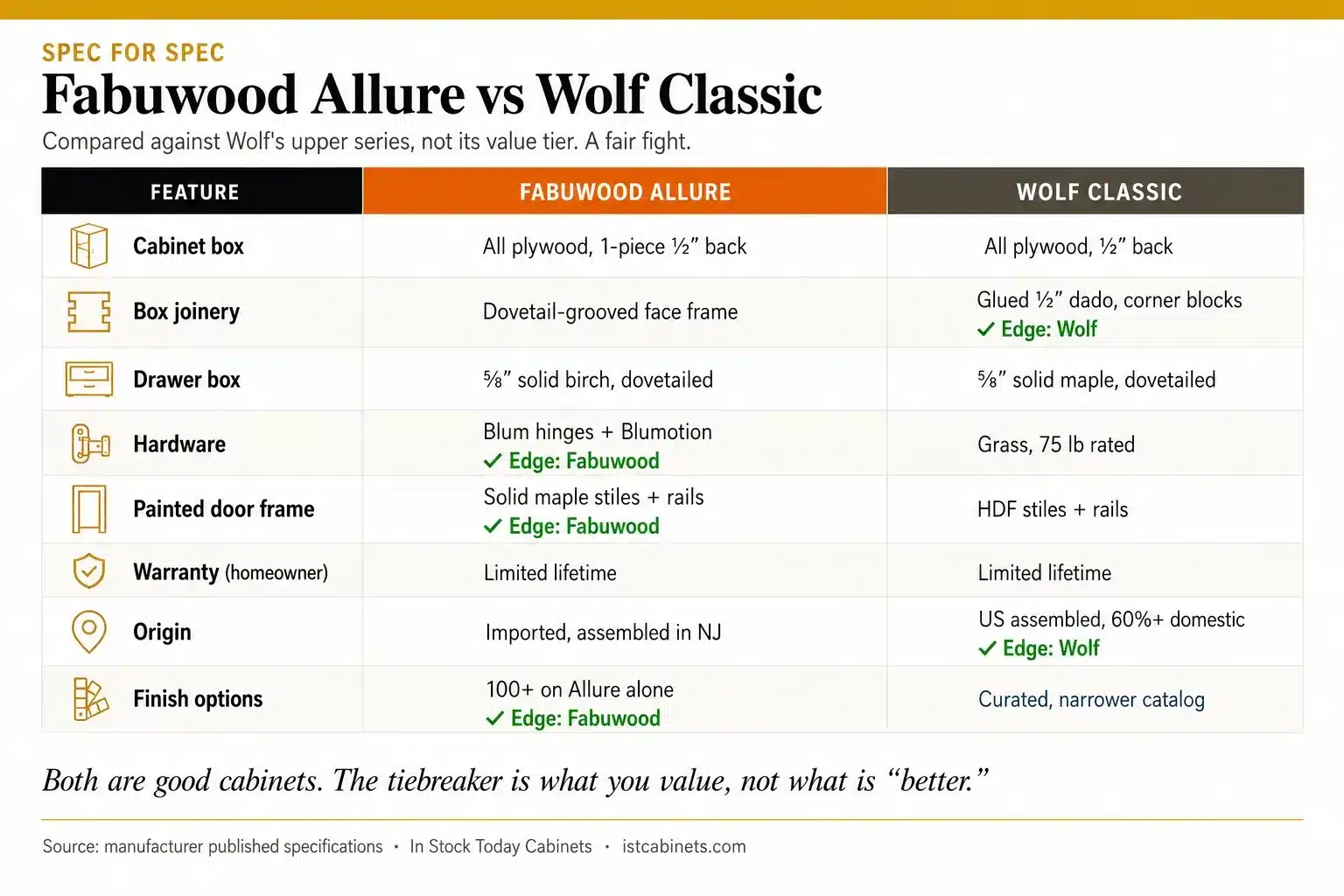
This is where our bias lives, so here it is laid out where you can check it. We are comparing Fabuwood Allure against Wolf Classic’s upper series, because comparing Allure to Wolf’s value tier would flatter us unfairly.
| Wolf Classic (upper series) | Fabuwood Allure | |
|---|---|---|
| Cabinet box | All-plywood. ½″ sides, back, top, bottom | All-plywood. Single-piece ½″ back |
| Box joinery | Glued ½″ dado, solid corner blocks | Dovetail-grooved face frame |
| Drawer box | ⅝″ solid maple, dovetailed | ⅝″ solid birch, dovetailed |
| Hardware | Grass hinges and glides, 75 lb rated | Blum Compact Clip and Tandem Blumotion |
| Painted door frame | HDF stiles and rails (Hanover, Dartmouth, York) | Solid maple stiles and rails |
| Warranty | Limited lifetime residential. Five years commercial | Limited lifetime, residential, not transferable |
| Certifications | KCMA A161.1, KCMA Environmental Stewardship | KCMA A161.1, CARB2, TSCA Title VI |
| Origin | US assembled. 60%+ domestic material | Imported, assembled in Newark, NJ |
| Finish range | Curated, narrower catalog | 100+ on Allure alone |
| Stocked lead time | Days. Five to six weeks once modified | About five business days |
Wolf takes the box and the origin. Fabuwood takes the hardware, the painted door frame, and the finish range. Those are the honest scores.
Wolf cabinets vs KraftMaid
The other comparison people run alongside this one. KraftMaid, sold through Home Depot and independent dealers, offers deeper customization, more wood species, and a longer menu of modifications. It also costs meaningfully more once you spec it to match, and its lower tiers do not automatically give you the all-plywood box that comes standard on Wolf Classic.
Put simply: KraftMaid buys you choice, Wolf Classic buys you value and speed. If you want the fuller version of that argument, we have written it up in our Fabuwood vs KraftMaid comparison.
Tariffs, and the part where we give up ground
Since October 2025, imported kitchen cabinets and vanities have carried a 25% Section 232 tariff. The scheduled jump to 50% was pushed back at the end of 2025 and is now set for January 1, 2027, so the rate through 2026 stays at 25%. Chinese-origin product can land far higher once anti-dumping and countervailing duties stack on top.
What that means for the brand we sell: the tariff applies to Fabuwood. Fabuwood’s own warranty document describes its cabinets as imported to and assembled in the United States. The components are made overseas, the company assembles and finishes in Newark, New Jersey, and the imported content is dutiable. We are not going to pretend otherwise. Any dealer telling you their import brand is untouched by the 2026 tariff environment is either uninformed or hoping you are.
What it means for Wolf: a real advantage, but a narrower one than the marketing suggests. Wolf assembles domestically and carries a majority of domestic material, so it is partially insulated. Not immune. Remember that the tariff is written to cover parts imported for use in cabinets, not only finished cabinets, and remember Wolf’s own line about components qualifying regardless of where they come from.
If a domestic supply chain genuinely matters to you, whether on principle or for price stability, Wolf Classic has the better story and it is not a fake one.
Walk into the showroom holding something
A homeowner wrote about visiting a cabinet showroom and realising, partway through, that the designer was running the entire conversation. Not because the designer was dishonest. Because he had turned up with nothing of his own. No rough layout, no cabinet list, nothing to check the proposal against.
That is how most people buy cabinets, and it is why so many end up loving a design before they ever see a number. Once you are attached to the drawing, the price is no longer a negotiation.
Bring four things to any cabinet showroom, ours included:
- Wall measurements and a rough sketch, even a bad one. It does not need to be right. It needs to be yours.
- A written cabinet list, so two quotes can be laid side by side and actually compared.
- The question about series or line, in writing, on every quote you collect.
- A question about what is excluded. Trim, moldings, and fillers are where quotes hide their differences.
Advice that applies whichever brand you choose
We have designed enough Northern Virginia kitchens to know which decisions people regret, and almost none of them are brand decisions.
Put drawers in your lower cabinets instead of doors with shelves behind them. Every client who does it says the same thing a year later. Reaching into the back of a base cabinet on your knees is a design failure that any brand will happily sell you.
Order the whole kitchen in one batch. Paint and stain finishes drift between production runs, and a cabinet added six months later will not match, on Wolf or on anything else. Neither warranty covers that, because it is not a defect.
Keep your outlets off the appliance circuits when you plan the backsplash, and specify pantry pull-outs at order time rather than retrofitting them later. Retrofits cost more and never fit as well.
And if a quote arrives with no series named on it, send it back.
The verdict: should you buy Wolf Classic cabinets?
Buy Wolf Classic if American assembly matters to you, if you want a domestic supply chain in a tariffed market, or if you prefer the discipline of a smaller curated catalog. The box is excellent, the upper-series hardware is legitimate, and the KCMA certification is real. Confirm the series in writing. And if you are buying for a rental, understand that you are on a five-year warranty rather than a lifetime one.
Buy Fabuwood instead if you are painting the kitchen and want a solid maple door frame rather than fiberboard, if you want Blum hardware and the accessory range behind it, or if you have a specific color in mind and want a real chance of finding it. It is the more flexible product, and for most of the homeowners who walk into our showrooms, it is the better kitchen.
We would sell you Fabuwood, because that is what we carry and because we believe in it. But if you read the tariff section and something in you said you would rather buy American, go buy the Wolf. You will not have made a mistake, and we would rather tell you that than watch you talk yourself out of the cabinet you actually wanted.
Wolf Classic cabinets: Frequently Asked Questions
Are Wolf cabinets good quality?
Yes. Wolf Classic cabinets use an all-plywood box with half-inch sides, back, top and bottom, solid maple dovetail drawer boxes, and solid wood corner blocks, and they carry KCMA A161.1 certification. The box joinery is strong. The one caveat is that the entry tier drops the soft-close hardware, so quality varies by series.
Where are Wolf cabinets made?
Wolf Classic cabinets are assembled in the United States by Wolf Home Products, based in York, Pennsylvania. A Wolf distributor puts domestic material content at a minimum of 60%, and Wolf’s own literature notes that components meet its standards regardless of origin, which confirms some are imported. Substantially American, not entirely.
Who owns Wolf cabinets?
Wolf cabinets are made by Wolf Home Products, an independent building products company headquartered in York, Pennsylvania, tracing its history to 1843. It sells through independent dealers. Two of its lines are built by outside manufacturers: Wolf Artisan by Cabinetworks Group and Wolf Designer by Norcraft.
Do Wolf Classic cabinets come with soft-close doors and drawers?
It depends on the series, which is why online answers conflict. Wolf Classic’s upper series includes soft-close hinges and undermount full-extension glides as standard. The value tier does not. The Saginaw door style uses side-mount epoxy glides and a hinge without a soft-close mechanism, while Dartmouth, Hudson and York get the full treatment. Always confirm the series on your quote.
What is the warranty on Wolf Classic cabinets?
Wolf Classic carries a limited lifetime warranty for original residential purchasers, applying to material delivered from early 2024 onward. Commercial purchasers, including landlords and investors, receive five years instead. Neither is transferable to a future owner of the home. Many reviews online still list only the older five-year figure.
How much do Wolf cabinets cost?
Wolf Classic sits in the affordable mid-range, the same bracket as Fabuwood and other value plywood brands. Pricing runs through independent dealers rather than a public price list. A Wolf quote that comes in far below a comparable brand is usually quoting a lower series rather than offering a better deal, so always confirm which Wolf Classic series it covers.
What is the difference between Wolf Classic, Wolf Artisan, and Wolf Designer cabinets?
Wolf Classic is the flagship framed line, assembled by Wolf itself. Wolf Artisan is the near-custom line with more door styles, finishes and wood species, built for Wolf by Cabinetworks Group. Wolf Designer sits above Classic and is built by Norcraft. Builders Mark is the budget contractor line and uses furniture board with a two-year warranty.
Fabuwood vs Wolf cabinets: which is better?
Neither is better across the board. Wolf Classic wins on box joinery and American assembly. Fabuwood wins on painted door construction, Blum hardware, and finish range. For most homeowners painting a kitchen, Fabuwood is the better cabinet. For buyers who want a domestic supply chain, Wolf is a legitimate choice.
Are Wolf Classic painted doors solid wood?
Not entirely. On the painted Hanover, Dartmouth, and York styles, Wolf uses HDF stiles and rails with an MDF center panel, which resists warping and hides joints well. Wolf’s stained doors use solid maple. By comparison, Fabuwood’s Allure painted doors use solid maple stiles and rails with an MDF center panel, so the frame itself is solid hardwood.
How long do Wolf Classic cabinets take to arrive?
Stocked Wolf Classic door styles ship from the York, Pennsylvania warehouse within days rather than weeks, which is one of the line’s strongest selling points. Special orders and Personalized Solutions modifications can push the timeline to five or six weeks. Confirm stocked versus special order before you commit to a finish.
Are Wolf cabinets affected by the 2026 cabinet tariffs?
Only partially. The 25% Section 232 tariff applies to imported cabinets, vanities, and imported parts, and it remains at 25% through 2026 before rising January 1, 2027. Wolf assembles domestically with majority domestic material, so it is largely insulated. Imported brands, including Fabuwood, carry the duty on their imported content.
How long do Wolf Classic cabinets last?
With normal household use, an all-plywood box like Wolf Classic’s should stay square and serviceable for fifteen to twenty-five years or more. The box is almost never what fails. What ages is the finish and the hardware: painted doors develop hairline cracks at the joints, and glides eventually start to drag. Both are fixable if the parts are still sourceable, which is why the replacement-parts question below matters more than any construction spec.
Why was my kitchen quoted at $60,000 when the cabinets cost far less?
Because a design-build quote is not a cabinet quote. It covers demolition, cabinets, countertops, appliances, plumbing, electrical, flooring, tile, and weeks of skilled labor. Cabinets are one line inside it. Homeowners routinely compare an all-in remodel figure against a cabinets-only figure, conclude cabinet prices have gone insane, and panic. Before reacting to any number, find out what is inside it.
Can you get replacement parts for Wolf Classic cabinets?
Hinges and glides, yes. Wolf uses Grass hardware, and Grass parts are sourceable. Interior accessories are the weak point. Wolf’s pull-outs and waste units are unbranded original-equipment components, and if your dealer has closed, Wolf’s support tends to redirect you back to that dealer. One Wolf Classic owner ordered six replacement trash bins before discovering the unit was an unbranded Century Components part. Keep your original paperwork.
How do I compare two cabinet quotes that look completely different?
Get three things in writing on every quote: the brand’s series or line, the full cabinet list, and what is excluded. Most quotes that look cheaper are not cheaper, they are covering less, or covering a lower tier of the same brand. With Wolf specifically, always confirm which Wolf Classic series the quote covers, since the hardware changes between them.
Where can I compare cabinet brands near Alexandria, VA?
In Stock Today Cabinets has been an authorized Fabuwood dealer since 2015, with a showroom on General Washington Drive in Alexandria and locations in Fairfax VA, Columbia MD, Bear DE, and Houston TX. We do not sell Wolf, but we will show you exactly what to look for so you can judge any brand’s drawer box, back panel, and hinge for yourself.
Compare them with your own hands
Specs on a page are not the same as a drawer you can pull. We have been an authorized Fabuwood dealer since 2015, with full displays in Alexandria and Fairfax VA, Columbia MD, Bear DE, and Houston TX. Bring your measurements and we will lay the kitchen out with you. No pressure, no deposit.
More cabinet brand comparisons
- Is Fabuwood a good cabinet? Our full review of the brand we sell
- Cubitac vs Fabuwood
- Fabuwood vs KraftMaid, for anyone cross-shopping the big-box brands
- Fabuwood vs Forevermark, the other value import in the DMV
- Fabuwood vs J&K Cabinetry
- Fabuwood vs Kith Cabinets, made-to-order semi-custom compared