
We sell Fabuwood, so you should read this knowing that. What you will not get here is a sales pitch dressed up as a comparison. After years of laying out kitchens, inspecting deliveries off the truck, and fielding the calls that come a few months after install, we have a clear view of where these two brands actually differ, and where one is genuinely the smarter buy than the other. Forevermark is a real competitor and for some projects it is the right answer. This guide is written to help you make that call, not to talk you into ours.
This is part of our Fabuwood comparison series, where we put Fabuwood head to head with the brands homeowners and contractors actually weigh it against. Both of these land on almost every short list in the affordable-to-mid bracket. Both are imported, both are KCMA certified, both ship all-plywood boxes with dovetail drawers. On a spec sheet they look close enough that price ends up deciding. The differences that matter most do not show up until year five or six, which is exactly why a dealer who sees them age is worth listening to.
Forevermark is the lower-priced brand, usually 10 to 15 percent cheaper, and it offers a ready-to-assemble option that stretches a budget further. Fabuwood costs more, and the premium buys the things that decide how a kitchen ages: a thicker single-piece back, branded Blum hardware on every main line, AWI Premium Grade qualification on Allure, and a Limited Lifetime Warranty instead of a two to five year term.
Choose Forevermark for a rental, a flip, or a strict budget where upfront cost leads. Choose Fabuwood for a primary home you plan to keep, where the hardware, the warranty, and resale matter. The rest of this guide shows you why, the way we would walk you through it on the showroom floor.
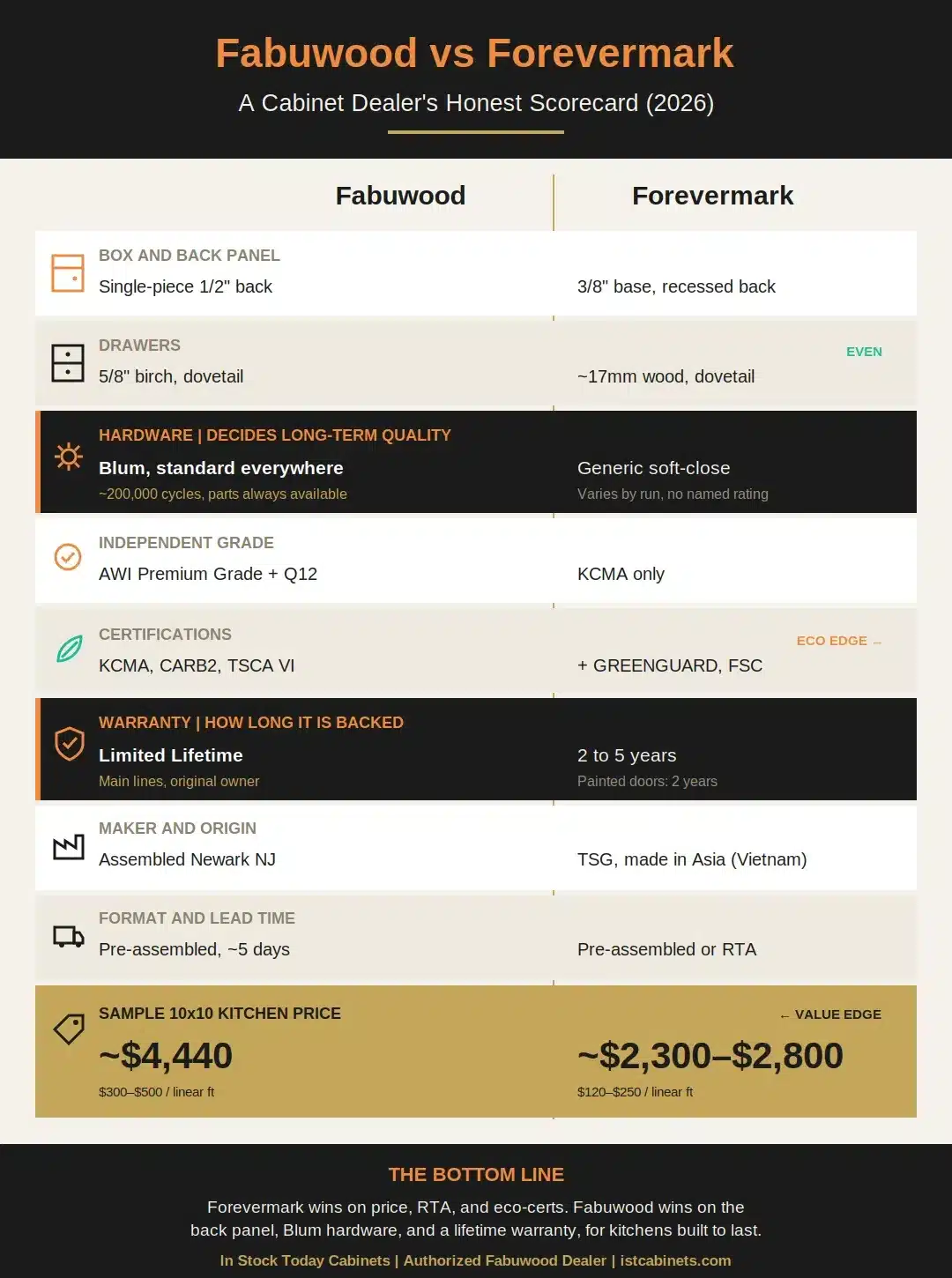
Fabuwood vs Forevermark at a glance
| Quality factor | Fabuwood | Forevermark |
|---|---|---|
| Box and back panel | All-plywood. Single-piece 1/2″ back for full shear strength | All-plywood. 3/8″ base bottoms, 1/2″ picture-frame recessed backs |
| Drawer boxes | 5/8″ solid birch, dovetail (Merivobox metal on Illume) | ~17mm solid wood, dovetail, 1/2″ plywood bottom |
| Hinges and glides | Blum, standard on every main line. Own warranty, deep parts supply | Generic soft-close, varies by series and production run |
| Independent grade | AWI Premium Grade on Allure, plus internal Q12 system | KCMA certified, no proprietary tier system |
| Frameless option | Yes. Illume (EFB) and all-plywood Ovela | Mostly framed collections |
| Certifications | KCMA, CARB 2, TSCA Title VI | KCMA, CARB 2, GREENGUARD Gold, FSC (select) |
| Warranty | Limited Lifetime on main lines, original owner | 2 to 5 years. Painted doors 2 years |
| Formats | Pre-assembled, ~5 business day lead on stock | Pre-assembled and ready-to-assemble (RTA) |
| Maker and origin | Fabuwood, assembled in Newark NJ from global components | The Shekia Group (TSG), Edison NJ. Made in Asia, shifting to Vietnam |
| Sample 10×10 price | Around $4,440 ($300 to $500 per linear foot) | Around $2,300 to $2,800 ($120 to $250 per linear foot) |
Read the table and the shape is clear. The two brands are close on the bones, the plywood box and the dovetail drawer, and they separate on the back panel, the hardware, the warranty, and the price. The rest of this guide walks each one, with the reasoning a dealer actually uses.
Who actually makes these cabinets
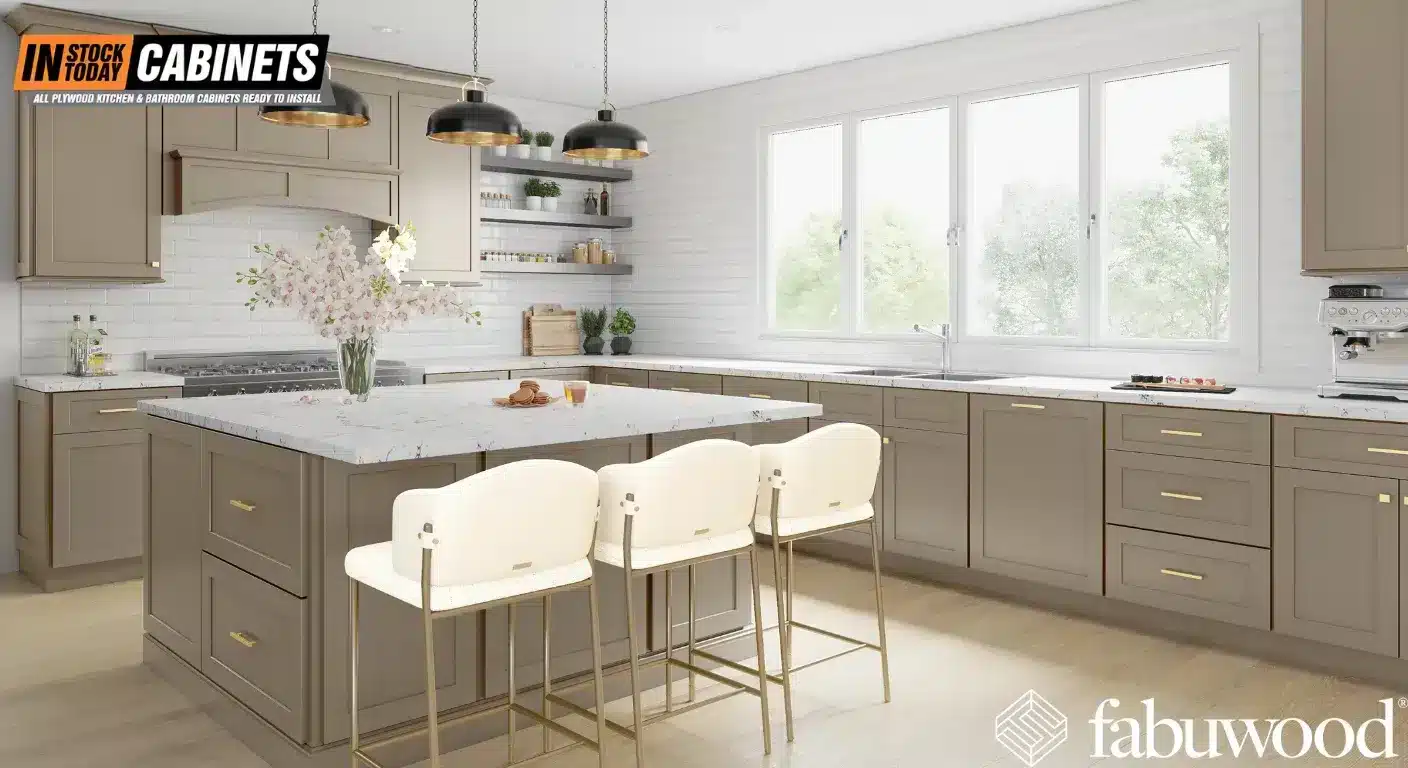
Start here, because it shapes everything downstream. Fabuwood imports components from global suppliers and does final assembly, quality checking, and shipping out of a one-million-square-foot facility in Newark, New Jersey. The cabinet arrives at your home already built and squared.
Forevermark is a brand of The Shekia Group, also called TSG, headquartered in Edison, New Jersey. The cabinets are manufactured overseas in Asia. Production was historically in China and has been shifting toward Vietnam, a move tied to the antidumping duties the US placed on Chinese-made cabinets. That origin is not stated plainly on the brand site, so if it matters to you, ask your dealer to confirm the current country of manufacture in writing. Neither brand is made in the USA in the way that phrase is often assumed. Both are imported. The honest distinction is that Fabuwood assembles and stands behind the product domestically, while Forevermark ships globally sourced product through a US distributor.
Box construction: the back panel is the tell
When we inspect a cabinet brand, the first thing we look at is the back panel, because it is the part you cannot see after install and the part that decides whether a run stays square for twenty years. Both brands build all-plywood boxes, which already puts them ahead of the particleboard cabinets a tier below. Neither uses the material that swells and crumbles the first time there is a leak under the sink.
The difference is in the back and the base. Fabuwood uses a single-piece half-inch plywood back on its main lines. A full one-piece back can be screwed into wall studs at any point across its width, carries shear strength in every direction, and resists racking, which is the slow twist that pulls a cabinet out of square when a heavy quartz or granite top is set on the base run. Forevermark uses a half-inch picture-frame recessed back in many lines, where a thinner central panel sits inside a perimeter frame, over three-eighths base bottoms. Anchored properly into studs, it holds up fine for normal loads and it keeps the cost down. It is simply a lighter build with less shear resistance, and on a heavily loaded run it is the kind of thing you notice a decade later, not on day one.
This is a real structural difference, not a cosmetic one. It is also the difference most buyers never see, which is exactly why we point it out.
Drawers and joinery
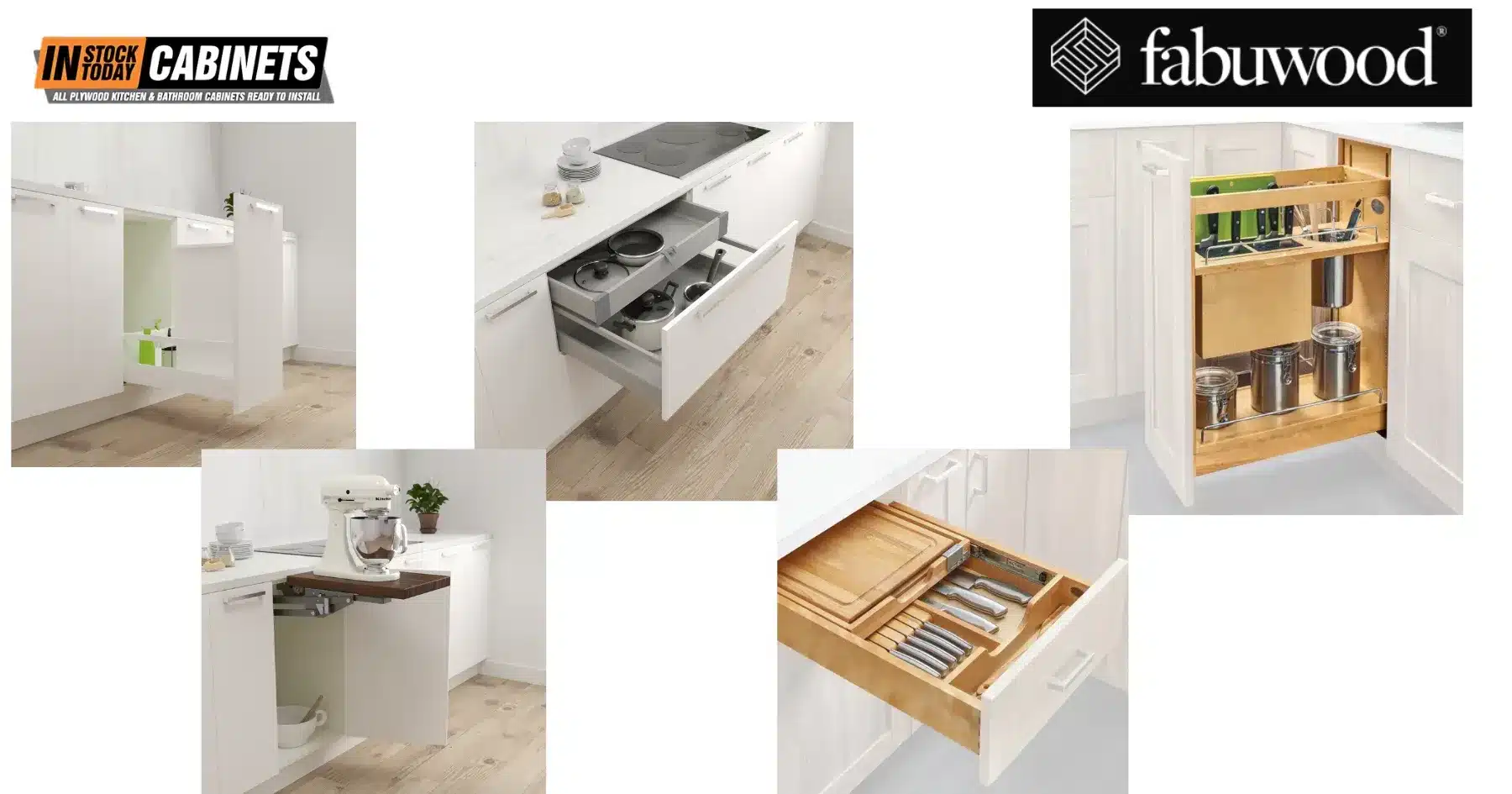
Drawers take more abuse than any other part of a kitchen, so the joint matters. Here the two brands are genuinely close, and we will not pretend otherwise. Both build solid-wood drawer boxes with dovetail joinery, the interlocking joint that keeps a drawer face from pulling loose after years of being yanked open. Fabuwood specs five-eighths solid birch boxes rated past 100,000 cycles, and its frameless Illume line steps up to the Blum Merivobox metal drawer system. Forevermark specs solid-wood boxes around seventeen millimeters with a half-inch plywood bottom, sometimes in birch and sometimes in eucalyptus grandis on lines like Petit and Midtown Grey.
If you only looked at the drawer box, you would have a hard time picking a winner. The separation happens at the hardware that drives those drawers, which is the next section and the one that decides this comparison.
Hardware: where Fabuwood pulls ahead
If one factor decides cabinet quality over twenty years, it is the hardware, because hinges and glides wear out long before a plywood box does. This is the clearest gap between the two brands, and it is the one we steer buyers to look at hardest.
Fabuwood runs Blum on every main collection as standard, not as a paid upgrade on the top tier. That means Blum Compact Clip six-way adjustable hinges and Tandem Blumotion full-extension runners on Allure, and the Blum Merivobox metal drawer system on Illume. Blum, the Austrian maker, rates its hardware for roughly 200,000 open-and-close cycles, carries its own separate warranty, and has a parts ecosystem so deep that a hinge or slide stays replaceable for decades. That last point matters more than the cycle rating. When something does eventually wear, you can get the exact part.
Forevermark uses generic six-way soft-close hinges and full-extension undermount glides, and the specific supplier varies by series and production run. It works smoothly out of the box. The catch comes years later, when matching a worn hinge or slide to an unbranded original is harder, and you do not have the published cycle rating or the universal Blum supply behind it. On a kitchen you plan to keep, the hinge is the first thing likely to need replacing, so this is the row to weigh heaviest if you are torn.
Quality standards: proprietary vs independent
Both brands carry KCMA certification, the industry baseline. KCMA testing simulates years of use, validating that cabinets survive 25,000 door and drawer cycles and 600 pounds of wall-cabinet loading. Both are CARB 2 compliant for low formaldehyde emissions. So far, even.
Fabuwood adds two things on top. Its internal Q12 system is a twelve-point standard covering lumber grading, anti-warp engineering, and finish. A proprietary standard is only worth what the company puts behind it, so the more meaningful credential is that the Allure line earned Architectural Woodwork Institute Premium Grade qualification in 2023, an independent benchmark, with testing that included weight capacity up to 2,250 pounds for tall pantry cabinets. Forevermark holds KCMA but has no equivalent proprietary tier or independent premium grade.
Where Forevermark answers back is the environmental stack. On top of KCMA and CARB 2, it carries GREENGUARD Gold for indoor air quality and FSC certification on select lines for responsibly sourced wood. If low-emission, sustainably certified materials are a priority for your household, that is a genuine Forevermark advantage, and we will say so.
Warranty coverage, and what a claim actually looks like
This is the second clear separator. Fabuwood carries a Limited Lifetime Warranty on its main lines, Allure, Illume, Ovela, Quest, Value Premium, and Valencia, to the first residential purchaser. It is not transferable to a later owner, and registration activates full coverage, but for the original buyer it covers the cabinet for as long as you own the home. The brand upgraded to this from a five-year warranty in October 2024 and added Ovela to it in March 2026.
Forevermark’s official warranty, written by The Shekia Group, covers products against manufacturer defects for five years from purchase by the original owner, except cabinets with painted finishes, which are limited to two years. Painted white is the most popular finish in this bracket and also the one most prone to chipping over time, so that two-year painted term deserves a hard look. You will see some dealers advertise a Forevermark lifetime warranty. The documented terms are the two to five year structure, so confirm the exact coverage in writing before you buy.
Now the part most comparisons leave out, because only a dealer sees it. The large majority of cabinet warranty issues, in our experience and across the trade, are shipping and delivery damage, not latent defects. Fabuwood’s claim process is thorough. It requires photo documentation and sometimes requires the damaged part be returned before a replacement ships. That protects against fraud, but it can slow a contractor on a tight schedule. The practical answer is the same for either brand. Inspect every box the moment it comes off the truck, photograph any damage before it leaves the driveway, and file before install day. We build that inspection step into how we hand off an order, and it is the single biggest thing that keeps a project on schedule.
One honest note on both. Neither warranty covers finish stress lines where a painted door’s stiles and rails meet. That is normal movement in a painted wood door, not a defect, and both manufacturers exclude it correctly.
Value for the build: Forevermark vs Fabuwood on real cost
Now the row that pulls many buyers toward Forevermark in the first place. On a sample 10×10 kitchen, Forevermark commonly lands between $2,300 and $2,800, or roughly $120 to $250 per linear foot. A comparable Fabuwood 10×10 runs closer to $4,440, or about $300 to $500 per linear foot. Fabuwood generally prices 10 to 15 percent above Forevermark on like-for-like configurations. That gap is real, and on a tight budget it decides things.
But sticker price is not total cost, and a contractor knows it. Forevermark’s ready-to-assemble format lowers the box price and the freight, but it moves assembly labor to you. Building, squaring, and gluing flat-pack cabinets runs roughly fifteen to forty-five minutes each, so a twelve-cabinet kitchen is about four hours of skilled labor. The RTA savings land near $500 on a typical kitchen, which means once your loaded crew rate passes about $128 an hour, the assembly labor eats the savings. Fabuwood ships pre-assembled and squared, which cuts on-site install time and gets a stocked order moving in roughly five business days.
There is one more 2026 wrinkle worth knowing. A 25 percent tariff has applied to imported cabinets and their components since October 2025, with a further increase delayed to 2027. Because both brands import, both feel it. What it does is compress the old price advantage that fully imported RTA lines used to hold, which quietly strengthens the case for domestically assembled product.
Here is the honest read. If you are spending less and the kitchen does not need to outlive the next sale, Forevermark’s lower price is money well saved. If you are keeping the home, the Fabuwood premium buys a stronger back, Blum hardware, an independent premium grade, and a lifetime warranty, and spread across fifteen years the difference per year is small.
Beyond the brand: what we actually steer buyers toward
The brand you pick matters less than the decisions around it, and the regrets we hear about months after install almost never involve the logo on the box. They involve the layout. So whichever way you go, here is the guidance we give on the showroom floor, brand-neutral and free.
Put drawers, not doors, on your lower cabinets in the prep and cooking zones. The most consistent regret we hear is too few drawers down low, where a door means kneeling and reaching into a dark box. Keep doors for the sink base and tall-item storage, and zone the kitchen to how you actually cook.
Plan outlets past the code minimum, and never put a small-appliance station on the same dedicated circuit as a major appliance. Decide on under-cabinet lighting before the boxes are built, because it has to be wired during construction, not after. These are the details that get value-engineered out early and regretted later.
Fix the pantry before it becomes a black hole. Deep fixed shelves swallow cans to the back where they expire forgotten. Pull-outs and drawers solve it. A workstation sink earns its price in prep efficiency and reclaimed counter space. And decide cabinets-to-ceiling or not at the design stage, based on your soffit, rather than discovering it on install day.
If you are going panel-ready on a designer refrigerator or dishwasher, coordinate the exact appliance specs before the cabinets are ordered. Fit failures on appliance panels are expensive and avoidable. And a plain warning that applies to neither brand here but to the tier below them. Be wary of cheap online cabinets advertised as wood that are actually particleboard. They sag at the shelves and disappoint within a few years, which is the whole reason all-plywood brands like these two exist.
One last practical tip that saves real headaches. Order all your cabinets in a single batch. Finish can vary slightly between production runs, and matching a later add-on to an earlier order is the kind of small mismatch that bothers you every day.
How each brand fits the 2026 look
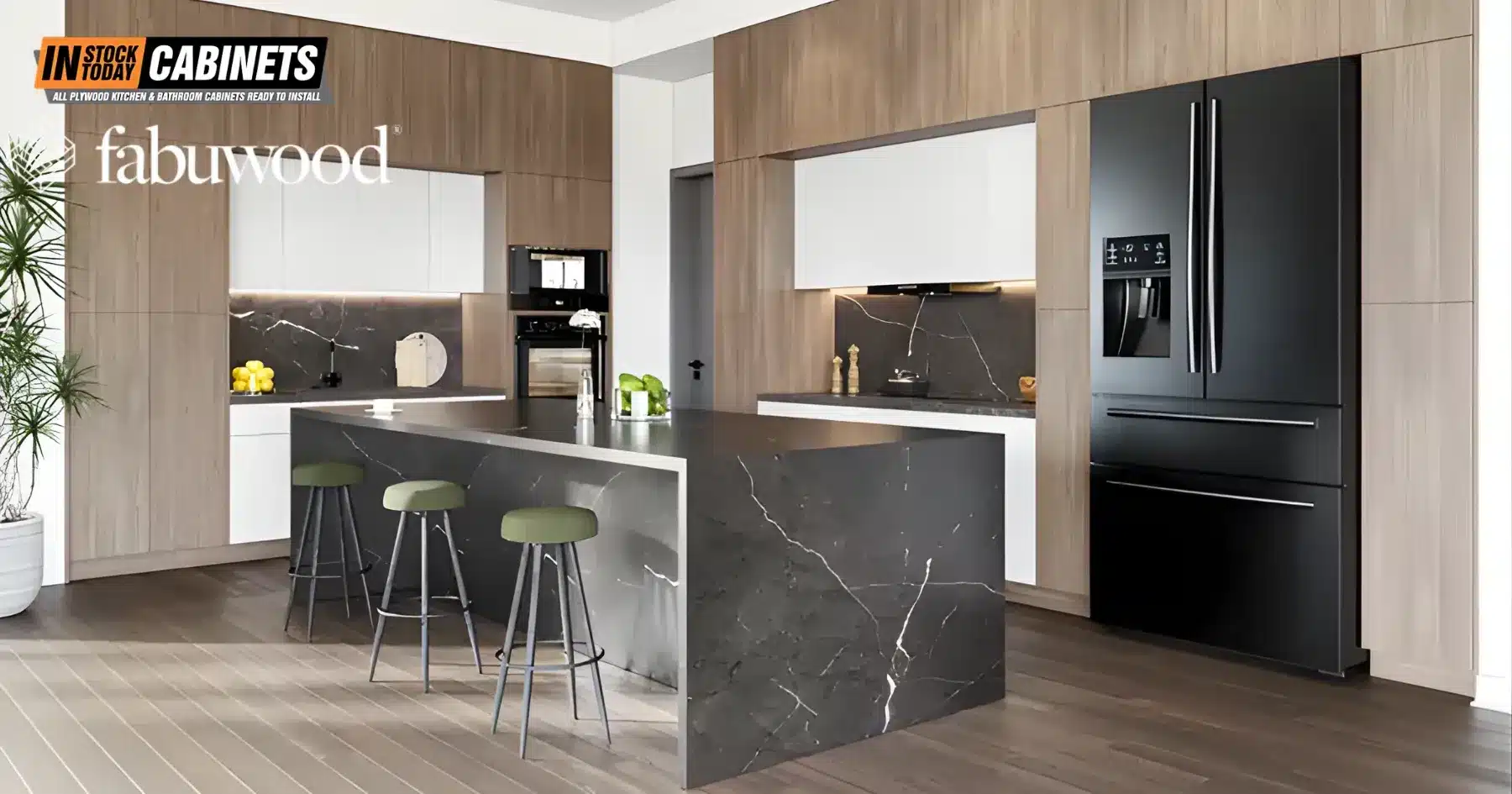
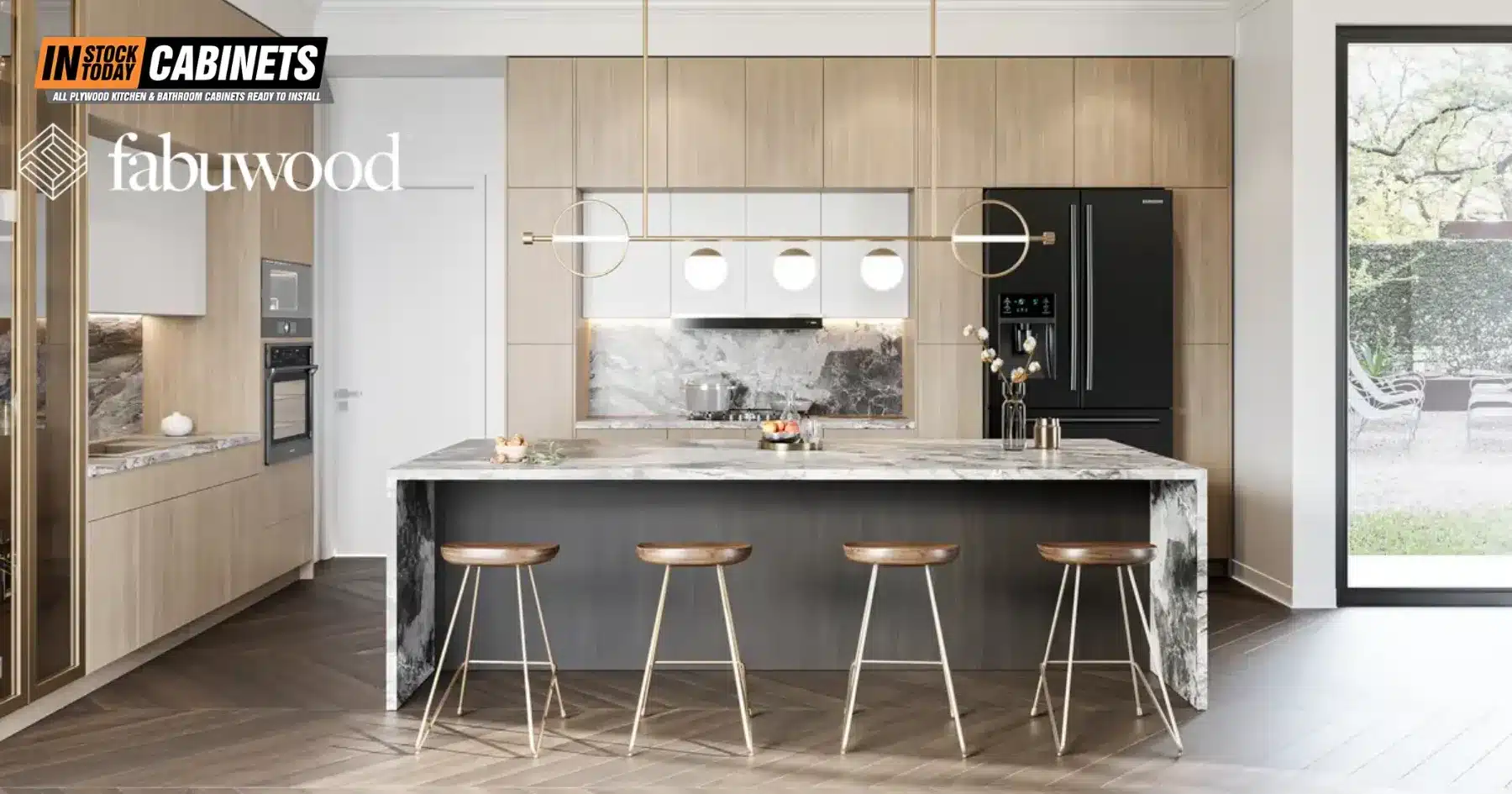
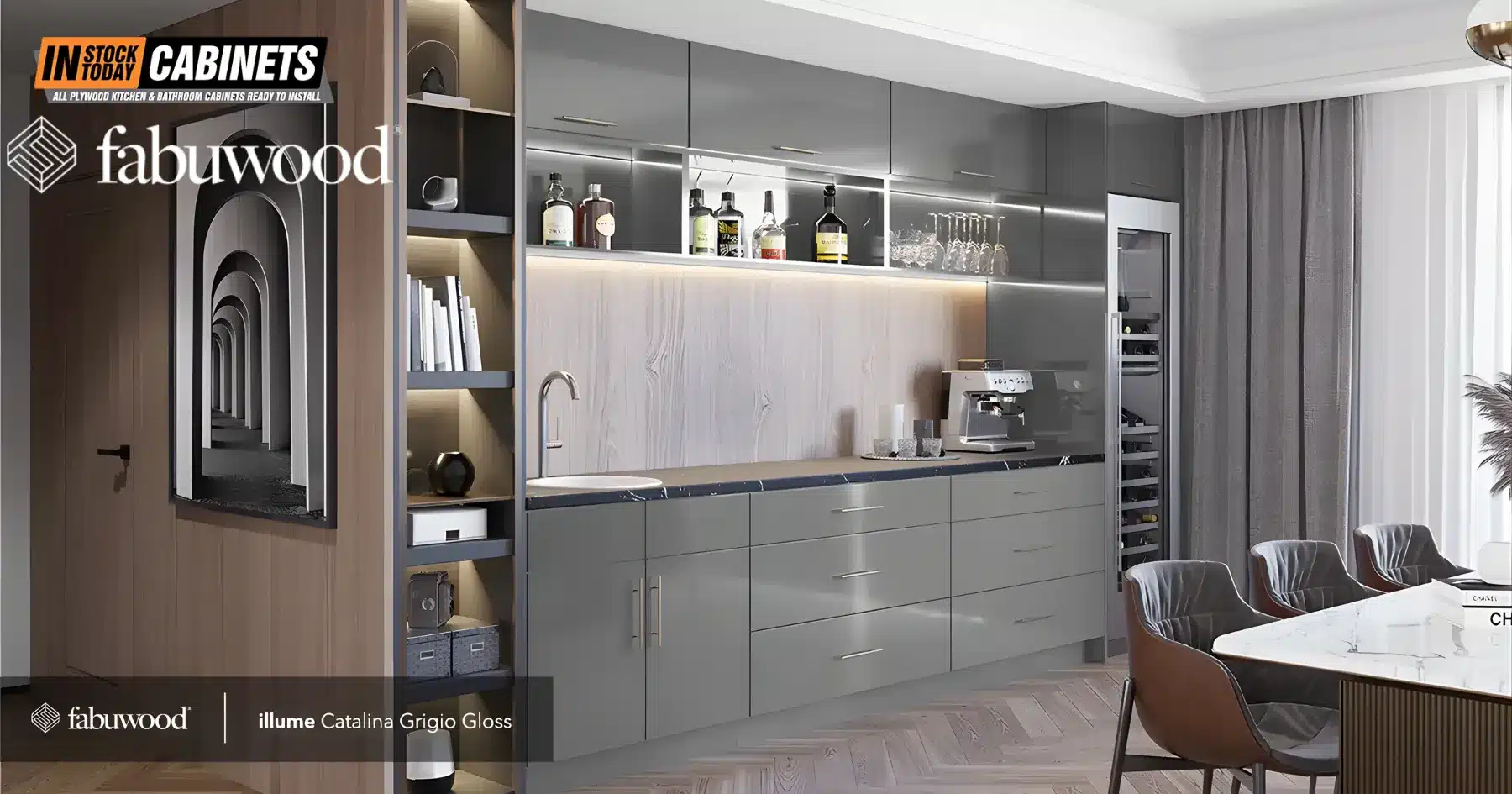
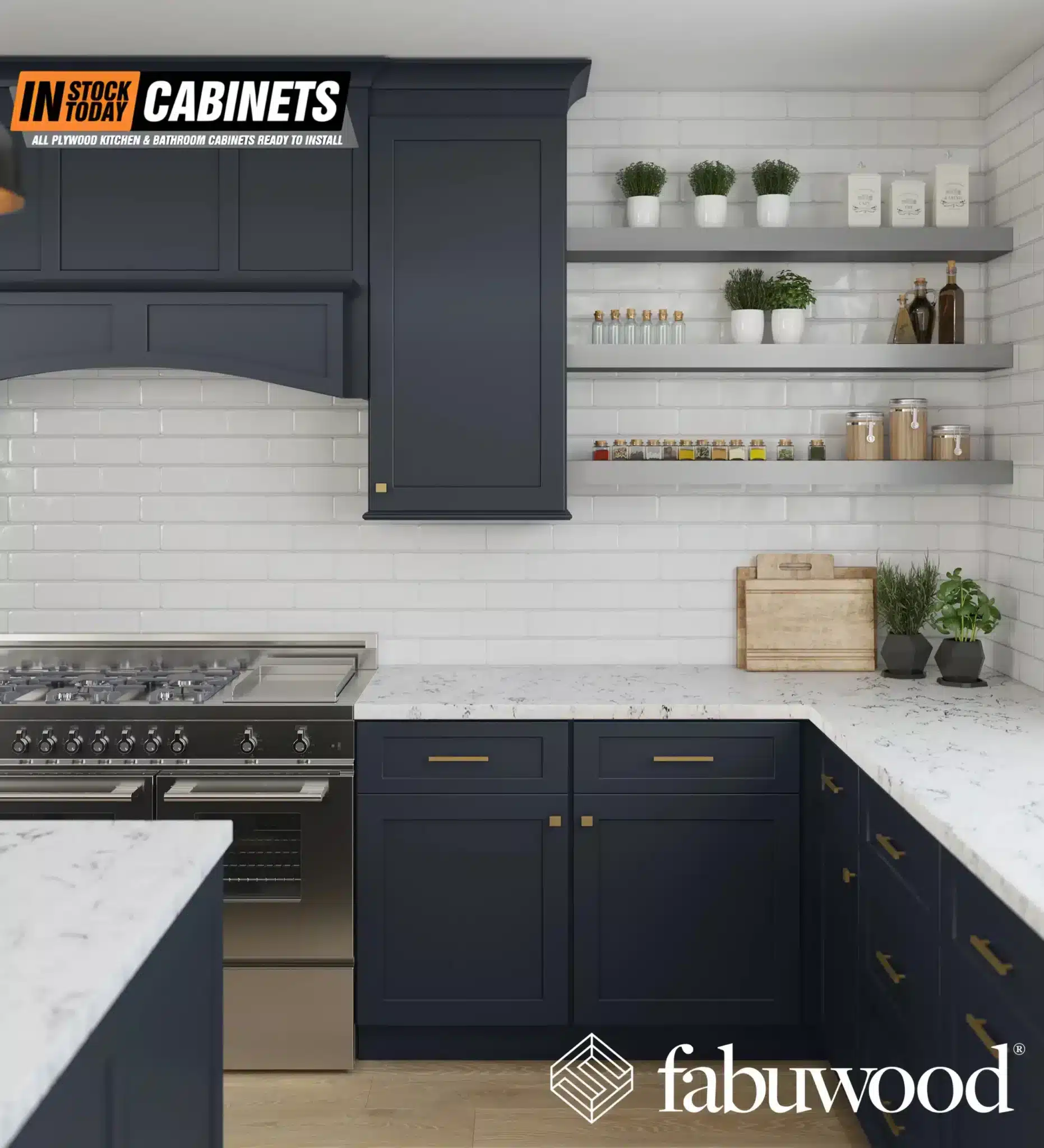
The NKBA 2026 trends report has the market moving toward warm neutrals like taupe, mushroom, and clay, a return of rich dark woods like walnut, white oak leading wood choices, and brushed brass replacing chrome. This is where finish palette depth starts to matter. Fabuwood lines up well with warm neutrals in the Galaxy and Luna ranges, deeper grain-forward stains like Kona and Timber, and an express custom-color program that can match most Sherwin-Williams or Benjamin Moore colors to order. Forevermark’s palette is narrower and weighted toward high-volume whites and grays, which keeps stock deep and prices low but gives a designer less room to chase the warmer 2026 direction. If you want a trend-forward color, Fabuwood gives you more paths to it. If you want a clean classic white and the lowest price, Forevermark covers it well.
So which one should you choose?
Choose Forevermark if price leads, the project is a rental, a flip, or a fast refresh, you can use the RTA format to save labor, or third-party environmental certifications like GREENGUARD Gold and FSC are a priority. It is a legitimately good value cabinet, and for a short-hold project it is often the right financial call.
Choose Fabuwood if the kitchen is a primary home you intend to keep, finish durability and resale matter, you want Blum hardware standard and a stronger single-piece back, or you value an independent premium grade and a Limited Lifetime Warranty over a short term. The premium is real, and across the life of the kitchen it earns out.
See Fabuwood in person before you decide
Both of these brands sell only through dealers, which means the dealer is a real part of what you are buying. At In Stock Today Cabinets we carry the full Fabuwood lineup, in stock, so you can open the drawers, feel the Blum hardware, look at the back of a cabinet, and compare door styles in daylight instead of guessing from a spec sheet. Our designers will lay out your kitchen the way you actually cook, price the real cabinet list, and tell you honestly where Fabuwood fits your project, and where it might not.
Visit a showroom in Alexandria VA, Fairfax VA, Columbia MD, Houston TX, Roselle IL, or Bear DE, or start a free design consultation online.
Comparing other brands too? Read our Fabuwood vs Kith and Fabuwood vs Cubitac comparisons, or start with our honest take on whether Fabuwood is a good cabinet.
Frequently asked questions
Is Fabuwood better than Forevermark?
For long-term quality, Fabuwood has the edge. It uses a thicker single-piece back, includes Blum hardware as standard on every main line, holds AWI Premium Grade on its Allure line, and backs its cabinets with a Limited Lifetime Warranty. Forevermark is the better pick when budget leads or for short-term projects, and it carries stronger environmental certifications. Both use all-plywood boxes and dovetail drawers, so the core is close.
How does Forevermark vs Fabuwood compare on price?
Forevermark is the cheaper brand, usually 10 to 15 percent less. A sample 10×10 kitchen runs about $2,300 to $2,800 for Forevermark versus around $4,440 for Fabuwood. Forevermark also offers a ready-to-assemble format that lowers cost further, though once a contractor’s loaded crew rate passes about $128 an hour, the assembly labor offsets those savings.
What hardware do Fabuwood and Forevermark use?
Fabuwood uses Blum hinges and runners as standard across its main lines, including Blum Compact Clip hinges and the Merivobox system on Illume. Blum hardware carries its own warranty and a deep parts supply, so worn parts stay replaceable for decades. Forevermark uses generic six-way soft-close hinges and undermount glides that vary by series and are not tied to a named brand. The Blum standard is Fabuwood’s clearest advantage.
Who makes Forevermark cabinets and where are they made?
Forevermark is a brand of The Shekia Group, also called TSG, based in Edison, New Jersey. The cabinets are manufactured overseas in Asia, historically in China and shifting toward Vietnam. The brand site does not state the current country plainly, so confirm it in writing if it matters to you. Fabuwood, by contrast, assembles its cabinets in Newark, New Jersey from globally sourced components.
What is Forevermark’s warranty?
Forevermark’s documented warranty covers manufacturer defects for five years from purchase by the original owner, with painted door styles limited to two years. Some dealers advertise a lifetime warranty, so confirm the exact terms in writing. Fabuwood, by comparison, offers a Limited Lifetime Warranty on its main lines to the original residential purchaser.
Does Forevermark have a frameless cabinet line?
Forevermark’s main collections are mostly framed. Fabuwood offers a clearer frameless path with its Illume line, which uses engineered furniture board and the Blum Merivobox system, and the newer all-plywood Ovela line, built from UV-veneered plywood with solid-wood dovetail drawers and Blum soft-close hardware. For a true frameless plywood kitchen, Fabuwood is the easier route.
Where can I buy Forevermark cabinetry in Alexandria, Virginia?
Forevermark sells only through authorized dealers. In the Alexandria area, Next Day Cabinets carries Forevermark and has a showroom at 5655 General Washington Dr, Suite E, Alexandria, VA 22312. In Stock Today Cabinets is a Fabuwood dealer, not a Forevermark dealer, so we do not stock it. Whichever brand you lean toward, confirm the exact line, finish, and warranty terms in writing before you order. If you are still comparing the two, our Alexandria showroom is on the same street at 5731 General Washington Dr, so you can see the Fabuwood equivalents side by side, since these brands compete directly in the same price bracket.
Where can I buy Fabuwood cabinetry in Alexandria, Virginia?
In Stock Today Cabinets is an authorized Fabuwood dealer with an Alexandria showroom at 5731 General Washington Dr, Alexandria, VA 22312. We carry the full Fabuwood lineup in stock, including the Allure, Illume, and Ovela lines, so you can open the drawers, feel the Blum hardware, and compare door styles in person. Most stocked configurations are available in about five to seven days. You can stop by the showroom or start a free design consultation online.
Is there a Fabuwood dealer or showroom near Alexandria, VA?
Yes. In Stock Today Cabinets serves the Alexandria and Northern Virginia area as an authorized Fabuwood dealer, with showrooms in Alexandria and Fairfax, plus additional locations in Columbia MD, Houston TX, Roselle IL, and Bear DE. The Alexandria showroom carries Fabuwood in stock, and our designers can lay out your kitchen, price the real cabinet list, and have stocked items ready in roughly five to seven days.
At In Stock Today Cabinets, we’ve helped thousands of homeowners across Virginia, Maryland, Texas, and Delaware find the right cabinet and countertop pairings for their kitchens. Visit one of our showroom locations to see cabinetries from Fabuwood in person, or try our Kitchen Visualizer to experiment with countertop combinations from home.