
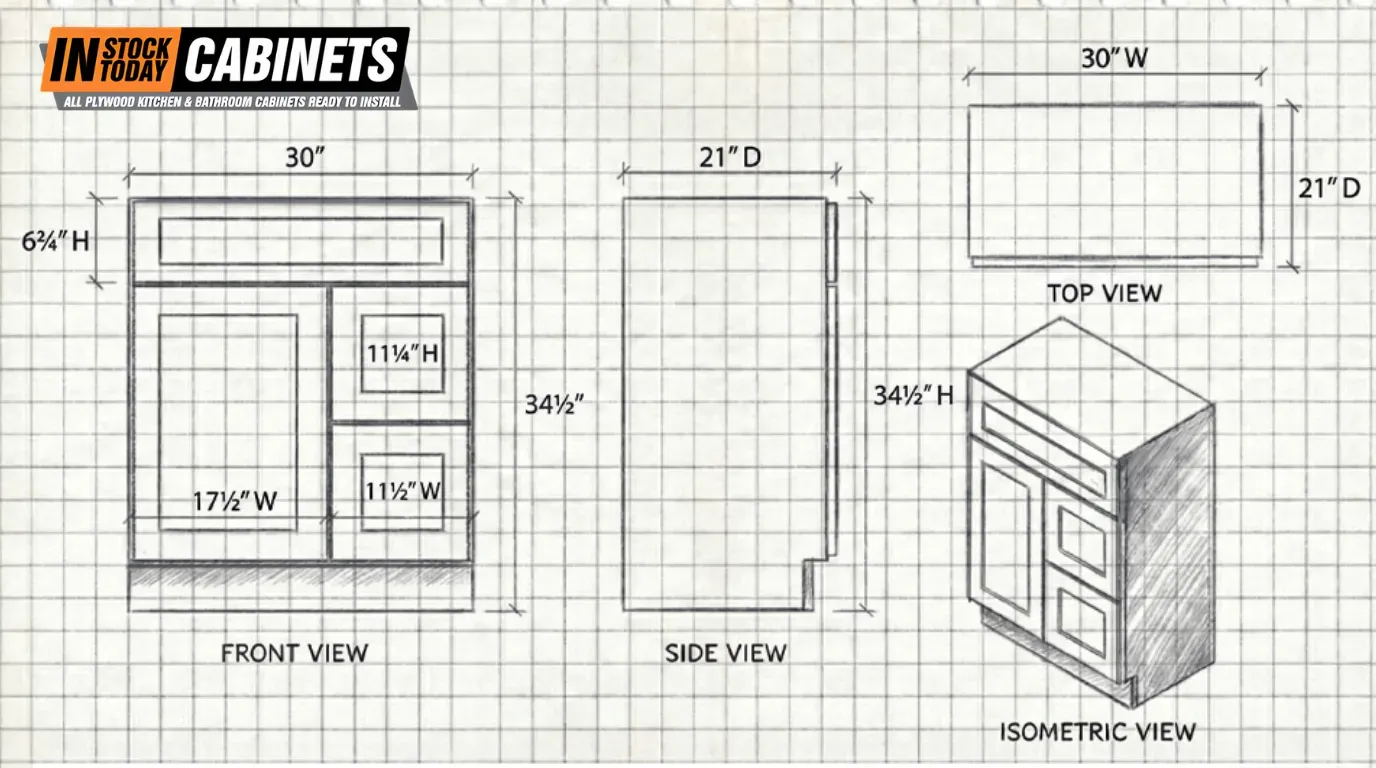
A Trade Professional’s Field Guide to Separating Quality from Marketing
Most Shaker cabinets look the same in a showroom. The differences show up 36 months later—warped doors, drawer bottoms pulling free, finishes yellowing where the morning sun hits the uppers. By then, somebody’s reputation is on the line. Usually yours.
Whether you’re a contractor pricing a kitchen gut-reno, a designer specifying for a builder-grade project, or a dealer vetting a new product line, you need to know which details separate cabinets that hold up for 20 years from cabinets that fall apart in five. Most of those details are invisible at first glance: the thickness of a back panel, the type of joint hiding inside a drawer box, the chemistry of the finish coat.
This guide walks through twelve quality indicators that matter in the field. Where possible, we’ve tied each one to third-party standards—KCMA A161.1, AWI Premium Grade, CARB Phase 2—so you’re working from independently verified benchmarks rather than manufacturer marketing. Where a claim comes from a proprietary framework (like Fabuwood’s Q12 system), we’ve labeled it as such.
10 Things That Actually Matter for Shaker Cabinet Quality
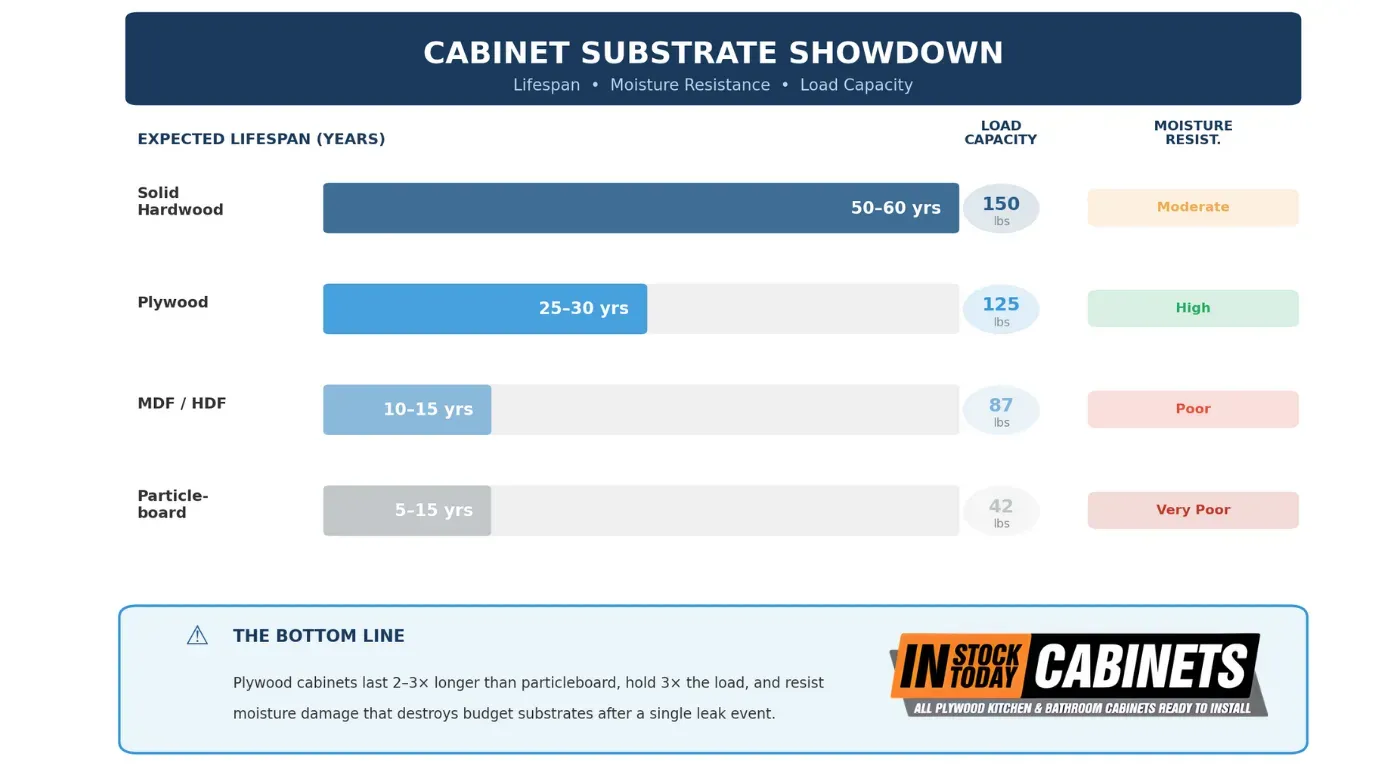
- All-plywood boxes outlast particleboard by 2–3×. Plywood cabinets deliver 25–30 years of service versus 5–15 for particleboard, with far superior moisture resistance and screw-holding power. (Sources: Nelson Cabinetry, Blue Ridge Cabinet Connection)
- Dovetail drawer joints are the professional standard. 5/8-inch solid hardwood dovetail drawers with plywood bottoms captured in dado grooves significantly outlast stapled or doweled alternatives. All three Fabuwood tiers (Allure, Quest, Hallmark) include them standard.
- Avoid mitered corners on painted Shaker doors. Mitered joints expand at 45° to the grain line, causing hairline paint cracks (“witness lines”) that are well-documented across the industry. Specify mortise-and-tenon or cope-and-stick joinery instead.
- Conversion varnish beats lacquer on every KCMA test. Catalyzed CV (30–60% solids) resists alcohol, heat, acids, and yellowing. Standard lacquer (15–25% solids) dissolves under 100-proof alcohol in 24 hours.
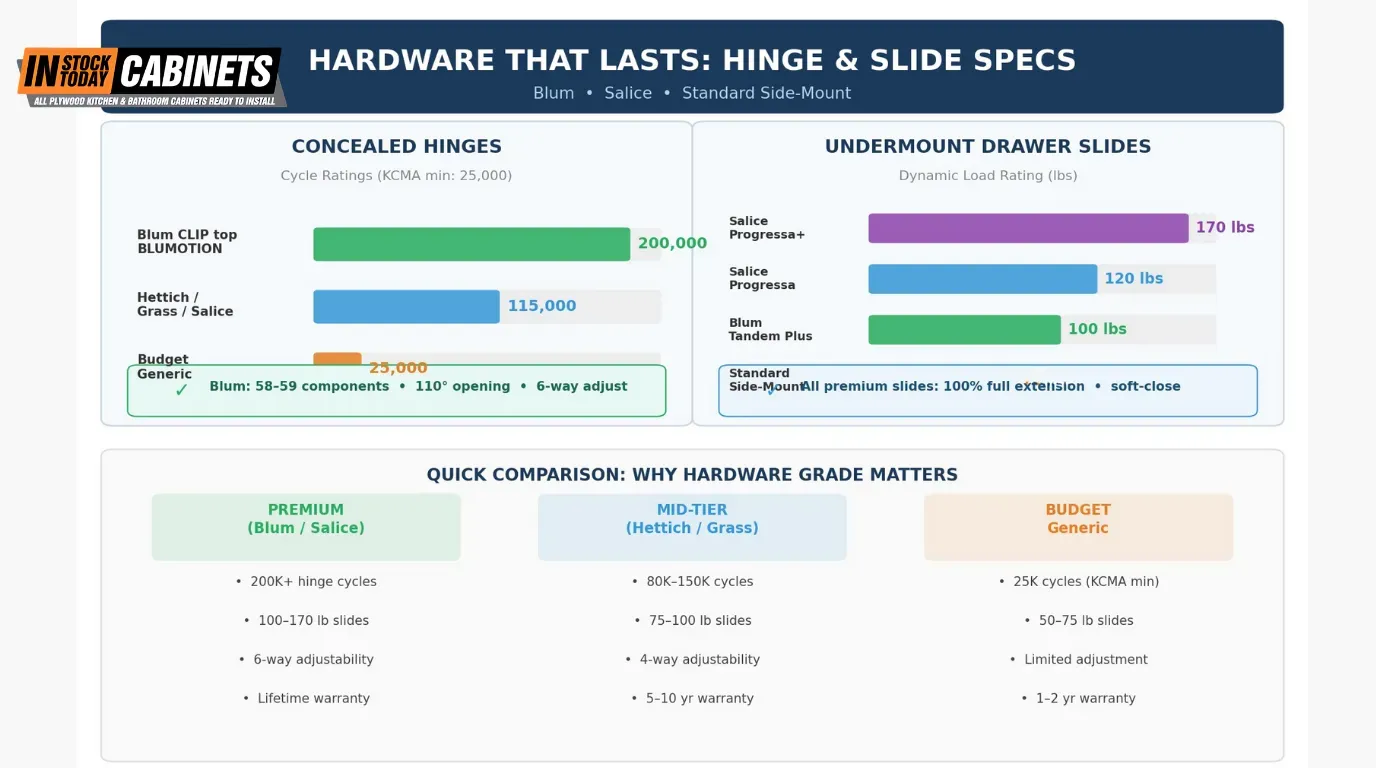
- Blum hinges last 8× the KCMA minimum. Blum’s CLIP top BLUMOTION carries a verified 200,000+ cycle rating versus the 25,000-cycle KCMA A161.1 minimum. Mid-tier options from Hettich, Grass, and Salice run 80,000–150,000 cycles at lower cost.
- Specify 100-lb minimum drawer slides for kitchens. Standard 75-lb side-mount slides can fail under loaded pots-and-pans drawers. Undermount options from Blum (Tandem Plus, 90–100 lbs) and Salice (Progressa, 120 lbs) offer full extension with integrated soft-close.
- KCMA and AWI certifications are independently verified; Q12 is not. ANSI/KCMA A161.1 and AWI Premium Grade are third-party standards. Fabuwood’s Q12™ is proprietary branding—useful as a checklist, but not a substitute for independent testing.
- CARB Phase 2 / TSCA Title VI compliance is non-negotiable. These federal and state standards limit formaldehyde in hardwood plywood to < 0.05 ppm—the toughest globally. Critical for LEED projects and health-sensitive clients.
- Hard Maple (1,450 lbf Janka) is the top pick for painted cabinets. White Oak (1,360 lbf) leads for stained work near water. Birch species vary hugely—Paper Birch rates 910 lbf, but cabinet-grade Yellow Birch hits 1,260 lbf. Always confirm which species you’re getting.
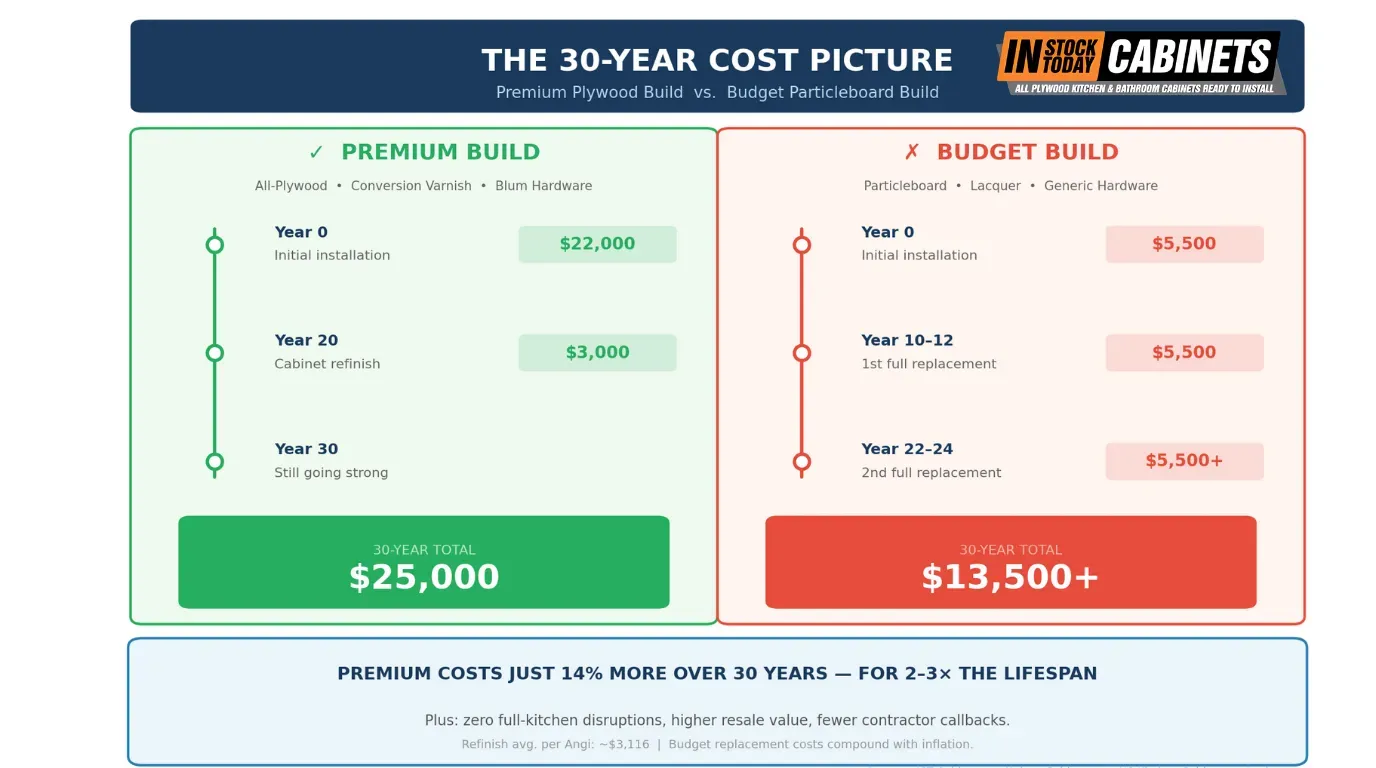
- Premium cabinets cost just 14% more over 30 years. A $22,000 all-plywood kitchen with a $3,000 refinish at year 20 totals $25,000 over three decades. Budget particleboard requiring two full replacements exceeds $13,500+. The premium option delivers 2–3× the service life.
Box Construction: What’s Holding Everything Together
The cabinet box—the carcass—is the foundation. It’s also the component manufacturers cut corners on first, because buyers rarely look inside.
Substrate Material
All-plywood construction is the professional standard for structural longevity. Plywood’s cross-grain lamination—each veneer layer alternating grain direction—creates superior dimensional stability, moisture resistance, and screw-holding power compared to particleboard or MDF. That matters most in kitchens and bathrooms, where particleboard swells irreversibly once water finds an edge.
Industry sources consistently place plywood cabinet lifespans in the 25–30 year range, versus roughly 5–15 years for particleboard depending on the environment and build quality. In flood-prone or high-humidity climates, that gap widens fast.
Substrate Performance Comparison for Kitchen Environments
| Metric | Solid Hardwood | Plywood | MDF / HDF | Particleboard |
|---|---|---|---|---|
| Durability Rating | Highest (50+ yrs) | Very High (25–30 yrs) | Moderate (10–15 yrs) | Low (5–15 yrs) |
| Moisture Resistance | Moderate | High | Poor | Very Poor |
| Screw Holding | Excellent | Very Good | Moderate | Poor |
| Load Capacity | 150+ lbs | 100–150 lbs | 75–100 lbs | 35–50 lbs |
| Paint Surface Quality | Moderate (grain shows) | Good (veneered) | Excellent (smooth) | Poor |
| Material Comparison – IST Cabinets | ||||
Panel Thickness
High-end Shaker lines use a minimum of 1/2-inch thick select veneered plywood for sides, tops, and bottoms. Frameless (European-style) cabinets—where there’s no face frame to add rigidity—need 3/4-inch sides as the minimum acceptable spec. Face-frame cabinets can get away with 1/2-inch sides, but premium builds run 3/4-inch throughout for better fastener retention and rigidity.
Back Panel: Where Corners Get Cut
The back panel is the single biggest tell. Premium construction uses a full, single-piece 1/2-inch veneered plywood back that acts as a structural diaphragm—it prevents the cabinet from racking (twisting during installation) and gives you a solid mounting surface for heavy wall-mounted units.
Budget cabinets substitute a thin 1/4-inch hardboard panel stapled to the rear edges, or a hanging rail system. Both compromise structural stability and load-bearing capacity. When sourcing, confirm that back panels sit in dado grooves on all four sides of the box. That dadoed-and-captured method creates inherent squareness during assembly and stiffens the cabinet far more than stapled alternatives.
Drawer Box Construction
Drawers take the most mechanical abuse in daily use. Open, close, slam, overload—every day, for decades. The drawer box is where quality differences become obvious the fastest.
Dovetail Joinery
Dovetail construction in 5/8-inch solid hardwood (typically birch or maple) is the professional benchmark. Those interlocking wedge-shaped pins and tails distribute tensile loads across multiple contact points, creating a mechanical bond that actually gets tighter under pulling force.
Dovetail drawers significantly outlast doweled or stapled alternatives—the durability advantage is well-documented across the trade, though the exact multiplier depends on usage patterns and the quality of the competing joint. Look for half-blind dovetails at the front (hidden when viewing the drawer face) with through-dovetails at the rear.
Mid-grade construction substitutes doweled joints with plywood sides—serviceable, but less resilient under heavy loads. Stapled butt joints with melamine or particleboard sides are the first components to fail in high-use kitchens.
Drawer Bottom Integrity
Premium construction captures a 3/8-inch plywood bottom in a dado groove on all four sides, then pins and glues it for permanence. This distributes weight across the entire perimeter. Budget construction glues or staples a 1/4-inch panel to the bottom edges—a weak point that separates under heavy cookware.
Five-Piece Shaker Door Engineering
Two stiles. Two rails. One center panel. The Shaker door is deceptively simple—and the quality of the joinery connecting those five pieces determines how well the door handles “breathing” (the expansion and contraction caused by seasonal humidity changes).
Rail-and-Stile Joinery
Mortise-and-tenon joinery remains the gold standard. A rectangular tenon projecting from the rail fits into a corresponding mortise cavity in the stile, providing massive glue surface and mechanical interlock. The joint turns two separate pieces of wood into a unified structural component.
Cope-and-stick joinery is the modern production standard. Rail ends are machined with a cope (negative profile) that interlocks with the stick (positive profile) along the stile. When precisely machined, this method provides very good performance with more glue surface area than simple butt joints.
Mitered corners are the weakest option and should be avoided for painted Shaker doors. Both pieces expand perpendicular to the grain at 45 degrees to the joint line, which causes hairline cracks in the paint—sometimes called “witness lines.” Industry professionals and woodworking forums report this happening frequently, often within the first few years. It’s a well-documented issue across all painted mitered doors.
Joinery Strength Ratings and Professional Requirements
| Joint Type | Strength | Primary Application | Professional Requirement |
|---|---|---|---|
| Dovetail | Highest | Drawer boxes, side-to-frame | Solid hardwood pins & tails |
| Mortise & Tenon | Excellent | Door frames, face frames | Deep glue penetration, mechanical interlock |
| Cope & Stick | Very Good | Standard door assembly | Precise mirror-image profile machining |
| Dowel Joint | Very Good | Face frame stiles / rails | 3/8″ spiral dowels with glue |
| Pocket Screw | Good (Fast) | Hidden frame assembly | Must be combined with glue |
| Cabinet Joinery Comparison – IST Cabinets | |||
Center Panel: The Floating Panel Principle
The center panel should never be glued into the frame. It sits in a channel with intentional gaps that let the wood swell or shrink without cracking the frame or warping the door. For painted Shaker cabinets, MDF or HDF center panels are the engineering-preferred choice—their uniform density eliminates grain telegraphing and provides isotropic (equal in all directions) dimensional stability. This is precision engineering, not cost-cutting.
Standard stile and rail widths run 2-1/4 to 3 inches. Premium Shaker doors use 2-1/2 to 3-inch widths for better proportions and structural integrity on larger door sizes. The “slim shaker” trend (3/4 to 1-1/2-inch rails) offers a modern look but trades some durability.
Finish Chemistry and Durability
The finish protects everything underneath, and finish chemistry varies wildly between quality tiers. Understanding it helps you predict long-term performance and set accurate expectations for clients.
Conversion Varnish: The Industry Standard
Catalyzed conversion varnish (CV) is the professional benchmark for factory-finished cabinetry. This post-catalyzed, chemically cured system typically contains 30–60% solids (depending on the formulation) and undergoes a cross-linking process that creates hard, dense molecular bonds resistant to heat, solvents, acids, and alkalis. CV builds a substantially thicker dry film than standard lacquer, offering better scratch and wear resistance.
Despite its hardness, CV retains enough elasticity to move with natural wood expansion, preventing the “checking” or cracking that plagues brittle coatings. It must be applied in a factory with a precise catalyst ratio and cured in a controlled booth—impractical for field application, ideal for production cabinetry.
Finish System Performance Comparison
| Test / Property | Conversion Varnish | Lacquer | Polyurethane |
|---|---|---|---|
| Alcohol (100-proof, 24h) | No effect | Softens / dissolves | No effect |
| Mustard / Vinegar | No staining | Possible staining | Minimal staining |
| Heat (120°F) | No blistering | May soften | Resistant |
| Yellowing Resistance | Excellent | Poor (yellows) | Moderate (may amber) |
| Solids Content | 30–60% | 15–25% | 45–60% |
| Cure Time (85%) | 48 hours | 24 hours | 3–4 weeks |
| Cabinet Finish Performance Comparison – IST Cabinets | |||
For painted Shaker cabinets, ask whether the manufacturer applies an oven-cured topcoat—it provides better chip resistance than air-dried alternatives. Multi-coat systems (one or two primer coats followed by two topcoats, sanded between applications) deliver optimal protection at 3–4 mils dry film thickness. White and light-colored finishes should specify “water white” formulations to prevent yellowing.
Hardware Performance Specifications
Hardware governs the daily user experience. It also governs your callback rate. Premium brands like Blum, Salice, and Grass have established benchmarks that far exceed industry minimums, and specifying them upfront saves you warranty headaches later.
Hinges: Cycle Ratings and Adjustability
Blum’s concealed hinges carry 200,000+ cycle ratings—verified on blum.com—which is eight times the KCMA A161.1 minimum of 25,000 cycles. That translates to 25+ years of heavy daily use. The CLIP top BLUMOTION hinge, Blum’s flagship, contains roughly 58–59 precision components (their smaller COMPACT BLUMOTION runs about 32). Mid-tier alternatives from Hettich, Grass, and Salice provide 80,000–150,000 cycle ratings at 20–40% lower cost, adequate for most residential applications.
Six-way adjustability is non-negotiable for professional installations: side-to-side, up-and-down, and in-and-out. It lets you achieve perfect door alignment even when boxes aren’t perfectly square or walls aren’t plumb. Also specify a minimum 110-degree opening angle and clip-on design for tool-free door removal.
Drawer Slides: Load Capacity and Extension
Modern high-end Shaker cabinetry has moved toward undermount concealed slides over side-mount ball-bearing slides. Undermounts provide a cleaner look, maximize interior drawer width, and integrate soft-close dampening. For kitchen applications, specify a minimum 100-pound dynamic load rating—standard 75-pound slides can fail under loaded pots-and-pans drawers.
Drawer Slide Specification Comparison
| Specification | Blum Tandem Plus | Salice Progressa | Standard Side-Mount |
|---|---|---|---|
| Mounting | Concealed undermount | Concealed undermount | Side-mount (visible) |
| Dynamic Load | 90–100 lbs | 120 lbs | 75 lbs |
| Adjustment | 4-way / 6-way | 6-way (tilt / height / side) | Limited |
| Soft-Close | Adaptive Blumotion | Smove integrated | Optional add-on |
| Extension | 100% full extension | 100% full extension | 75–80% typical |
| Drawer Slide System Comparison – IST Cabinets | |||
Calculate required slide capacity by adding the weight of stored items plus the drawer box itself, then add a 25% safety margin. A drawer holding 40 lbs of dishes in a 15 lb box has a static load of 55 lbs; with the margin, you need at least a 69 lb rating. Round up to 75 lb or 100 lb slides.
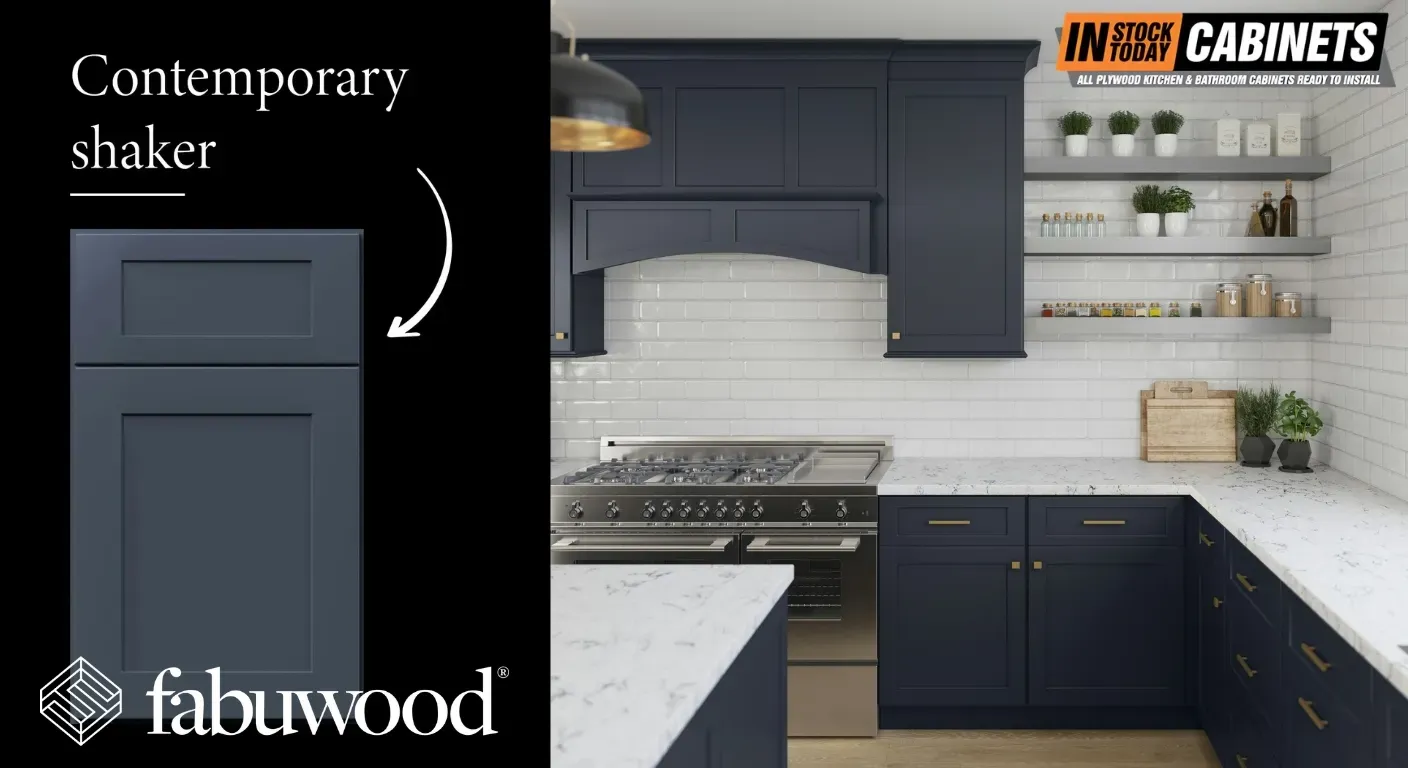
Fabuwood’s Q12 Quality Framework
Important context: The Q12 system is Fabuwood’s proprietary quality branding—not an independent industry standard. However, the individual criteria it covers are sound construction practices, and Fabuwood also holds genuinely independent certifications (KCMA A161.1 and AWI Premium Grade). We include Q12 here because it provides a useful checklist structure, but readers should understand it’s a manufacturer’s self-assessment framework, not third-party validation.
Pillars 1–4: Material Integrity and Joinery
- Q1 — Quality Sourced Lumber: Top-grade hardwoods free of irregularities, knots, or mineral streaks that compromise structural integrity or finish quality.
- Q2 — Pro Touch Finish: Factory-applied, multi-coat finishing with oven-cured topcoats for superior chip resistance and long-term durability.
- Q3 — Dovetail Construction: Plywood side panels interlock with solid wood face frames through corresponding dovetail grooves, creating mechanical bonds superior to stapled butt joints.
- Q4 — Anti-Warp Structures: Plywood reinforcement beams (21″ x 1/2″) fastened into grooves at the top of the cabinet via dovetail technique, keeping sides straight under heavy countertop loads.
Pillars 5–8: Structural Cohesion and Interior Finishing
- Q5 — Wooden Corner Blocks: Wood-to-wood corner blocks (not plastic gussets) maintain a unified build that resists cracking from dissimilar material expansion.
- Q6 — Solid Back Build: Full 1/2″ veneered plywood backs, both stapled and screwed, preventing racking and providing superior wall-mounting support.
- Q7 — Flush Fit Frames: Inner frames designed with flat-surface interior planes, creating a flush interior without protruding lips for practical use and ease of cleaning.
- Q8 — Finished Interior: UV-cured natural wood veneers on interior surfaces—resistant to peeling, bubbling, and chipping—rather than applied linings or adhesive-backed paper.
Pillars 9–12: Mechanical Precision and Quality Control
- Q9 — Soft-Closing Action: Blum Compact Clip Hinges with integrated Blumotion dampening for whisper-quiet door operation.
- Q10 — Fluid Full-Extension: Blum Tandem Plus runners with soft-close mechanisms providing 100% drawer extension for complete content access.
- Q11 — EZ Level Drawer Fronts: Circular disc adjustment system allowing 3/8″ movement in any direction, enabling perfectly consistent reveals between drawer faces.
- Q12 — Sealed Signature: Final quality assurance stamp issued after review at every manufacturing stage, backed by Limited Lifetime Warranty coverage.
Industry Certifications: Objective Verification
Third-party certifications move quality assessment from manufacturer claims to independently verified data. These are the certifications that carry real weight for trade professionals.
KCMA A161.1 Certification
The ANSI/KCMA A161.1 standard is the only nationally recognized performance standard for kitchen and bath cabinets. Certification requires passing rigorous third-party testing:
- Shelf load: must support 15 lbs per square foot for seven consecutive days without excessive deflection.
- Wall cabinet load: must withstand 600 lbs of gradually applied load without failure.
- Base cabinet front joint: 200–250 lbs applied against inside stiles (the specific figure depends on whether the cabinet has drawer rails).
- Door and drawer cycling: 25,000 open/close cycles under load plus impact testing.
- Finish durability: 24-hour exposure to vinegar, citrus, ketchup, coffee, olive oil, and 100-proof alcohol, plus heat resistance at 120°F and 70% humidity for 24 hours.
AWI Premium Grade Certification
The Architectural Woodwork Institute’s Premium Grade is the highest of three aesthetic and structural grades (Economy, Custom, Premium). Testing includes weight capacity validation across shelving and structural components using per-square-foot duty levels. Few semi-custom manufacturers achieve Premium grade—Fabuwood’s Allure line earned it in 2023, which is a meaningful differentiator.
CARB Phase 2 and TSCA Title VI Compliance
These environmental certifications limit formaldehyde emissions from composite wood panels to less than 0.05 ppm for hardwood plywood—the toughest production standard globally. TSCA Title VI effectively nationalized California’s CARB Phase 2 requirements. All materials should come from certified suppliers, with products clearly labeled demonstrating compliance. Increasingly important for clients pursuing LEED certification or with health sensitivities.
Material Durability: The Janka Hardness Factor
The Janka hardness scale measures how much force (in lbf) it takes to embed a 0.444-inch steel ball halfway into a wood surface. For Shaker cabinets serving active kitchens, hardness directly correlates with long-term appearance retention.
For painted applications, Hard Maple (1,450 lbf) is the preferred species—its fine, closed grain creates glass-smooth painted surfaces with minimal grain telegraphing and superior dent resistance. For stained applications, White Oak (1,360 lbf) offers natural water resistance through cellular structures called tyloses, making it ideal for base cabinets near sinks. Cherry (950 lbf) delivers rich tones that deepen naturally with UV exposure, but requires client education about that darkening.
Birch provides the best budget option for painted applications due to its fine grain and warp resistance. A note on species: Paper Birch rates 910 lbf, but the Yellow Birch commonly found in cabinet-grade plywood rates a much harder 1,260 lbf. Confirm which species your supplier is actually using—the difference in dent resistance is significant.
Request material samples before production, and confirm they represent actual production stock rather than showroom examples that may differ in quality.
Product Tier Stratification
Understanding how quality metrics shift between product tiers lets you match the right grade to each project’s requirements and budget.
Cabinet Product Tier Comparison
| Feature | Premium (Allure) | Mid-Tier (Quest) | Value (Hallmark) |
|---|---|---|---|
| Center Panel | 3/8″–5/8″ MDF | 5mm–1/2″ MDF | 1/2″ MDF |
| Drawer Extension | 100% full extension | 80% extension | Full extension |
| Hinges | Blum 110° soft-close | Blum soft-close | Blum 110° soft-close |
| Interior Finish | Natural finished veneer | Natural finished veneer | Natural finished veneer |
| Cabinet Box | 1/2″ plywood, full back | 1/2″ plywood, full back | 1/2″ plywood, full back |
| Drawer Box | 5/8″ solid wood dovetail | 5/8″ solid wood dovetail | 5/8″ solid wood dovetail |
| Cabinet Line Feature Comparison – IST Cabinets | |||
A telling sign of a quality-focused manufacturer: essential construction features—all-plywood boxes, dovetail drawers, soft-close hardware, full plywood backs—come standard across all tiers, not as costly upgrades. Even value-tier lines should prioritize structural essentials. “Value” doesn’t have to mean particleboard.
Warranty as a Quality Proxy
A manufacturer’s warranty tells you how much they trust their own work. Look past the headline.
Strong warranty signals: Limited Lifetime coverage for the original purchaser covering defects in material and workmanship under normal residential use. Unified policies that cover structural components, hardware, and finish under a single framework with clearly defined claim processes.
Red flags: Hardware warranted separately for just one year. Coverage limited to the original purchaser with no transferability. “At our discretion” replacement language without clear standards. Exclusion of all labor costs for warranty work.
Certain characteristics are universally excluded across all manufacturers and should be set as client expectations upfront: stress lines at joints on painted doors, wood warping up to 1/4 inch, panel movement during seasonal humidity changes, and paint micro-cracking at joints over time. These are properties of wood as a natural material—not defects—and educating your client on this point prevents warranty disputes.
Supply Chain and Lead Time
For contractors and builders, project timelines are often the hardest metric to nail down. The cabinet industry’s supply chain varies enormously.
Stock and ready-to-assemble programs from well-inventoried dealers can ship in 5–7 business days. Semi-custom cabinets typically require 3–8 weeks. Fully custom work runs 8–14 weeks. The name “In Stock Today” reflects IST’s model of maintaining warehouse inventory of Fabuwood lines, which enables the shorter end of those timelines—but that’s specific to their business model, not a general industry norm.
Fast lead times should come from manufacturing automation and volume efficiency—not rushed craftsmanship. Verify that rapid production still adheres to third-party standards (AWI, KCMA). A manufacturer that delivers quickly and maintains certifications demonstrates genuine operational capability.
Long-Term Return on Investment
The upfront cost of all-plywood Shaker cabinets with conversion varnish and premium hardware is higher. The 30-year cost picture flips that calculation.
Cost-to-Value Comparison: 30-Year Lifecycle
| Factor | Premium Build | Budget Build | Implication |
|---|---|---|---|
| Replacement Cycle | 20–30+ years | 5–15 years | Budget builds may cost 2–3x over 30 years |
| Resale Impact | High (listed as feature) | Low (budget solution) | Premium materials drive higher sale prices |
| Moisture Failure Risk | Low (plywood / CV) | High (particleboard) | Kitchen leaks can destroy budget boxes |
| Hardware Warranty | Lifetime | 1–2 years | Premium hardware reduces repair labor |
| Long-Term Value Comparison – IST Cabinets | |||
A premium kitchen cabinet installation running approximately $22,000 initially, with a $3,000 refinish around year 20 (consistent with Angi’s national average of ~$3,116), totals $25,000 over three decades. Budget cabinets that need full replacement every 10–15 years can easily reach $13,500+ cumulative. The premium option delivers two to three times the service life while maintaining higher resale value throughout.
The Professional’s Quality Assessment Checklist
When evaluating Shaker cabinets for your next project, verify these specifications:
Box Construction
- All-plywood box with minimum 1/2″ sides (3/4″ for frameless)
- Full 1/2″ plywood back panel set into dado grooves (not stapled 1/4″ hardboard)
- Solid wood corner blocks or anti-warp reinforcement beams
- Flush-fit interior frames with finished interior surfaces
Drawer Boxes
- Full dovetail joints in 5/8″ solid hardwood (birch or maple)
- 3/8″ plywood bottom captured in dado grooves on all four sides
- Undermount full-extension slides with 100 lb minimum load rating
- Integrated soft-close mechanism (not bolt-on dampeners)
Door Construction
- Mortise-and-tenon or cope-and-stick joinery (avoid mitered corners for painted doors)
- 2-1/2″ or wider rail/stile widths for standard Shaker profiles
- MDF/HDF center panels for painted finishes; wood veneer for stained
- Floating center panel (not glued) to accommodate wood movement
Finish and Hardware
- Catalyzed conversion varnish or 2K polyurethane (not pre-catalyzed lacquer)
- Multi-coat system with sanding between applications
- KCMA-certified chemical and heat resistance
- 200,000+ cycle hinges with six-way adjustment (Blum, Grass, or equivalent)
Certifications and Compliance
- KCMA A161.1 certification (structural and finish performance)
- AWI Premium Grade (highest architectural woodwork standard)
- CARB Phase 2 / TSCA Title VI compliance (formaldehyde emission limits)
- Limited Lifetime Warranty covering materials and workmanship
Frequently Asked Questions for Shaker Cabinet Quality
Why does IST Cabinets recommend all-plywood construction over particleboard or MDF?
Plywood’s cross-grain lamination gives it far superior moisture resistance, screw-holding power, and dimensional stability compared to particleboard or MDF. In kitchen and bathroom environments—where humidity and the occasional leak are inevitable—particleboard swells irreversibly once water hits an exposed edge. Industry sources like Nelson Cabinetry and Blue Ridge Cabinet Connection consistently place plywood cabinet lifespans at 25–30 years, compared to 5–15 years for particleboard depending on environment and build quality. That’s not a marginal improvement. It’s the difference between cabinets that survive a dishwasher leak and cabinets that don’t.
What is dovetail joinery, and why does it matter for drawer boxes?
Dovetail joints are interlocking wedge-shaped cuts—pins on one side, tails on the other—that create a mechanical bond in 5/8-inch solid hardwood (typically birch or maple). The geometry distributes tensile loads across multiple contact points, so the joint actually gets tighter when you pull the drawer. Keystone Wood Specialties and woodworking industry sources consistently rank dovetails as the strongest drawer joint available. Budget drawers use stapled butt joints with melamine or particleboard sides—those are the first components to fail in high-use kitchens. All three Fabuwood tiers (Allure, Quest, and Hallmark) carried by IST Cabinets use 5/8″ solid wood dovetail drawer boxes as a standard feature, not an upgrade.
What’s the difference between mortise-and-tenon and cope-and-stick door joinery?
Mortise-and-tenon is the traditional gold standard: a rectangular tenon on the rail fits into a cavity (mortise) in the stile, creating a massive glue surface and mechanical interlock. Cope-and-stick is the modern production method—rail ends are machined with a negative profile (cope) that interlocks with the positive profile (stick) on the stile. Both outperform butt joints by a wide margin. The one to avoid on painted Shaker doors is mitered corners—both pieces expand at 45 degrees to the joint line, which causes hairline paint cracks (called “witness lines”) that are well-documented across woodworking forums like Houzz and WoodWeb.
What is conversion varnish, and why is it better than lacquer?
Catalyzed conversion varnish (CV) is a chemically cross-linked finish system containing 30–60% solids (depending on formulation—Mohawk’s Ultra Flo runs around 33%, while Sherwin-Williams KemVar Plus reaches ~60%). That cross-linking creates hard, dense molecular bonds resistant to heat, solvents, alcohol, and household acids. Standard lacquer only runs 15–25% solids and will soften or dissolve under 100-proof alcohol within 24 hours. CV passes every KCMA A161.1 finish test—including 24-hour exposure to vinegar, citrus, ketchup, coffee, olive oil, and alcohol. Cabinet Door Store and CabinetDoors.com both provide detailed comparisons confirming CV’s superiority for factory-finished cabinetry.
How do Blum hinges compare to Salice, Hettich, and Grass?
Blum’s CLIP top BLUMOTION hinges carry a verified 200,000+ cycle rating (per blum.com)—eight times the KCMA minimum of 25,000 cycles. Each hinge contains roughly 58–59 precision components. That’s the premium tier. Hettich (a German manufacturer with over 8,600 employees), Grass (part of the Würth Group, manufacturing in North Carolina), and Salice (Italian) offer mid-tier alternatives rated at 80,000–150,000 cycles—adequate for most residential kitchens at 20–40% lower cost. For drawer slides, Blum’s Tandem Plus undermount runs 90–100 lbs dynamic load, while Salice’s Progressa is rated at a flat 120 lbs (the Progressa+ handles 170 lbs). All of Fabuwood’s lines use Blum hardware as standard—including their value-tier Hallmark.
What does KCMA A161.1 certification actually test?
The ANSI/KCMA A161.1 standard is the only nationally recognized performance certification for kitchen and bath cabinets. It’s administered by the Kitchen Cabinet Manufacturers Association (KCMA) through independent third-party labs. Testing includes: shelf loads of 15 lbs per square foot sustained for seven days, wall cabinet loads up to 600 lbs applied gradually, base cabinet front joint tests at 200–250 lbs (depending on configuration), 25,000 open/close hinge cycles, and 24-hour chemical exposure to household substances including 100-proof alcohol, vinegar, and citrus at 120°F and 70% humidity. Republic Elite has published a useful guide on why KCMA certification matters for multifamily projects. Fabuwood holds KCMA certification, which IST Cabinets can verify for any product line you’re evaluating.
What is AWI Premium Grade, and why is it hard to get?
The Architectural Woodwork Institute (AWI) defines three quality grades: Economy, Custom, and Premium. Premium is the highest—it sets the tightest tolerances on joints, frames, doors, shelves, and structural components, with weight capacity validation using per-square-foot duty levels across multiple shelf and structural configurations. According to Woodworking Network, Fabuwood earned AWI Premium Grade certification for their Allure line in 2023. Few semi-custom manufacturers achieve this grade, which makes it a genuine differentiator rather than a marketing checkbox. AWI Premium Grade is independently verified—unlike proprietary frameworks.
Is Fabuwood’s Q12 system an industry standard?
No. Q12 is Fabuwood’s proprietary quality branding—trademarked as Q12™ on their q12cabinets.com website. It is not recognized by KCMA, AWI, ANSI, or any other third-party body. That said, the twelve individual criteria it covers—dovetail construction, plywood backs, Blum hardware, UV-cured interior veneers, solid wood corner blocks, and so on—are individually sound construction practices. Think of Q12 as Fabuwood’s internal checklist. Their genuinely independent certifications are KCMA A161.1 and AWI Premium Grade. IST Cabinets carries all Q12-certified Fabuwood lines but encourages clients to weigh Q12 alongside those third-party certifications.
What do CARB Phase 2 and TSCA Title VI compliance mean for my projects?
Both regulate formaldehyde emissions from composite wood panels. California’s CARB Phase 2 standard limits hardwood plywood emissions to less than 0.05 ppm—the toughest production standard globally. The federal TSCA Title VI (signed into law under the Toxic Substances Control Act) effectively nationalized that same California standard across all 50 states. Compliance means every composite panel in the cabinet—plywood, MDF, particleboard—has been tested and certified for low formaldehyde off-gassing. This matters increasingly for clients pursuing LEED certification, healthcare facilities, schools, or anyone with chemical sensitivities. All Fabuwood product lines available through IST Cabinets are CARB Phase 2 and TSCA Title VI compliant.
Which wood species works best for painted vs. stained Shaker cabinets?
For painted applications, Hard Maple (Janka rating: 1,450 lbf) is the professional’s first choice—its fine, closed grain produces glass-smooth painted surfaces with minimal grain telegraphing. For stained work, White Oak (1,360 lbf) offers natural water resistance through cellular structures called tyloses, making it ideal near sinks. Cherry (950 lbf) darkens beautifully with UV exposure but requires client education about that color shift. Birch is the budget pick for painted work, but verify which species: Paper Birch rates 910 lbf, while the Yellow Birch commonly found in cabinet-grade plywood rates a significantly harder 1,260 lbf. Ask your supplier to confirm which one you’re actually getting.
How fast can IST Cabinets deliver a full kitchen order?
IST Cabinets maintains warehouse inventory of Fabuwood product lines—that’s the “In Stock Today” in their name—which enables turnaround of 5–7 business days for full kitchen orders and 3–4 business days for vanities. For context, industry lead times vary widely: stock and ready-to-assemble programs ship in under a week, semi-custom cabinets typically run 3–8 weeks, and fully custom work takes 8–14 weeks. IST’s speed comes from their inventory model, not from cutting manufacturing corners—their Fabuwood lines still carry KCMA and AWI certifications. IST serves dealers, contractors, builders, and designers from showrooms in Alexandria VA, Fairfax VA, Columbia MD, Houston TX, Roselle IL, and Bear DE.
Do premium cabinets actually pay for themselves over time?
The math favors premium construction over a 30-year horizon. A well-built all-plywood kitchen with conversion varnish and Blum hardware running approximately $22,000 initially, plus a $3,000 refinish around year 20 (Angi’s national average for cabinet refinishing is ~$3,116), totals about $25,000 over three decades. Budget particleboard cabinets that need full replacement every 10–15 years can accumulate $13,500 or more in total spend—and you’re living through two full kitchen disruptions instead of one refinish. The premium option delivers two to three times the service life, better moisture resilience, and higher resale value throughout. For contractors and dealers, specifying quality upfront also means fewer callbacks and warranty claims—which protects your margin and your reputation.
What warranty red flags should I watch for when evaluating cabinet brands?
Strong warranties offer Limited Lifetime coverage for the original purchaser under a single unified policy covering structural components, hardware, and finish. Red flags include: hardware warranted separately for just one year (suggesting the manufacturer knows their hinges won’t last), coverage limited only to the original purchaser with no transferability, vague “at our discretion” replacement language, and blanket exclusion of labor costs. Also educate your clients upfront that stress lines at painted door joints, wood warping up to 1/4 inch, seasonal panel movement, and paint micro-cracking at joints are inherent properties of wood—every manufacturer excludes these, because they’re not defects. Setting that expectation early prevents warranty disputes later.
How do I contact IST Cabinets for samples or wholesale pricing?
IST Cabinets offers free design consultations and can provide material samples and specification sheets for any Fabuwood product line. Reach them at info@istcabinets.com or (703) 259-9030. Their website at istcabinets.com includes project galleries and product-line details. Walk-in showrooms are located in Alexandria VA, Fairfax VA, Columbia MD, Houston TX, Roselle IL, and Bear DE—all serving trade professionals with wholesale pricing on Fabuwood’s Allure, Quest, and Hallmark lines.
About IST Cabinets
In Stock Today Cabinets (IST Cabinets) is an authorized dealer specializing in premium and semi-custom cabinetry for dealers, contractors, builders, and interior designers across Virginia, Maryland, Delaware, Texas, and Illinois. As a source for Fabuwood’s AWI Premium Grade certified product lines, IST Cabinets combines technical expertise, competitive wholesale pricing, and inventory-based fulfillment with the philosophy: No Wait. No Hassle. Just Beautiful Cabinets.
🌐 istcabinets.com 📧 info@istcabinets.com 📞 (703) 259-9030
Showrooms: Alexandria, VA • Fairfax, VA • Columbia, MD • Houston, TX • Bear, DE