
Fabuwood cabinets cost roughly half what Lowe’s Home Improvement quoted one homeowner for the same kitchen layout — $12,000 versus $30,000. That price gap raises an obvious question: what are you giving up?
Less than you’d think. Below is an honest look at what Fabuwood actually delivers, where it falls short, and whether it belongs in your next kitchen remodel.
Is Fabuwood a Good Cabinet?
Key specs, pricing, and how Fabuwood stacks up against Forevermark, Waypoint, Kith, and IKEA — at a glance.
| Feature | Fabuwood | Forevermark | Waypoint | Kith | IKEA |
|---|---|---|---|---|---|
| Box material | ✓ All plywood | ✓ Plywood | △ Upgrade | △ Upgrade | ✕ Particleboard |
| Back panel | ✓ ½″ plywood | △ Thinner | ✓ ½″ plywood | △ Furn. board | ✕ Fiberboard |
| Drawer joinery | ✓ Dovetail | ✓ Dovetail | ✓ Dovetail | ✓ Dovetail | ✕ Dowel/staple |
| Hardware | ✓ Blum | △ Varies | ✓ Blum avail. | ✓ Blum | ✕ Generic |
| Lead time | ~5 days | ~1–2 wks | 2–4 wks | ~3 wks | In-store |
| Price / lin. ft | $300–$500 | $250–$400 | $400–$650 | $260–$500 | $150–$300 |
| Warranty | Ltd. Lifetime | Ltd. Lifetime | Ltd. Lifetime | Lifetime | 25 years |
| Made in USA | △ Assembled | △ Assembled | ✓ Yes | ✓ Yes | ✕ No |
- ✓All-plywood + dovetail standard
- ✓Blum soft-close on every cabinet
- ✓25–50% below semi-custom brands
- ✓5-day lead time
- ✓100+ finishes in Allure line
- ✓KCMA + Q12 certified
- ✕White paint can chip over time
- ✕Semi-custom only, no full custom
- ✕No inset door option
- ✕Delivery damage reported
- ✕Warranty needs part returns
- ✕Limited dealer network
Who Is Fabuwood?
Fabuwood launched in 2009 as an import cabinet brand. Today, the kitchen cabinet manufacturer operates out of a one-million-square-foot facility in Newark, New Jersey, where cabinets are assembled, modified, and shipped. Components are globally sourced, but final assembly happens stateside.
The company has grown into a $400+ million operation and now offers semi-custom modifications on top of its stock lines. Six main collections — Allure, Illume, Value Premium, Quest, Valencia, and Luna — cover everything from Shaker-style door profiles (inspired by the minimalist Shaker furniture tradition) to sleek frameless European-style cabinets.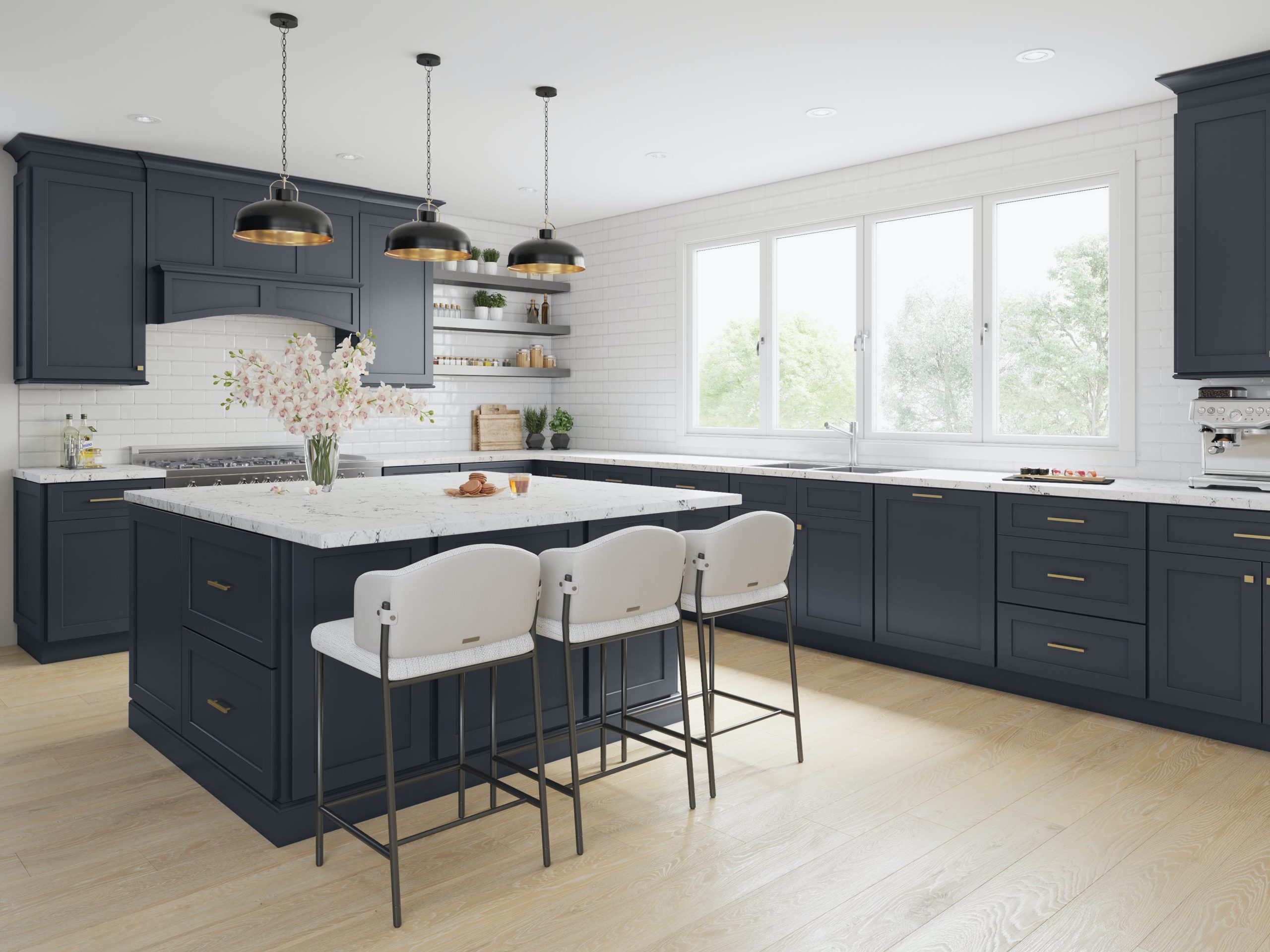
Construction: What’s Inside the Box
This is where Fabuwood earns its reputation. The Allure series — their best seller — ships with all-plywood cabinet boxes, solid ½-inch plywood backs (one piece, not stapled sections), and dovetail drawer construction using ⅝-inch solid birch hardwood.
That matters because cheaper brands at this price point often substitute particleboard for plywood and use stapled drawer boxes instead of dovetail joints. Dovetail joinery — a centuries-old woodworking technique where interlocking wedge-shaped cuts lock two boards together — supports 100+ pounds through 100,000+ opening cycles. Stapled alternatives handle about half that load for a quarter of the lifespan.
Every Fabuwood cabinet includes Blum Compact Clip hinges and Tandem plus Blumotion full-extension soft-close drawer runners. Blum (officially Julius Blum GmbH, an Austrian hardware manufacturer) is rated for 200,000 cycles — roughly four times the lifespan of economy hinges. These are standard inclusions, not paid upgrades.
Fabuwood also holds KCMA, CARB 2, and TSCA VI certifications. CARB 2 compliance means the cabinets meet California Air Resources Board Phase 2 standards for formaldehyde emissions — a health consideration for indoor air quality. KCMA testing validates that cabinets survive 25,000 door and drawer cycles and 600 pounds of wall-cabinet loading. Their internal Q12 quality system adds twelve construction benchmarks on top of that, covering everything from Grade-A lumber sourcing to anti-warp engineering.
Style and Finish Options
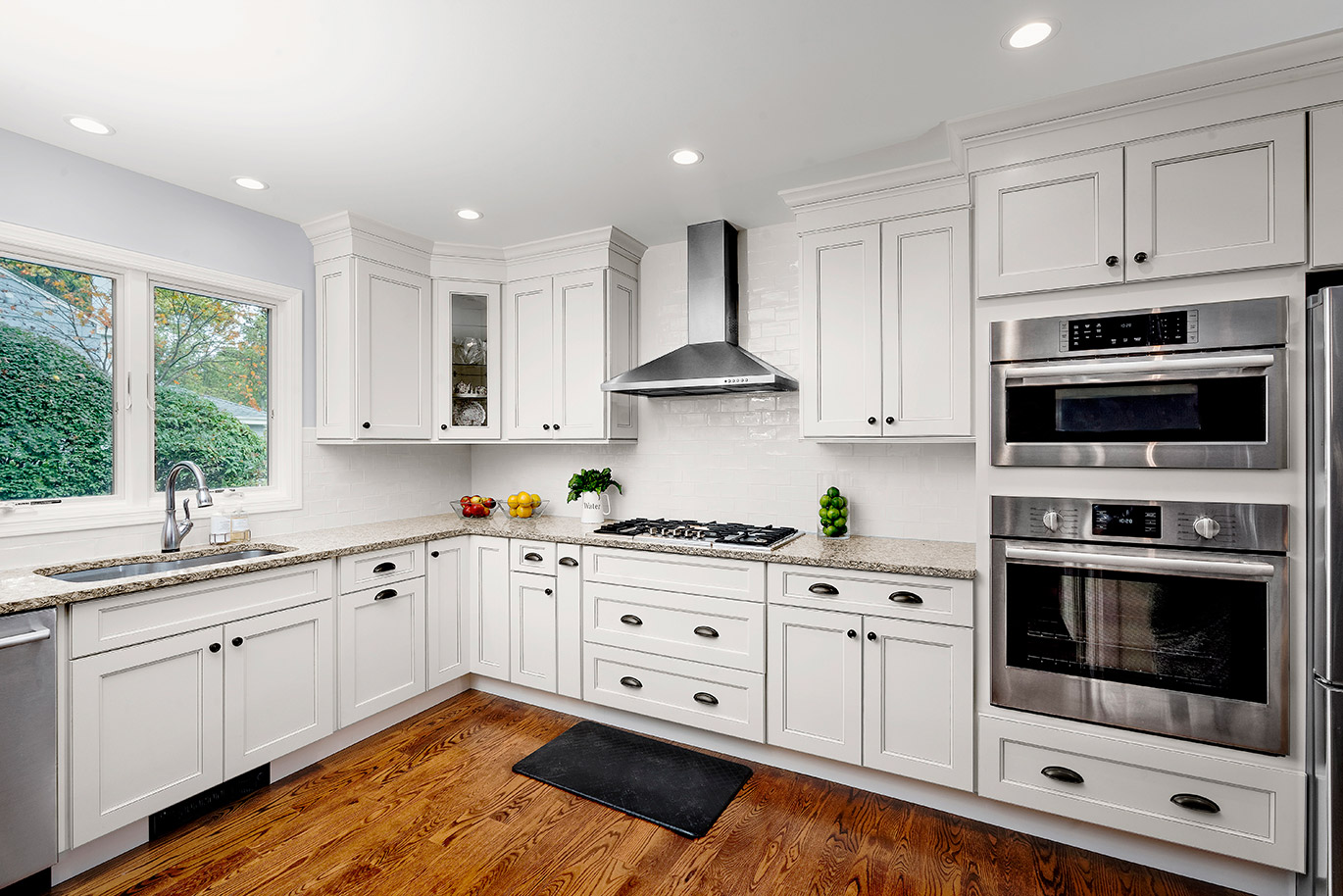
The Allure series alone offers six door styles and 100+ finishes — painted, stained, and glazed options included. Doors use solid maple stiles and rails with a medium-density fibreboard (MDF) center panel. MDF works better than solid wood for painted cabinet doors because it creates an ultra-smooth paint surface and resists the expansion and contraction that causes solid wood panels to crack under paint over time. The Galaxy Frost (a white Shaker-style door) and Galaxy Horizon dominate sales, especially in the Northeast.
The Illume series targets a different buyer: frameless European-style construction with Threespine® snap-together assembly, glossy and matte lacquer finishes, and a clean minimalist look. Illume delivers about 15% more interior storage than framed cabinets of the same exterior size.
Both lines offer practical upgrades like pull-out spice racks, microwave base cabinets, trash pullouts, apron-front sink bases, floating shelves, and wood range hoods.
One limitation: Fabuwood doesn’t offer inset doors. Every cabinet uses full-overlay construction. If inset styling matters to you, you’ll need to look elsewhere — though full overlay actually gives you more usable interior space.
Customization is semi-custom, not full-custom. Cabinet sizes are mostly standard. You can modify dimensions within certain parameters, but this isn’t a build-from-scratch shop. Fabuwood ships assembled — not as ready-to-assemble (RTA) flat-pack kits — so you avoid the assembly hassle that comes with budget RTA cabinet brands.
Pricing: What to Expect
Fabuwood sits 25–35% below comparable American-made semi-custom lines. Allure kitchens typically land between $300 and $500 per linear foot. A full kitchen often falls in the $6,000–$15,000 range depending on size, configuration, and accessories.
That’s significantly less than brands like Wellborn, Medallion, or Yorktowne — which frequently run $8,000–$20,000+ for similar kitchen renovation builds. The cost savings come from efficient production (fewer door styles and finishes than full-custom brands) and globally sourced materials assembled domestically.
Tip: get quotes from multiple Fabuwood dealers. Pricing varies by distributor, and negotiating across dealers can save you another 10–15%.
Real Homeowner Feedback
The positive reviews follow a pattern. Owners praise build quality, finish appearance, and the soft-close hardware. One homeowner on The Pink Dream blog reported her Galaxy Frost cabinets still looked great after seven years of daily use — the only cabinet showing wear was the pull-out trash unit, which gets the most abuse.
The complaints also follow a pattern. Painted finishes — white painted finishes specifically — sometimes chip, bubble, or peel within one to three years. This appears most common with cabinets produced during the 2020–2021 period. Fabuwood’s warranty language classifies paint cracking at joints and stress lines as expected behavior, not defects. That’s an industry-wide issue with painted wood cabinetry, but it still frustrates buyers who expect a flawless surface indefinitely.
Delivery damage is the other recurring issue. One dealer estimated 98% of damage claims involve shipping or arrival damage rather than manufacturing defects. Fabuwood requires photos for warranty claims and occasionally asks for damaged parts to be returned before sending replacements — a process that can slow things down compared to other brands.
Warranty Coverage
As of October 2024, Fabuwood upgraded to a Limited Lifetime Warranty on the Allure, Illume, Value Premium, and Quest series. Cabinets purchased before that date fall under the previous five-year warranty.
The warranty covers defects in materials and workmanship for as long as the original purchaser owns the home. It’s non-transferable to new owners. Claims go through your original dealer, and approval typically takes three to five business days.
Know what’s excluded: wear and tear, improper installation, exposure to extreme conditions, and house settling. Blum hardware carries its own separate manufacturer warranty.
Fabuwood vs. the Competition
Fabuwood vs. Forevermark
Forevermark Cabinetry is one of the most common alternatives to Fabuwood — you’ll find it at distributors across the Mid-Atlantic. Both brands occupy the entry-to-mid price tier and both use solid wood components with plywood construction.
The differences: Fabuwood’s Allure series ships with full ½-inch plywood backs as standard. Forevermark Cabinetry uses plywood construction but with thinner backs in some lines. Fabuwood includes Blum hardware across all collections. Forevermark uses soft-close hardware, though the specific brand varies by series. Fabuwood’s lead time is roughly five business days for stocked items.
Fabuwood generally prices 10–15% higher than Forevermark. That premium buys you thicker plywood backs, branded Blum hardware, and the Q12 quality certification. If budget is the primary concern and you’re comfortable with slightly lighter construction, Forevermark is a solid alternative.
Fabuwood vs. Waypoint
Waypoint is an American-made brand positioned slightly above Fabuwood in some markets. Waypoint offers more wood species options — including cherry and oak — and more finish customization than Fabuwood.
On construction, both brands deliver plywood boxes, dovetail drawers, and soft-close hardware. Waypoint charges extra for some plywood upgrades that come standard with Fabuwood. When both are spec’d equally with full plywood construction, Fabuwood typically costs 25–35% less.
Waypoint’s advantage: broader customization and domestic manufacturing.
Fabuwood’s advantage: lower price with comparable base construction and faster delivery.
Fabuwood vs. Wolf Classic
Wolf Home Products is another popular line. Wolf Classic sits at a similar price point to Fabuwood but with some construction differences. Wolf uses ½-inch plywood backs (matching Fabuwood) and soft-close hardware as standard.
The finish and door style selection is narrower with Wolf, though the brand has expanded options recently. Industry reviewers note that Fabuwood and Wolf are close in construction quality, with Fabuwood offering more style variety and Wolf offering fully American-made production.
Fabuwood vs. IKEA
This comparison comes up constantly, and it’s not close. IKEA uses particleboard boxes with foil-wrapped fronts. Fabuwood uses all-plywood boxes with solid wood face frames and dovetail joinery. IKEA cabinets can work for a rental or short-term kitchen, but they don’t hold up to the same level of daily use over five to ten years. One dealer noted bluntly that IKEA cabinets may need replacing within a few years — Fabuwood won’t.
Fabuwood vs. Kith Kitchens
Kith is an American-made brand out of Haleyville, Alabama. Their KithOne series sits closest to Fabuwood in price — starting around $260 per linear foot — and shares some impressive spec overlap: plywood construction, dovetail drawer boxes, Blum soft-close hardware, and KCMA certification.
Where Kith pulls ahead: finish variety. Kith offers hundreds of paint and stain options, including glazed, brushed, vintage, and heirloom treatments. They’ll even custom-match any Sherwin-Williams color. Fabuwood’s Allure line has 100+ finishes, which is generous for semi-custom, but Kith’s palette is deeper. Kith also offers both framed and frameless construction within the same product line and at the same price — Fabuwood separates these into Allure (framed) and Illume (frameless).
Where Fabuwood pulls ahead: lead time and price consistency. Fabuwood ships stocked configurations in about five business days. Kith’s standard lead time runs around three weeks since every cabinet is built to order. Fabuwood’s thicker ½-inch one-piece plywood backs also edge out KithOne’s standard furniture-board boxes (plywood is available as a “Deluxe” upgrade with Kith, while it’s standard with Fabuwood).
Both brands carry lifetime warranties and both use Blum hardware throughout. The choice comes down to priorities: Kith for deeper finish customization and fully American-made production, Fabuwood for faster delivery, thicker standard construction, and a lower entry price.
The Pros
- All-plywood construction with dovetail drawers, standard — not an upgrade
- Blum soft-close hardware on every cabinet
- Priced 25–50% below comparable semi-custom brands
- Five-day lead times on stocked configurations
- Wide range of finishes and door styles for a semi-custom line
- KCMA certified with Q12 internal quality standards
- Limited Lifetime Warranty on current product lines
The Cons
- Painted finishes (especially white) can chip or peel over time
- Not fully customizable — standard sizing with limited modifications
- No inset door option
- Limited dealer network in some regions
- Delivery damage occasionally reported
- Warranty claims require returning damaged goods in some cases, slowing the process
Frequently Asked Questions for Fabuwood Cabinetry
Is Fabuwood a good cabinet brand?
Yes. Fabuwood delivers mid-range construction quality — all-plywood boxes, dovetail drawers, Blum soft-close hardware — at entry-level pricing. The brand holds KCMA certification and has earned an 85% satisfaction rate in dealer surveys. It’s not a full-custom luxury line, but for the price, the construction rivals brands costing 30–50% more.
How much do Fabuwood cabinets cost?
A typical Fabuwood kitchen runs $300–$500 per linear foot, with full kitchens landing between $6,000 and $15,000 depending on layout, accessories, and finish choices. That’s roughly 25–35% less than comparable semi-custom American brands like Waypoint or Wellborn.
Are Fabuwood cabinets real wood?
Yes. Fabuwood cabinet boxes use all-plywood construction. Doors feature solid maple stiles and rails with a medium-density fibreboard (MDF) center panel — MDF resists cracking better than solid wood under paint, which is why most cabinet manufacturers use it for painted doors. Drawer boxes are ⅝-inch solid birch hardwood with dovetail joints. They are not particleboard.
How long do Fabuwood cabinets last?
With normal use, Fabuwood cabinets should last 15–25+ years. One homeowner documented her Galaxy Frost cabinets still looking nearly new after seven years. The dovetail drawer joints are rated for 100,000+ opening cycles, and Blum hardware is rated for 200,000 cycles.
Does Fabuwood have a lifetime warranty?
As of October 2024, Fabuwood offers a Limited Lifetime Warranty on the Allure, Illume, Value Premium, and Quest series. It covers defects in materials and workmanship for as long as the original purchaser owns the home. Cabinets purchased before October 2024 fall under the previous five-year warranty.
Fabuwood vs. Forevermark — which is better?
Both are solid entry-to-mid-tier brands. Fabuwood edges ahead on construction (thicker ½-inch plywood backs, branded Blum hardware, Q12 certification) and style variety (100+ finishes in the Allure line alone). Forevermark is typically 10–15% cheaper and widely available. If budget is the deciding factor, Forevermark is a capable alternative. If construction quality per dollar matters most, Fabuwood wins.
Fabuwood vs. Waypoint — which is better value?
Waypoint offers broader wood species and deeper customization, but charges extra for plywood upgrades that Fabuwood includes as standard. When both are fully spec’d with plywood construction, Fabuwood costs 25–35% less. Waypoint is American-made; Fabuwood is globally sourced and assembled in Newark, NJ. For value, Fabuwood wins. For full domestic sourcing, Waypoint is the call.
Fabuwood vs. Kith — which should I choose?
Both use plywood construction, dovetail drawers, Blum hardware, and carry lifetime warranties. Kith offers more finish options — including custom Sherwin-Williams color matching and vintage treatments — and is 100% American-made in Alabama. Fabuwood ships faster (five days vs. three weeks), includes all-plywood construction as standard (Kith’s base KithOne uses furniture board with plywood as an upgrade), and typically costs less per linear foot. Choose Kith for maximum finish flexibility and domestic manufacturing. Choose Fabuwood for faster delivery and lower cost with comparable base construction.
Where can I buy Fabuwood cabinets?
Fabuwood sells through authorized dealers and showrooms. In Stock Today Cabinets carries the full Fabuwood lineup at locations in Alexandria, VA, Fairfax, VA, Columbia, MD, Houston, TX, and Delaware. You can also use Fabuwood’s dealer locator at fabuwood.com.
What are the downsides of Fabuwood cabinets?
The main complaints: painted finishes (particularly white) can chip or peel over time — an industry-wide issue with painted wood cabinetry but still frustrating. Cabinet sizing is standard, not fully custom. No inset door option is available. Delivery damage occurs occasionally, and the warranty claims process sometimes requires returning damaged parts before replacements ship.
Can I install Fabuwood cabinets myself?
Technically, yes — the Allure series arrives assembled and ready to mount. But professional installation is recommended. Improper installation can void the warranty, and getting cabinets level and plumb across an entire kitchen requires experience. Budget $50–$100 per cabinet for professional installation.
Fabuwood vs. Cubitac — how do they compare?
Cubitac Cabinetry is another entry-level import brand that competes directly with Fabuwood on price. Both offer all-plywood construction and soft-close hardware. Fabuwood edges ahead with branded Blum hardware (Cubitac uses generic soft-close components in some lines), thicker ½-inch one-piece plywood backs, and broader finish selection in the Allure series. Cubitac can price slightly lower on comparable configurations. If you’re deciding between the two, compare the specific series side by side — Fabuwood’s Allure against Cubitac’s highest tier — and check which dealer network serves your area.
Final Verdict
Fabuwood delivers legitimate mid-range cabinet quality at entry-level pricing. The all-plywood boxes, dovetail drawer joints, and Blum hardware put it ahead of most competitors in its price bracket — and on par with brands charging 30–50% more.
It’s not a luxury, full-custom line. You won’t get inset doors, unlimited sizing, or domestic sourcing throughout. But for homeowners planning a kitchen remodel who want solid construction, modern styling, and hardwood kitchen cabinets that hold up for years without spending $20,000+ on cabinetry alone, Fabuwood earns the recommendation.
If you’re considering Fabuwood, visit a showroom. Pull out the drawers, open the doors, and feel the soft-close action. The construction speaks for itself.
In Stock Today Cabinets is an authorized Fabuwood dealer serving Virginia, Maryland, Texas, Delaware, and Illinois. Browse our Fabuwood collection or contact us for a quote.