
White kitchens had a long, dominant run. But if you’ve been browsing renovation ideas lately, you’ve probably noticed the shift: warm wood tones, earthy greens, and cabinets that feel more like furniture than filler. The data backs it up. According to the 2026 Houzz Kitchen Trends Study (surveying 1,780 U.S. homeowners), wood-toned cabinetry has officially overtaken white for the first time, claiming 29% of renovating homeowners compared to white’s 28%.
That’s not a tiny blip. It’s a 6-percentage-point jump for wood year over year, while white dropped 5 points. Something real is happening in how people think about their kitchens.
We put this guide together to walk you through the modern kitchen cabinet ideas that actually matter in 2026, grounded in renovation data, trade forecasting from the National Kitchen & Bath Association (NKBA), and what we see daily at our IST Cabinets showrooms across Virginia, Maryland, Delaware, Texas, and Illinois. Whether you’re planning a full renovation or looking for a targeted refresh, these are the trends that hold up under the data.
2026 Kitchen Trends at a Glance Modern Kitchen Cabinet Ideas: Key Takeaways | |||||
Historic shift 29% vs 28% Wood overtakes white as the #1 cabinet color for the first time | Still dominant 58% Shaker doors remain the most popular style. Flat-panel is the rising #2 at 22% | ||||
Growing trend 24% of homeowners now choose two-tone cabinets with contrasting upper and lower colors | Color shift 6% vs 5% Green overtakes gray as the top non-neutral cabinet color | ||||
Top feature 47% add pantry cabinets as the #1 built-in feature. Beverage stations follow at 24% | Accessibility 59% choose pull-out shelving for easier access. Universal design is now mainstream | ||||
What homeowners buy Cabinet type choices show custom and semi-custom dominate real remodels
| |||||
| |||||
1. Wood-Forward Cabinetry Is the New Default
For years, “modern kitchen” meant white, flat-panel, and minimal. That playbook has changed. Medium wood tones now account for 15% of the market and light wood tones 11%, with species like white oak, maple, ash, and walnut leading the charge. Designers describe this as a shift toward “biophilic connection,” which is a fancy way of saying people want their kitchens to feel warm and grounded rather than clinical.
What’s interesting about the 2026 wood trend is the grain preference. Rather than the uniform, rift-cut oak that dominated previous years, homeowners are gravitating toward plain-sliced varieties that show off natural “cathedral” peaks and variation. The grain itself becomes a design feature, not something to hide.
At IST Cabinets, our Fabuwood Allure line offers this exact warmth in ready-to-go configurations. You get solid wood door and drawer fronts with mortise-and-tenon joinery, plywood box construction, and Blum Bluemotion hardware. That’s not a compromise for speed. That’s a solid spec.
2. Two-Tone Cabinets: Upper and Lower in Different Finishes
About 24% of renovating homeowners now choose contrasting colors for their upper and lower cabinets. The most common pattern: lighter tones on top (whites, off-whites, light wood) with deeper, grounding colors below (natural wood, sage green, navy, or charcoal).
This isn’t new, but the way it’s being executed in 2026 is more refined. Instead of stark contrast, the best two-tone kitchens use tones that share an undertone. Think warm white uppers paired with honey oak lowers, or pale sage above with walnut below. The island becomes the accent piece where you can go bolder.
From a practical standpoint, two-tone layouts give smaller kitchens a visual lift. Lighter uppers keep the eye moving toward the ceiling while darker lowers anchor the room. It also lets you mix materials without the kitchen feeling disjointed.
3. Shaker Holds, but Flat-Panel Is Gaining Ground
Let’s settle the door-style question. Shaker remains the most popular cabinet door in America at 58%, according to the Houzz data. It’s not going anywhere soon. But flat-panel (slab) doors now hold a strong 22%, which represents real momentum toward cleaner, more architectural lines.
The middle ground that’s getting a lot of attention: the slim Shaker or micro-Shaker profile. It keeps the familiar recessed-panel proportions but with thinner rails and stiles, which reads more contemporary without the coldness of a pure flat panel. If you want something that looks current in 2026 but won’t feel dated by 2029, that’s the sweet spot.
MasterBrand, the largest cabinet manufacturer in North America, confirms this direction in their 2026 forecast: Shaker leads, but flatter profiles and subtle raised details are rising fast.
| Door Style | 2026 Market Share | Best Fit | IST Cabinet Match |
|---|---|---|---|
| Shaker (standard) | 58% | Transitional and traditional kitchens | Fabuwood Allure |
| Flat panel / slab | 22% | Modern, open-plan, urban layouts | Fabuwood Quest |
| Slim / micro Shaker | Growing | Contemporary-traditional blend | Allure series with rail modifications |
| Raised panel | Declining | Formal, classic homes | Custom order options |
4. Cabinet Colors That Define 2026
Beyond wood-vs-white, the color story for 2026 kitchens is about “earthy vibrancy.” It’s a shift from the flat, cold neutrals of recent years toward richer, nature-pulled hues that still feel calm. Here’s what the data shows for main cabinet colors:
| Color | Market Share | Direction | Pairs Well With |
|---|---|---|---|
| Wood tones | 29% | Up (+6% YoY) | White counters, brass hardware, green accents |
| White | 28% | Down (-5% YoY) | Wood islands, black hardware, marble counters |
| Off-white / cream | 15% | Stable | Wood lowers, warm metals, natural stone |
| Green (sage, olive, forest) | 6% | Overtaking gray | Light oak, brass, white counters |
| Gray | 5% | Declining | White uppers, stainless hardware |
Green is the breakout color here. Sage, olive, and muted forest tones are being used on islands, lower runs, and pantry walls. They create a grounded, organic feel without the heaviness of darker shades. If you’re considering green, pair it with light oak open shelving and warm brass pulls. That combination is showing up in almost every high-end design publication right now.
For those wanting a specific paint reference, the 2026 Color of the Year picks tell the story: Sherwin-Williams chose Universal Khaki (SW 6150), a warm restorative neutral. Benjamin Moore went with Silhouette (AF-655), a rich chocolate brown. Behr selected Hidden Gem, a smoky jade green. All three reinforce the warm, earthy direction.
Brown Is Back (and It Looks Nothing Like the ’70s)
Deep browns, chocolate, and cognac tones are getting serious attention, especially in “color drenching” applications where walls, cabinetry, and even the ceiling share the same hue. Done well, it creates an enveloping, moody space that feels expensive. Done poorly, it’s a cave. The trick is balancing it with lighter countertops and metallic accents. Benjamin Moore’s Silhouette is the reference point here.
5. Finish Trends: Matte Is Winning Over Gloss
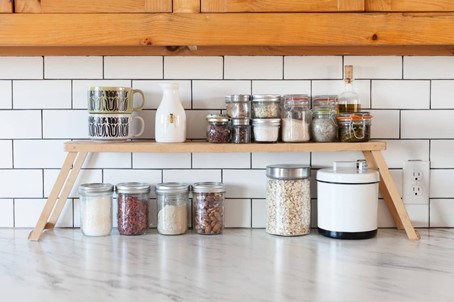
Paint still leads overall at 52% of cabinet finishes, but stains (18%) and natural finishes (7%) are climbing as part of the wood-forward story. Within those categories, the big shift is toward matte and suede textures over high-gloss.
Why? Matte finishes hide fingerprints, diffuse light more naturally, and photograph better in real-world conditions (no glare, no reflection of your messy counter). The concern used to be that matte showed grease and water marks, but newer anti-fingerprint surface technologies from companies like FENIX and EGGER have largely solved that problem, particularly in handleless kitchens where you’re touching cabinet fronts constantly.
For painted cabinets, factory-applied coatings outperform site painting every time. The film build and curing are more consistent, which means better long-term durability.
6. Pantry Walls and Beverage Stations: Storage as Design
The biggest change in how modern kitchens are planned isn’t about the cabinet door you pick. It’s about how storage is organized across the room. The 2026 Houzz data shows 47% of homeowners adding pantry cabinets and 24% incorporating dedicated beverage stations. Walk-in pantries (16%) and butler’s pantries are also on the rise.
The practical idea here is “zone thinking.” Instead of organizing a kitchen around the old work triangle (sink, stove, fridge), designers now plan by activity zones: prep, cooking, cleaning, beverages, baking, and a drop zone for keys and mail. Each zone gets its own storage solution.
The cabinet moves that look most 2026 are tall pantry walls (floor-to-ceiling runs that hide everything behind consistent doors), appliance garages (retractable-door cabinets for blenders, toasters, and coffee makers), and dedicated coffee corners with pull-out shelving and built-in outlets.
7. The Kitchen Island Gets Bigger (and Smarter)
Islands have shifted from prep surface to the architectural anchor of the kitchen. In 2026, they’re larger, more multi-functional, and often the one spot where homeowners go bold with color or material. Think waterfall-edge countertops extending down to the floor, integrated seating that doubles as a dining area, and under-island storage optimized for drawers rather than doors.
Increasingly, islands also serve as appliance hubs. Dishwashers, beverage fridges, and even secondary sinks are moving to the island to keep the perimeter runs clean and uncluttered.
In a two-tone kitchen, the island is where you deploy your accent. A deep green island against oak perimeter cabinets. A walnut island under white upper and lower runs. This is the one spot where you can take a risk, because changing an island’s finish later is far easier than repainting an entire kitchen.
8. Handleless Cabinets and Modern Hardware
The hardware story for 2026 splits into two clear camps: cabinets where hardware disappears entirely, and cabinets where hardware acts as jewelry. Both are valid, but handleless is the more distinctly “2026-modern” choice.
The main handleless systems on the market:
| System | How It Works | Best For | Maintenance |
|---|---|---|---|
| Push-to-open (Tip-On) | Magnetic spring latch, opens with a light press | Lower cabinets, waste pull-outs | Low; replace springs occasionally |
| J-Pull | CNC-milled groove along the door edge | Budget-friendly handleless look | Moderate; grooves need cleaning |
| Gola rail | Recessed aluminum channel behind door | LED integration, clean lines | Low; easy wipe-down |
| Servo-assisted lift | Motor-driven vertical opening | Overhead wall cabinets | Higher; electrical integration needed |
Blum’s SERVO-DRIVE and TIP-ON systems are the industry standards here, and they’re what we spec at IST Cabinets with our Fabuwood lines. All our cabinet boxes come with Blum Bluemotion soft-close hardware as standard, so you’re starting from a solid mechanical foundation regardless of your door style choice.
If you prefer visible hardware, the 2026 direction is mixed metals (brass with matte black, or nickel with gold) and “color-drenched” pulls that match the cabinet finish rather than contrast it. ELLE Decor’s 2026 coverage highlights this as millwork hardware that blends into the color field rather than interrupting it.
9. Floor-to-Ceiling Cabinetry
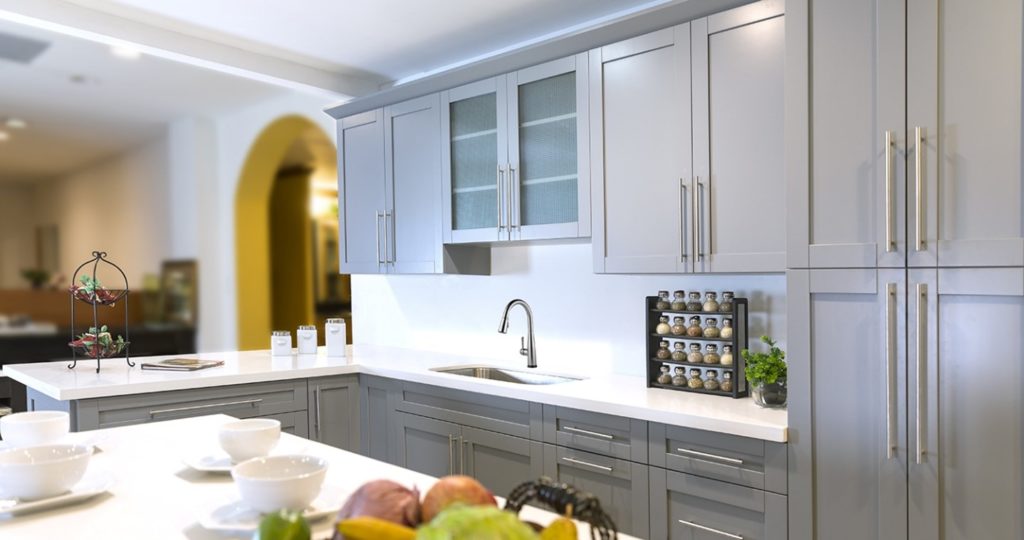
Eliminating the gap between the top of your wall cabinets and the ceiling is one of the highest-impact moves you can make. It creates a built-in, architectural look that makes the room feel taller and more finished. It also solves the dusty-top-of-cabinet problem that nobody enjoys dealing with.
In tighter kitchens (urban apartments, galley layouts), floor-to-ceiling runs maximize cubic footage of storage without expanding the footprint. The upper sections can house items you reach for less often: holiday serving pieces, large stockpots, specialty bakeware.
If the top shelves are too high to reach comfortably, consider motorized lift systems or simple pull-down shelf inserts that bring upper items to counter height. This connects to the growing “universal design” priority. Over 50% of renovating homeowners now incorporate accessibility features, and many of those choices, like pull-out shelving and soft-close hardware, improve daily life for everyone, not just those with mobility needs.
10. Frameless (European-Style) Construction
Frameless cabinets are the default for modern kitchen designs, and there’s a practical reason beyond aesthetics. Without the face frame, you get full access to the cabinet interior. Drawers and pull-outs can be wider, and there’s no center stile blocking a base cabinet’s opening.
For context: framed cabinets have vertical and horizontal wood members across the front of the box, reinforcing the opening. Frameless cabinets skip that frame and hinge the door directly to the box side. The result is a cleaner front surface and roughly 10-15% more usable interior space.
All Fabuwood cabinet lines at IST Cabinets use solid plywood box construction with flush-fit face frames and Fabuwood’s Q12 quality standard, which requires twelve specific construction benchmarks including one-piece solid half-inch plywood backs, wooden corner blocks, and dovetail drawer construction.
11. Smart Features That Actually Add Value
The NKBA’s 2026 outlook puts it well: technology should feel “invisible.” That means the smart features gaining real traction aren’t flashy gadgets but quality-of-life upgrades that disappear into the cabinetry.
Under-cabinet and in-drawer LED lighting (sensor-activated, so it turns on when you open a drawer or approach the counter). Charging drawers with hidden USB-C and wireless pads, keeping devices off the counter. Motion-activated waste and recycling pull-outs, so you can toss scraps without touching the cabinet when your hands are messy. These are the features people actually use daily.
The high-end tier includes app-controlled lighting scenes, cameras inside refrigeration that integrate with recipe management, and voice-controlled cabinet lifts. But for most homeowners, the under-cabinet lighting and charging drawers deliver 80% of the value at 20% of the cost.
12. Sustainable and Health-Conscious Cabinetry
Sustainability in kitchen cabinetry has moved from a marketing angle to a baseline expectation. In practice, that means:
Low-VOC and water-based finishes are standard for any reputable manufacturer. These reduce volatile organic compound emissions that affect indoor air quality, especially in new or freshly renovated homes. Look for TSCA Title VI compliance (the federal formaldehyde emission standard for composite wood) and ideally UL GREENGUARD certification.
FSC or PEFC chain-of-custody certification on the wood means the timber was sourced from responsibly managed forests with tracked documentation through the supply chain.
The KCMA (Kitchen Cabinet Manufacturers Association) runs two relevant certification programs: A161.1 covers structural durability through lab testing (door operation, finish resistance, hinge cycles), while ESP covers environmental stewardship in manufacturing. If a cabinet brand carries both, you have a reasonable proxy for quality and responsibility.
The most sustainable choice might be the simplest: building cabinets that last. Solid hardwood doors can be refinished multiple times over their lifespan. Plywood boxes resist moisture better than particleboard. Better hardware means fewer mechanical failures. Spending more upfront on construction quality often costs less over a 15-to-20-year window than replacing cheaper cabinets twice.
13. Refacing vs. Full Replacement: What Homeowners Actually Do
Full replacement dominates. Houzz reports 68% of homeowners replace all cabinets, 27% partially replace, and just 5% skip cabinet upgrades entirely. But among those who do partial upgrades, the strategies are practical and worth considering:
Refinishing or repainting existing cabinet exteriors (50% of partial upgraders). Adding new cabinets to the existing layout (32%). Replacing specific cabinets that are damaged or don’t fit the new plan (26%). Swapping just the doors and drawer fronts (20%), which the “Cost vs. Value” report identifies as a legitimate midrange minor remodel strategy.
The key question: are your existing cabinet boxes structurally sound? If the boxes are solid (no water damage, no warping, hinges hold well), you can achieve a dramatic visual transformation by replacing doors, hardware, and adding organizational accessories, at roughly 40-60% of full replacement cost.
If the boxes are damaged, or if your layout needs to change, full replacement makes more sense. With IST Cabinets’ stock and ready-to-go inventory, we can deliver vanity cabinets in 3-4 business days and kitchen cabinets in 5-7 business days, which keeps your renovation timeline tight even with a full swap.
14. Cost Ranges You Can Actually Plan Around
Cabinet costs are the biggest single line item in most kitchen renovations.
An honest breakdown of what to expect:
| Budget Tier | Typical Scope | Approximate Cost (per linear foot) | Best Fit |
|---|---|---|---|
| Economy | RTA or stock cabinets, limited finishes, selective hardware upgrades | $100 – $300 | Rentals, starter homes, budget-conscious refreshes |
| Mid-range | Semi-custom sizing and finishes, upgraded organizers, better drawer systems | $250 – $650 | Most owner-occupied remodels; two-tone and pantry walls achievable |
| Premium | Fully custom or European systems, appliance panels, complex storage | $500 – $1,500+ | Architect-led projects, open-plan “furniture” kitchens |
Houzz’s 2026 data shows median spend of \$55,000 for a major kitchen remodel (where all cabinets and appliances are replaced) and \$20,000 for a minor remodel. Cabinets typically account for about 28% of total kitchen renovation costs.
Most homeowners land in the custom or semi-custom segment: Houzz reports 46% choose custom and 33% choose semi-custom, with stock (10%) and RTA (9%) rounding out the field. At IST Cabinets, our Fabuwood lines offer semi-custom quality at stock-level speed, which is where we see the most value for homeowners who want good construction without custom-cabinet lead times.
15. Universal Design: Building Kitchens That Work for Everyone
Over 50% of renovating homeowners now build in accessibility features, and the reason isn’t always aging-in-place planning. Pull-out shelving, soft-close drawers, and lower-profile fixtures simply make a kitchen more comfortable to use, period.
The numbers tell the story: 59% of homeowners are choosing pull-out cabinet shelving. Soft-close and servo-assisted systems reduce the physical force needed to operate heavy drawers. Rounded countertop edges improve safety for households with young children. These aren’t clinical “accessibility” additions. They’re just better design.
When planning a kitchen that needs to serve a family for 10-15 years, building in these features from the start costs almost nothing extra compared to retrofitting later.
Frequently Asked Questions About Modern Kitchen Cabinets Ideas
What is the most popular kitchen cabinet style in 2026?
Are white kitchen cabinets going out of style?
What kitchen cabinet colors are trending in 2026?
How much do modern kitchen cabinets cost?
What are frameless kitchen cabinets and why are they popular?
Should I reface or replace my kitchen cabinets?
What are the best cabinet materials for durability?
What is Fabuwood’s Q12 quality standard?
What are the best handleless cabinet systems?
What smart features are worth adding to kitchen cabinets in 2026?
Ready to See These Ideas in Person?
Visit any of our IST Cabinets showrooms to see modern cabinet styles, Fabuwood collections, and storage solutions up close. Our design team provides free consultations and can help you plan a kitchen that fits your space, style, and budget.
Fairfax, VA | Alexandria, VA | Columbia, MD | Houston, TX | Delaware