
Oak cabinets have outlasted every kitchen trend thrown at them for the last fifty years. They survived the 1990s granite-and-brass era, the all-white-everything decade of the 2010s, and they’re still standing — stronger than ever — in 2026. The trick has never been the cabinets themselves. It’s always been about what you put next to them.
The right countertop turns oak from “dated” to “deliberate.” The wrong one makes even beautiful quarter-sawn grain look like an afterthought. And with countertop materials evolving faster than most homeowners can keep up with — quartzite, porcelain slabs, sintered stone, matte-finished quartz — the pairing decision is more nuanced than it was even two years ago.
This guide breaks down how to think about countertops alongside oak cabinetry, covering materials, color theory, specific oak tones, and the 2026 trends that are reshaping what “modern kitchen” actually means.
How to Choose the Right Countertop for Oak Cabinets?
Choosing a countertop for oak cabinets isn’t about matching — it’s about balancing. Oak has strong visual grain, warm undertones (ranging from golden honey to deep amber), and a presence that demands something equally confident beside it.
Start with your oak’s undertone. Not all oak reads the same. Honey oak leans distinctly golden-orange. White oak sits cooler, with gray and taupe running through the grain. Red oak pulls warm and pink. Each undertone steers you toward a different countertop palette, and getting this wrong is why so many oak kitchens feel “off” without their owners understanding why.
If your cabinets lean warm — honey or golden oak — pair them with countertops that either complement that warmth (cream, soft beige, warm whites with gold veining) or provide a grounding contrast (deep charcoal, black, cool gray). What you want to avoid is a countertop that sits in the same warmth range as the cabinets without enough contrast. Two warm surfaces at similar saturation levels blur together and make the kitchen feel flat.
Cooler-toned oak, like white oak, gives you wider latitude. Gray quartz, bright white marble, even soft blue-green stones pair beautifully because the cabinet’s cooler grain doesn’t fight for attention. White oak is especially forgiving and is one of the reasons white oak kitchen cabinets have become one of the most requested styles heading into 2026.
Consider the finish, not just the color. A polished countertop surface next to oak creates a modern, high-contrast kitchen. Honed or matte finishes — which are dominating 2026 design — soften the space and let the oak’s natural texture take center stage. If you’re drawn to the idea of a kitchen that feels warm and collected rather than glossy and sharp, matte is the way to go. Bonus: matte surfaces hide fingerprints and minor scratches far better than polished ones.
Think about what you’re actually doing in the kitchen. A household that cooks heavily five nights a week has different needs than one that mostly reheats and entertains. Heat resistance, stain resistance, and knife-friendliness all factor in — and some of the most beautiful countertop materials are also the most demanding to maintain. Marble stains. Butcher block needs oiling. Limestone etches if you look at it wrong. None of these are dealbreakers, but they’re worth understanding before you commit.
Quick Reference: Oak Undertone → Countertop Pairing
| Oak Type | Undertone | Best Countertop Tones | Tones to Avoid |
|---|---|---|---|
| Honey oak | Warm golden-orange | Cool white, gray, black, blue-green | Warm beige without contrast |
| White oak | Cool gray-taupe | Almost anything — white, gray, warm marble, black | Very light neutrals that blend in |
| Golden oak | Warm amber | Veined stone, warm gray, charcoal | Flat solid colors with no movement |
| Red oak | Warm pink-red | Cool gray, white, black | Orange or red-toned surfaces |
| Dark-stained oak | Rich brown-espresso | Light marble, pale quartzite, white quartz | Equally dark countertops |
IST Cabinets Guide
Countertop Materials for Oak Cabinets
#1 Designer Pick 2026 |
Most Popular |
Luxury Statement |
||||||||||||||||||||||||||||||||||||||||||||||||||||||
Timeless Classic |
Rising Star 2026 |
Unique Character |
||||||||||||||||||||||||||||||||||||||||||||||||||||||
Warm & Natural |
Best Budget Pick |
Industrial Chic |
The Best Countertop Materials for Oak Cabinets
Every countertop material brings its own character to an oak kitchen. Rather than ranking them, here’s an honest look at each — what it does well, where it falls short, and how it pairs with oak specifically.
Countertop Materials at a Glance
| Material | Price (per sq ft installed) | Durability | Maintenance | Heat Resistant | Best Oak Pairing |
|---|---|---|---|---|---|
| Quartzite | $80–150 | Excellent | Seal yearly | Yes | Honey oak, white oak |
| Quartz | $50–100 | Excellent | Wipe clean | No (use trivets) | All oak types |
| Marble | $75–200 | Moderate | Seal 1–2x/year | No | White oak, dark oak |
| Granite | $40–100 | Excellent | Seal yearly | Yes | Honey oak, golden oak |
| Porcelain | $55–120 | Excellent | Wipe clean | Yes | White oak, modern oak |
| Soapstone | $70–120 | Good | Mineral oil optional | Yes | Honey oak, farmhouse oak |
| Butcher block | $30–80 | Moderate | Oil monthly | No | White oak, golden oak |
| Concrete | $65–135 | Good | Seal regularly | Moderate | Modern/industrial oak |
| Laminate | $15–40 | Fair | Wipe clean | No | Budget oak updates |
| Sintered stone | $80–150 | Excellent | Wipe clean | Yes | All oak types |
| Travertine | $50–100 | Moderate | Seal regularly | Moderate | Honey oak, golden oak |
Quartzite
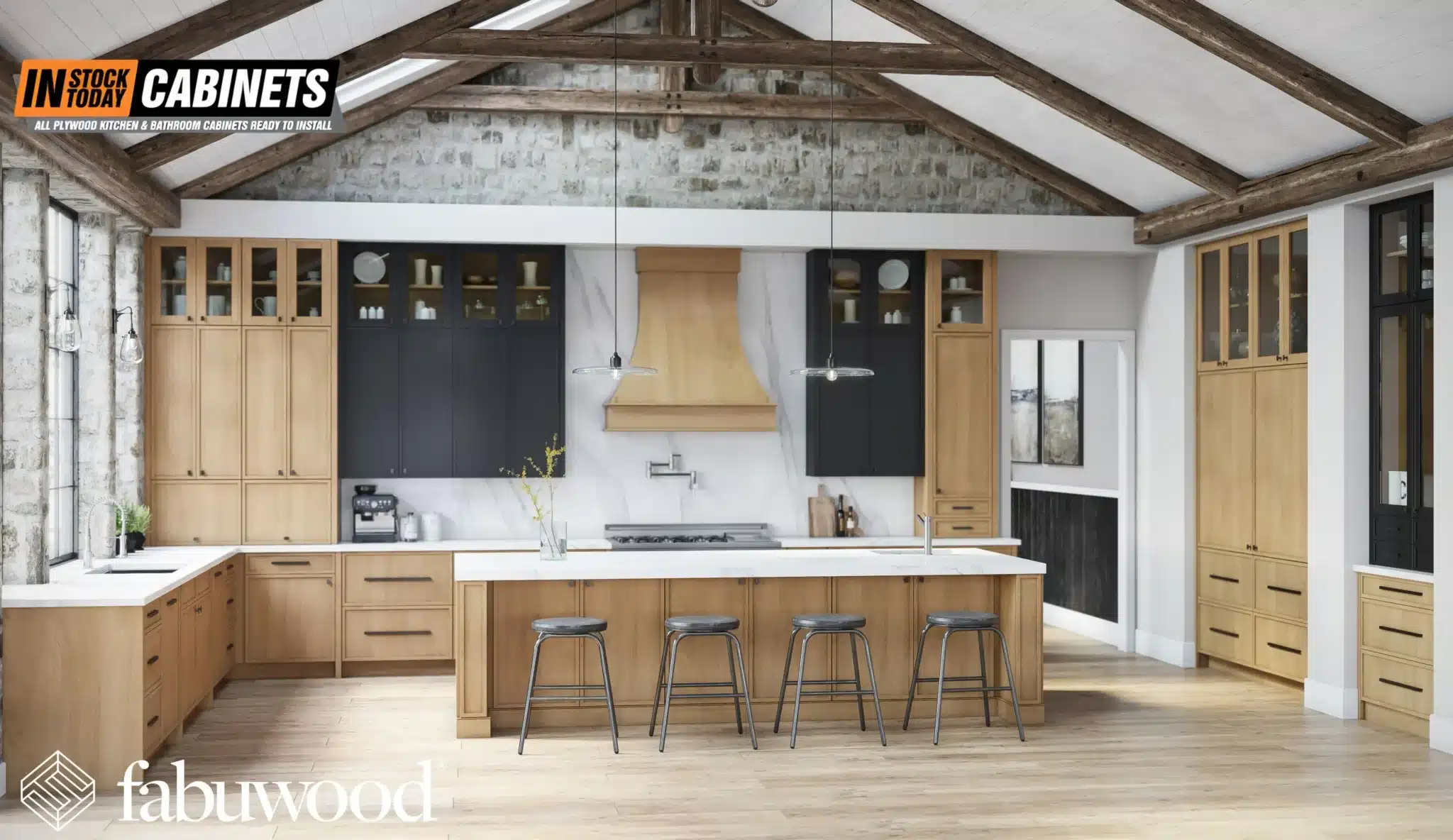
If there’s a single material dominating kitchen design conversations in 2026, it’s quartzite. Taj Mahal quartzite, in particular, has become the designer’s go-to for oak kitchens. It offers the soft veining and warmth of marble with the hardness and heat resistance of granite — a combination that was hard to find five years ago.
Quartzite pairs exceptionally well with oak because its natural veining introduces visual movement without competing with the wood grain. Light quartzite with warm gold or taupe veining picks up on honey oak’s golden tones. Darker quartzite varieties create drama against lighter oak finishes. It’s a natural stone, so every slab is unique — something worth considering if you value one-of-a-kind character over predictable uniformity.
The trade-off: quartzite costs more than most engineered options, typically running $80–150 per square foot installed. It also needs periodic sealing, though far less frequently than marble.
Why choose quartzite for oak cabinets:
- Natural veining complements oak grain without competing
- Harder than marble and granite — holds up to daily kitchen use
- Heat resistant — safe for hot pots and pans directly on the surface
- Every slab is unique, adding one-of-a-kind character
Watch out for: Higher price point, requires annual sealing, heavier than engineered alternatives
Quartz (Engineered)
Quartz countertops remain the most popular engineered surface for good reason. They’re non-porous, scratch-resistant, and available in hundreds of colors and patterns. For oak cabinets paired with quartz countertops, the combination works across virtually every design style.
What’s changed in 2026 is how quartz looks. The designs that mimic natural marble have gotten dramatically better — softer veining, more realistic depth, warmer tones. At the same time, some designers are pushing back against faux-stone quartz and recommending that homeowners embrace quartz for its own qualities: consistent color, uniform pattern, and the clean look of an engineered surface. If you want the marble look, many designers now say to just get marble (or quartzite). If you want quartz, lean into what makes quartz unique.
Gray quartz with oak cabinets is a reliable combination — the cool gray offsets oak’s warmth without creating too stark a contrast. White quartz with subtle veining works well with both honey oak and white oak. Beige quartz blends quietly with golden oak, creating a tone-on-tone warmth that feels cohesive rather than matchy.
Budget-wise, quartz sits in the mid-range at $50–100 per square foot installed, making it the sweet spot for homeowners who want durability without the maintenance commitments of natural stone.
Why choose quartz for oak cabinets:
- Non-porous — won’t stain from coffee, wine, or oil
- Hundreds of color and pattern options to match any oak tone
- Zero sealing or special maintenance required
- Consistent appearance across slabs — easier to plan around
Watch out for: Not heat resistant (trivets are a must), can look artificial in some patterns, lacks the depth of natural stone
Marble
Marble is unapologetically high-maintenance, and that’s precisely what some homeowners want. A Calacatta marble countertop paired with rich oak cabinetry creates the kind of kitchen that stops people mid-conversation. The contrast between marble’s smooth, cool elegance and oak’s warm, textured grain is one of the most visually striking pairings in kitchen design.
White marble — especially varieties with soft gray or gold veining — brightens an oak kitchen without washing it out. It reflects light beautifully, making it a strong choice for smaller kitchens or those with limited natural light. Calacatta Viola marble, with its purple-tinged veining, is emerging as a bold designer pick for 2026 and creates a genuinely unexpected focal point against warm oak tones.
The reality check: marble etches from acidic liquids (lemon juice, tomato sauce, vinegar) and stains if spills sit too long. It needs sealing once or twice a year and develops a patina over time. Some people love that lived-in character. Others find it stressful. Know which camp you’re in before installing.
Why choose marble for oak cabinets:
- Unmatched visual elegance — creates a true focal point
- Reflects light beautifully in smaller or darker kitchens
- Natural cool tones contrast strikingly with warm oak grain
- Increases perceived home value
Watch out for: Etches from acids, stains from prolonged spills, needs sealing 1–2 times per year, higher price range ($75–200/sq ft)
Granite
Granite had its moment as the default “upgrade” countertop in the early 2000s, and that association has made some homeowners reluctant to consider it. That’s a mistake. Granite remains one of the most durable, heat-resistant, and cost-effective natural stone options available — and the speckled beige varieties that defined a generation have given way to much more interesting patterns.
For oak cabinets paired with granite countertops, black granite creates one of the most consistently successful combinations. The high contrast between dark stone and warm wood adds depth and sophistication without feeling trendy. Homeowners who chose black granite fifteen years ago still have kitchens that look current — that kind of staying power is rare.
Lighter granite with movement (swirls, veining, mineral deposits) can also work with oak, particularly warm-toned varieties that echo the wood’s golden notes. Steer clear of busy, multi-colored granite patterns; they tend to clash with oak’s already-prominent grain rather than complementing it.
Why choose granite for oak cabinets:
- Extremely durable — resists heat, scratches, and stains
- Black granite + oak is one of the most timeless kitchen combinations
- More affordable than marble or quartzite ($40–100/sq ft)
- Wide variety of patterns beyond the dated 2000s-era speckle
Watch out for: Needs annual sealing, some patterns look dated, heavy material requiring solid cabinet support
Porcelain Slabs
Porcelain countertops are the dark horse of 2026 kitchen design. Large-format porcelain slabs can now mimic the look of marble, concrete, or natural stone with startling accuracy — while offering superior heat resistance, near-zero porosity, and remarkably easy maintenance.
Porcelain pairs well with oak kitchens when you want a contemporary edge without going fully industrial. Concrete-look porcelain against warm oak creates a modern-meets-organic feel that many designers are gravitating toward. White porcelain with delicate gold veining adds subtle luxury. The material works especially well for waterfall island designs, where the slab cascades down the side of the island to meet the floor.
Pricing varies significantly by manufacturer and pattern, but porcelain generally falls in the same range as mid-grade quartz. The main drawback is that porcelain is thinner than stone, which gives countertop edges a different visual profile — though mitered edges solve this by creating the illusion of a thick slab.
Soapstone
Soapstone is for the homeowner who wants something distinctly different. Its matte, velvety texture feels like nothing else in the kitchen, and the dark gray-to-black coloring provides a moody, grounded contrast to oak’s warmth. Think of it as the countertop equivalent of a well-worn leather jacket.
The surface darkens naturally over time, developing a rich patina that many homeowners find beautiful. It’s non-porous (no sealing required), heat-resistant, and chemically inert — meaning acidic foods won’t etch it the way they would marble. Scratches happen, but they’re easily buffed out with mineral oil.
Soapstone and oak together create a kitchen with serious character. The pairing works best in farmhouse, cottage, or transitional-style kitchens where a little imperfection is part of the charm.
Why choose soapstone: Non-porous (no sealing), heat-proof, acid-resistant, develops beautiful patina. Watch out for: Scratches easily (though they buff out), limited color range (gray-to-black only), fewer fabricators available.
Butcher Block
Pairing wood countertops with wood cabinets sounds risky, and it can be — if you don’t manage the contrast. The key is selecting a butcher block species that differs from your cabinet wood in both tone and grain pattern. Walnut butcher block against honey oak cabinets, for example, creates warm contrast without monotony. Maple butcher block with white oak cabinets offers a lighter, Scandinavian feel.
Many 2026 kitchens are using butcher block strategically rather than wall-to-wall. A common approach: stone or quartz on the perimeter counters for durability, with a butcher block section on the island for food prep and visual warmth. This mixed-material approach is one of the strongest trends in current kitchen design, and it works particularly well in oak kitchens where the additional wood surface reinforces the natural, organic atmosphere.
Maintenance is the trade-off. Butcher block needs regular oiling (monthly for heavy-use surfaces) and can stain or warp if exposed to standing water. But for a designated prep zone or a low-use countertop section, it’s hard to beat the warmth and tactile pleasure of a good butcher block.
Why choose butcher block: Warm and tactile, budget-friendly ($30–80/sq ft), can be sanded and refinished, ideal for mixed-material kitchens. Watch out for: Needs monthly oiling, can stain and warp from water, not heat-resistant, requires more upkeep than any stone.
Concrete
Concrete countertops fit oak kitchens that lean modern, industrial, or farmhouse-contemporary. The weight and raw texture of concrete against the warmth of oak grain creates a tension that feels intentional and design-forward.
Concrete can be poured in custom shapes and tinted to virtually any color. Most concrete countertops for oak kitchens work best in mid-to-dark gray tones, which create enough contrast against the wood without reading as cold. Lighter, warmer concrete tones (sand, warm gray) blend more quietly.
The material is durable but not indestructible. It’s porous and needs sealing. It can crack under extreme thermal shock. And it’s heavy — your cabinetry needs to be able to support it. For the right homeowner and the right kitchen, though, concrete makes a statement that engineered surfaces can’t replicate.
Why choose concrete: Custom shapes and colors, unique industrial aesthetic, durable for daily use. Watch out for: Porous (needs sealing), can crack, extremely heavy, requires experienced fabricator.
Laminate
Laminate countertops have improved dramatically from the thin, peeling surfaces of decades past. Modern laminate can convincingly replicate stone, wood, and concrete textures at a fraction of the cost — typically $15–40 per square foot installed.
For homeowners updating an oak kitchen on a budget, laminate is an honest choice. White and light gray laminates brighten an older oak kitchen quickly. Stone-look laminates offer the visual appeal of granite or marble without the cost or maintenance. And if you’re planning a more extensive renovation down the road, laminate lets you live with a particular color palette before committing to expensive natural stone.
The main limitation is durability. Laminate can chip at the edges, doesn’t handle heat well (no hot pans directly on the surface), and lacks the resale appeal of stone. But as a practical, budget-friendly update? It works.
Why choose laminate: Most affordable option ($15–40/sq ft), easy DIY install, huge color selection, zero maintenance. Watch out for: Chips at edges, no heat resistance, can’t be repaired, lower resale value than stone.
Sintered Stone
Sintered stone (brands like Dekton and Neolith) is an ultra-compact surface made from natural minerals fused under extreme heat and pressure. It’s virtually indestructible — resistant to scratches, stains, heat, and UV light. For high-traffic oak kitchens that need a surface capable of handling serious daily use, sintered stone is worth investigating.
The material comes in large-format slabs that can be used for countertops, backsplashes, and even flooring — creating a continuous, unbroken look throughout the kitchen. Colors and patterns range from marble-mimicking to concrete-inspired to solid bold tones. Against oak cabinets, sintered stone in a creamy off-white provides a clean, modern counterpoint to the wood’s warmth.
Travertine
Travertine brings a Mediterranean warmth that pairs naturally with oak’s organic character. Its soft, pitted surface and warm beige-to-cream tones complement golden and honey oak without competing for attention. If your design leans toward rustic European, coastal, or old-world inspired, travertine is a material worth considering.
It does require sealing and is softer than granite or quartzite, so it’s best suited for kitchens where heavy-duty cooking isn’t the primary activity. Think of it as a surface that ages gracefully rather than stays frozen in time.
Which Countertop Color Matches Your Oak?
Match your oak cabinet undertone to the right countertop palette for a cohesive kitchen.
Cool White
Silver Gray
Black
Sage Green
Warm White
Warm Gray
Charcoal
Cream
Soft Blue
Veined Stone
Dark Gray
Charcoal
Sage
Bright White
Ivory
Light Gray
Pale Quartzite
Countertop Colors That Work With Oak Cabinets
Beyond the material itself, color drives how your countertop-cabinet pairing actually reads in the room. Here are the color families that consistently pair well with oak — and the specific contexts where each shines.
Countertop Color Quick Reference
| Countertop Color | Mood It Creates | Best With | Ideal Materials |
|---|---|---|---|
| White / off-white | Bright, clean, airy | All oak types (use warm white for honey oak) | Quartz, marble, quartzite, porcelain |
| Black | Bold, grounded, sophisticated | Honey oak, white oak (needs good lighting) | Granite, soapstone, porcelain |
| Gray | Modern, versatile, calm | All oak types (match undertone: warm or cool) | Quartz, quartzite, concrete |
| Beige / cream | Warm, cohesive, inviting | Golden oak, honey oak | Quartz, quartzite, travertine |
| Green | Earthy, unexpected, natural | Honey oak, golden oak | Marble, soapstone |
| Blue tones | Fresh, contemporary | White oak | Quartzite, porcelain |
White and Off-White
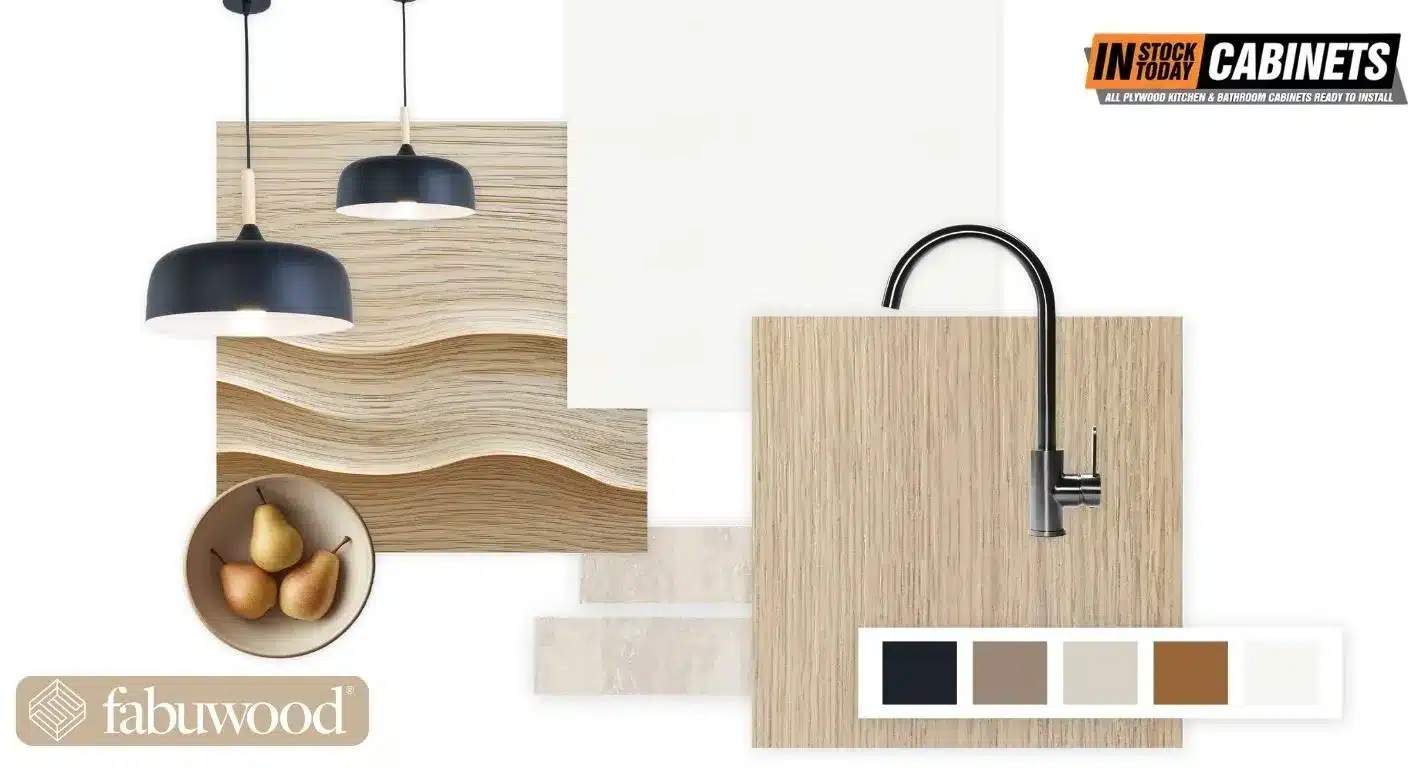
White countertops with oak cabinets are the safest bet for a clean, bright kitchen. But “white” covers a lot of ground. Bright, pure white can read stark against warm oak — especially honey oak — and sometimes creates an uncomfortable tension between warm and cool. Warmer whites (think ivory, cream, or whites with gold veining) are more forgiving and tend to feel more cohesive.
Off-white tones are particularly effective in 2026, as the broader design world moves away from clinical whites toward warmer, softer neutrals. A warm white quartz or quartzite countertop with soft taupe veining reads as timeless without effort.
Black
Black countertops are a power move. The contrast with oak is immediately striking and gives the kitchen a grounded, sophisticated quality that lighter surfaces can’t replicate. Black granite, black soapstone, and matte black porcelain all work — each bringing a slightly different character.
One consideration: the kitchen needs enough light to pull off dark countertops without feeling cave-like. Ample natural light or well-planned task lighting keeps the space feeling open. In a darker kitchen, a black countertop can overwhelm. In a bright kitchen, it’s magnetic.
Gray
Gray is the chameleon of countertop colors. Light gray creates gentle contrast with oak. Dark gray adds drama without the commitment of full black. Warm grays (with beige or taupe undertones) blend beautifully with golden oak. Cool grays (with blue undertones) pair better with white oak or lighter, more neutral stains.
Oak cabinets with gray countertops is one of the most searched-for combinations in kitchen design, and for good reason: it almost always works. The key is matching the gray’s undertone to the oak’s undertone.
Beige and Cream
Tone-on-tone is quietly powerful. Beige or cream countertops with golden oak cabinets create a kitchen that feels warm, inviting, and pulled-together. The risk is monotony — if everything is the same warmth and saturation, the space can read as flat. Adding visual texture through veined stone, a contrasting backsplash, or hardware in a different metal (black, brushed nickel) prevents that.
Green
Here’s the unexpected one. Green countertops — particularly emerald-veined marble or green-tinged soapstone — pair beautifully with oak because green and wood are naturally complementary. Think about a forest: oak trees and green foliage exist in the same palette. Translating that into a kitchen creates something earthy, distinctive, and surprisingly sophisticated. This is a trend that’s gaining real momentum among designers for 2026.
Countertop Ideas by Oak Cabinet Type
Different varieties of oak require slightly different approaches. Here’s how to think about each.
Best Countertop Picks by Oak Type
| Oak Variety | Top 3 Countertop Picks | Design Direction |
|---|---|---|
| Honey oak | White quartz, gray quartzite, black granite | Cool contrast to balance golden warmth |
| White oak | Warm marble, gray quartz, soapstone | Almost anything — versatile and forgiving |
| Golden oak | Veined quartzite, warm granite, concrete | Depth and movement to match active grain |
| Dark-stained oak | White marble, pale quartzite, light gray quartz | Light surfaces for relief and balance |
Honey Oak Cabinets
Honey oak is the most common — and the most polarizing. Its strong golden-orange tone reads as dated to some homeowners, especially when paired with the wrong countertop or surrounded by beige walls and beige flooring. The fix isn’t replacing the cabinets. It’s creating contrast around them.
Countertops for honey oak cabinets work best when they cool down the warmth. White quartz, gray quartzite, or black granite all provide enough contrast to make honey oak look intentional rather than inherited. Warm-toned countertops (cream, beige) can also work, but only if the kitchen has other cool elements — a white backsplash, stainless-steel appliances, or dark hardware — to break up the warmth.
White Oak Cabinets
White oak is the darling of 2026 kitchen design. Its cooler, more neutral tone plays well with virtually any countertop color. Warm marble, gray quartz, black soapstone, creamy porcelain — white oak adapts. This versatility is exactly why demand for white oak cabinetry has surged among designers and homeowners.
The one thing to avoid with white oak: countertops that are so neutral and light they disappear against the cabinets. A little contrast — even subtle contrast through veining or texture — keeps the kitchen from reading as a single undifferentiated surface.
Golden Oak Cabinets
Golden oak sits between honey oak and white oak in tone — warmer than white oak but less orange than honey oak. It pairs well with countertops that have depth and movement: granite with mineral deposits, quartzite with warm veining, or concrete with natural color variation. Flat, solid-colored surfaces can feel too simple next to golden oak’s active grain.
Dark Oak Cabinets
Dark-stained oak brings richness and formality. Light countertops — white marble, pale quartzite, light gray quartz — provide necessary relief and keep the kitchen from feeling heavy. Avoid pairing dark oak with equally dark countertops unless the kitchen has exceptional natural light and substantial square footage.
How to Make Oak Kitchen Cabinets Look Modern
This is the question homeowners with existing oak kitchens ask most often: how do I update the space without ripping out perfectly good cabinets?
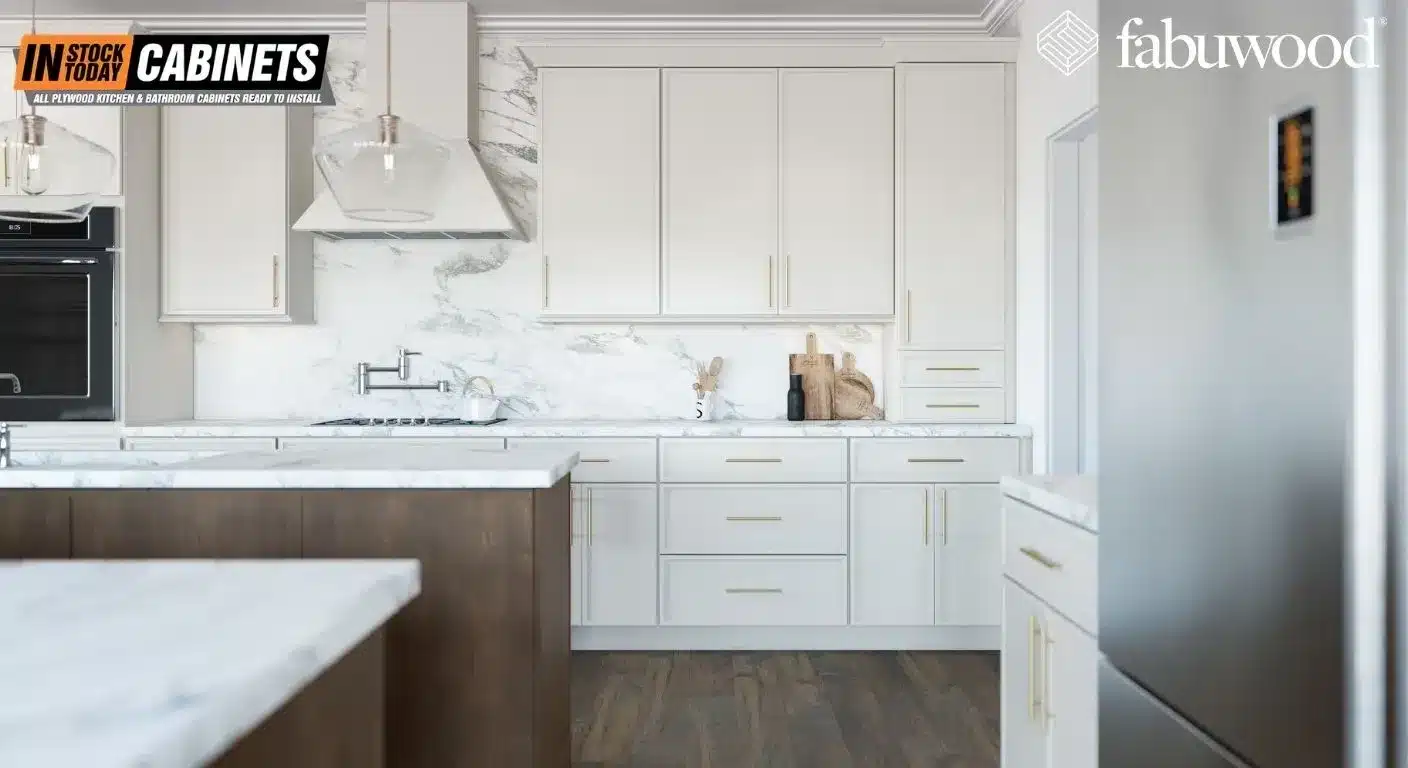
The countertop swap is the single highest-impact change you can make. Replacing a dated laminate or tile countertop with a slab of white quartz or honed quartzite immediately shifts the kitchen from “90s holdover” to “intentionally warm.” The oak stops reading as something you’re stuck with and starts reading as something you chose.
Beyond the countertop, a few complementary updates amplify the effect. Changing the backsplash to a simple subway tile or full-height slab backsplash (using the same countertop material) creates a clean, continuous backdrop. Swapping hardware from brass or oak knobs to matte black or brushed nickel instantly modernizes the doors. Painting the walls white, warm gray, or soft greige lets the oak become a feature rather than something the room is trying to hide.
The oak kitchen modernization checklist:
- Countertop: Replace dated laminate or tile with white quartz, honed quartzite, or matte porcelain
- Backsplash: Switch to simple subway tile or a full-height slab in matching countertop material
- Hardware: Swap brass or wood knobs for matte black, brushed nickel, or brushed brass pulls
- Wall paint: Go with white, warm gray, or soft greige — let the oak be the warmth
- Lighting: Add under-cabinet LED strips and modern pendant fixtures
- Appliances: Stainless steel or matte black appliances pair cleanly with updated oak
The 2026 approach to modernizing oak kitchens isn’t about disguising the wood. It’s about building a context where the wood shines. Matte countertops, clean-line hardware, and a restrained color palette let the oak’s natural character carry the room.
If you want to see how different countertop pairings look with various cabinet styles before committing, IST Cabinets’ Kitchen Visualizer lets you experiment with combinations digitally.
Backsplash Pairings for Oak Cabinets and Countertops
The backsplash is the third member of the cabinet-countertop partnership, and it either ties the design together or pulls it apart.
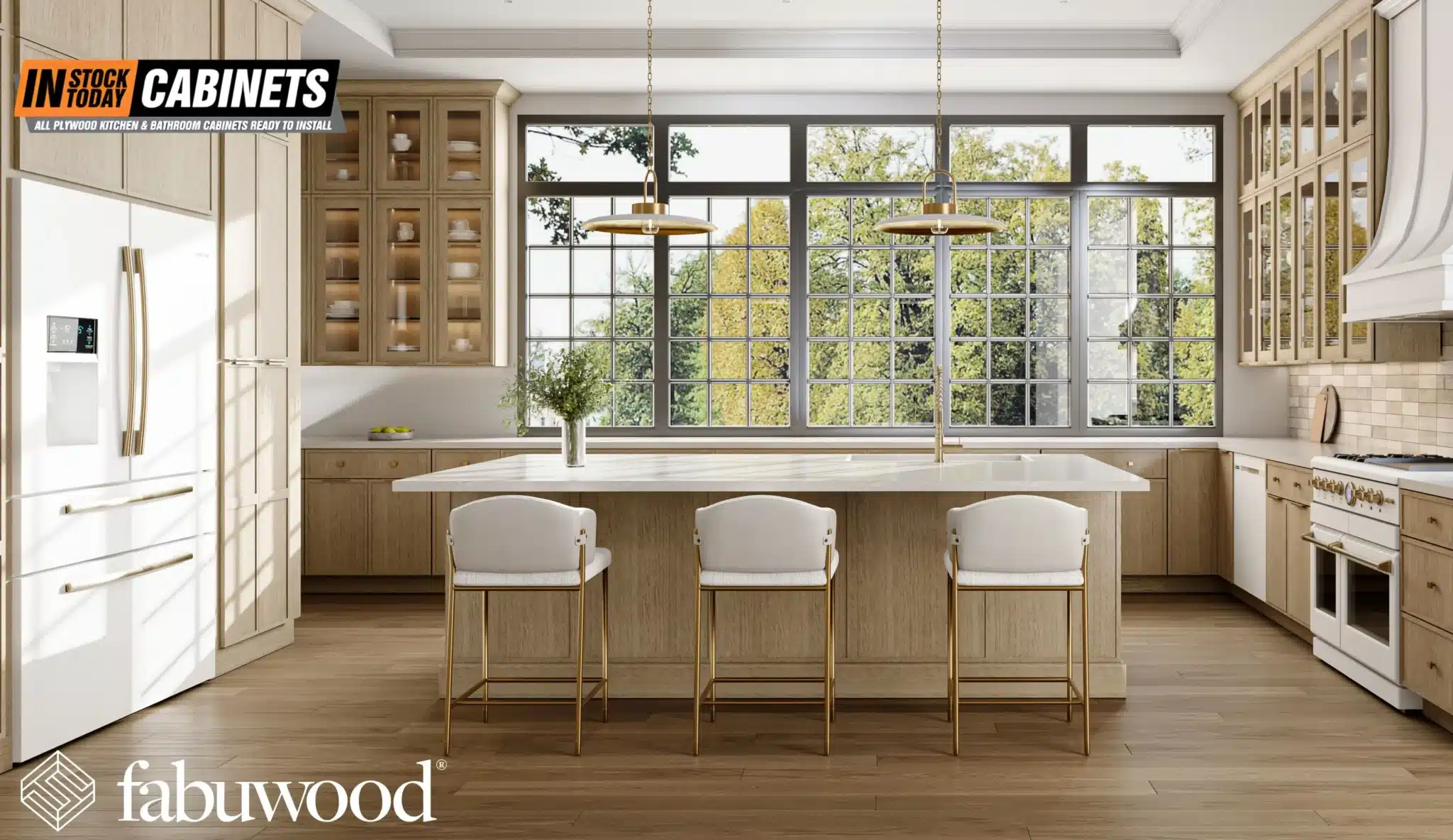
With a bold or heavily veined countertop, a simple backsplash works best. White or off-white subway tile, a clean slab of matching countertop material, or a subtle textured tile keeps the eye focused without introducing too many competing patterns. Oak grain plus dramatic countertop veining plus a busy backsplash equals visual chaos.
With a quieter countertop — solid quartz, honed gray, matte black — the backsplash has more room to add personality. Zellige tile, handmade ceramic tile, or a natural stone mosaic all introduce texture and character without overwhelming the space. The backsplash becomes the accent rather than the countertop.
Full-height slab backsplashes — where the countertop material continues up the wall — are trending heavily in 2026. The clean, uninterrupted look eliminates grout lines, simplifies cleaning, and creates a sense of luxury that’s hard to achieve with tile. Against oak cabinets, a full-height slab backsplash in marble or quartzite makes the kitchen feel immediately elevated.
Backsplash Pairing Guide
| Oak Variety | Top 3 Countertop Picks | Design Direction |
|---|---|---|
| Honey oak | White quartz, gray quartzite, black granite | Cool contrast to balance golden warmth |
| White oak | Warm marble, gray quartz, soapstone | Almost anything — versatile and forgiving |
| Golden oak | Veined quartzite, warm granite, concrete | Depth and movement to match active grain |
| Dark-stained oak | White marble, pale quartzite, light gray quartz | Light surfaces for relief and balance |
Countertop Ideas on a Budget
Not every kitchen update requires a $10,000 countertop investment. Several materials deliver a genuine visual upgrade without stretching the budget.
Budget tiers for oak kitchen countertops:
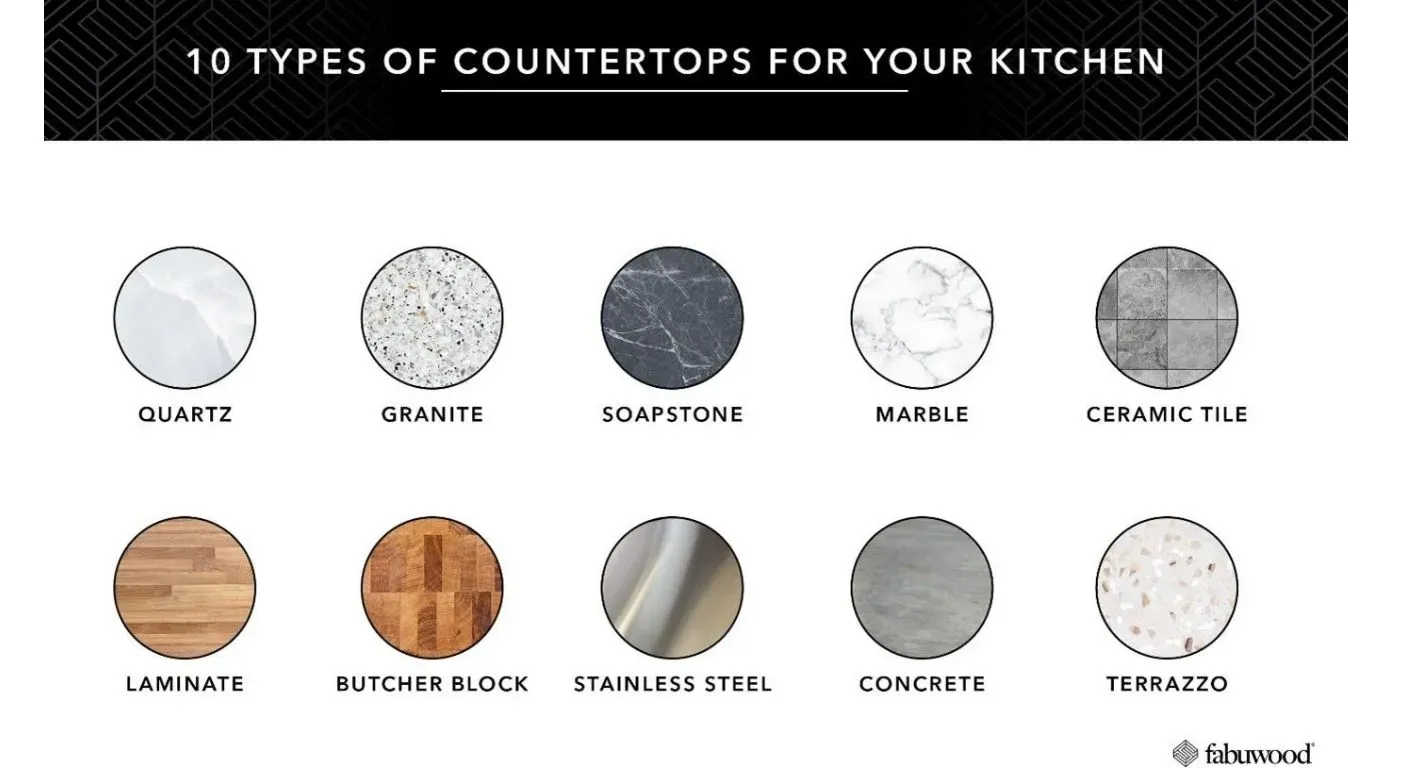
- Under $40/sq ft: Laminate, ceramic tile — best for quick refreshes or rental properties
- $40–80/sq ft: Butcher block, lower-end granite, solid surface (Corian) — solid mid-range with real material presence
- $50–120/sq ft: Quartz, porcelain, mid-range granite — the durability sweet spot for most homeowners
- $80–200/sq ft: Quartzite, marble, sintered stone, soapstone — premium natural and engineered stone
Laminate has already been mentioned, and it’s the most affordable path to a refreshed oak kitchen. But solid surface countertops (Corian and similar brands) offer another compelling mid-range option. Solid surface is non-porous, repairable (scratches can be buffed out), and available in a wide range of colors and patterns. It won’t have the depth of natural stone, but it provides a clean, uniform look that works well with oak.
Ceramic tile countertops are another budget option that can actually look quite intentional in the right context. Large-format ceramic tiles with minimal grout lines mimic the look of a slab without the slab pricing. In an oak kitchen with a cottage, farmhouse, or Mediterranean aesthetic, tile feels at home rather than like a compromise.
The budget-friendly approach that delivers the biggest visual punch: invest in a higher-quality material for the island or the primary work area, and use a more affordable surface on secondary counters. A quartz island surrounded by laminate perimeter counters is a common and effective strategy, especially in larger kitchens where countertop costs add up quickly.
Countertop Maintenance for Oak Kitchens
Every countertop material has its own maintenance personality, and understanding this before installation saves frustration later.
Maintenance Comparison
| Material | Daily Care | Sealing Frequency | Stain Risk | Scratch Risk | Overall Effort |
|---|---|---|---|---|---|
| Quartz | Soap + water | Never | Very low | Very low | Minimal |
| Porcelain | Soap + water | Never | Very low | Very low | Minimal |
| Sintered stone | Soap + water | Never | Very low | Very low | Minimal |
| Granite | Soap + water | Once/year | Low | Low | Low |
| Quartzite | Soap + water | Once/year | Low | Low | Low |
| Soapstone | Soap + water | Never (oil optional) | Very low | Moderate | Low |
| Marble | Soap + water | 1–2x/year | High | Moderate | Moderate |
| Concrete | Soap + water | Every 6 months | Moderate | Low | Moderate |
| Laminate | Soap + water | Never | Moderate | Moderate | Minimal |
| Butcher block | Mild soap, dry promptly | Oil monthly | High | High | High |
| Travertine | Soap + water | 1–2x/year | Moderate | Moderate | Moderate |
Natural stone surfaces — marble, granite, quartzite, limestone, travertine, soapstone — need periodic sealing. Frequency varies: granite and quartzite might need it once a year, marble twice, and soapstone essentially never (though mineral oil enhances its appearance). Sealing is straightforward — apply, wait, wipe — but it’s a commitment you need to be willing to make.
Engineered surfaces — quartz, sintered stone, porcelain, solid surface — are essentially maintenance-free beyond regular cleaning with mild soap and water. This low-maintenance quality is one of the primary reasons quartz and porcelain have gained so much market share from natural stone.
Wood countertops (butcher block) are the highest-maintenance option. Regular oiling, prompt spill cleanup, and occasional sanding keep them looking their best. If the idea of babying a surface stresses you out, butcher block may not be the right choice — or limit it to a small section where you can enjoy the material without the upkeep burden.
For the oak cabinets themselves, keep surfaces clean with a damp cloth and mild cleaner. Avoid placing hot pots directly on wood surfaces, use cutting boards, and address spills promptly. Oak is a durable hardwood, but it’s not invincible — especially with certain finishes that may be more susceptible to water spots or heat marks.
What’s Trending for 2026
Kitchen design in 2026 reflects a broader cultural pull toward warmth, authenticity, and intentional materials. Oak cabinets — once seen as needing an “update” — now sit squarely at the center of this movement. Here’s what’s shaping the countertop landscape right now.
Warm neutrals over cold whites. The era of all-white kitchens is giving way to creamy off-whites, taupes, and soft golds. These warmer palettes complement oak naturally, making it easier than ever to build a cohesive kitchen around wood cabinets. The NKBA (National Kitchen & Bath Association) highlighted this shift as one of the defining trends presented at KBIS 2026.
Matte and honed finishes. High-gloss countertops are losing ground to softer, more tactile surfaces. Honed marble, matte quartz, leathered granite — these finishes absorb light instead of bouncing it, creating a calmer, more sophisticated atmosphere. They also happen to hide daily wear much better than polished surfaces.
Natural stone over engineered mimicry. Designers are increasingly recommending real stone when the budget allows. The reasoning: engineered surfaces that mimic marble are good, but they never fully replicate the depth and variation of the real thing. As one emerging design philosophy puts it, embrace the material for what it is rather than asking it to pretend to be something else.
Mixed materials. Using two different countertop surfaces in the same kitchen — stone on the perimeter, butcher block on the island, or porcelain for everyday and marble for display — adds functional logic and visual interest. This approach lets homeowners enjoy a high-end material where it matters most while keeping overall costs manageable.
Waterfall edges. Extending the countertop material down the side of an island remains a popular design feature heading into 2026. It’s especially effective in oak kitchens where the stone or quartz waterfall creates a strong vertical contrast against horizontal wood grain.
2026 countertop trends at a glance:
- Warm neutrals (cream, taupe, soft gold) replacing stark whites
- Matte and honed finishes overtaking high-gloss polish
- Natural stone preferred over engineered mimicry when budget allows
- Mixed-material kitchens: stone perimeter + butcher block island
- Waterfall edges continuing strong, especially on islands
- Bold veining and dramatic natural movement as focal points
- Terrazzo making a 70s-inspired comeback in modern resin variants
- Blue tones emerging as accent countertop colors
- Sharp, angled edge profiles replacing soft curves
Frequently Asked Questions for Kitchen Countertop Ideas With Oak Cabinets
What color countertops go with oak cabinets?
White, gray, black, cream, and beige all work well depending on the specific oak tone. Honey oak pairs best with cooler tones (white, gray, black) for contrast. White oak is more versatile and handles warm and cool countertop colors equally well.
What countertop goes best with honey oak cabinets?
White quartz, gray quartzite, and black granite are the most reliably successful pairings. Each provides enough contrast to balance honey oak’s warm golden tone without creating a jarring mismatch.
Are oak cabinets outdated?
The opposite. Oak — especially white oak — is one of the most in-demand cabinet materials for 2026. The key to making any oak kitchen feel current is pairing it with modern countertops, updated hardware, and a thoughtful color palette.
What is the best low-maintenance countertop for oak cabinets?
Quartz and porcelain are the lowest-maintenance options, requiring only regular cleaning with soap and water. No sealing, no special cleaners, no periodic treatments.
Can I mix countertop materials in my kitchen?
Absolutely. Mixing materials — stone on perimeter counters with butcher block on the island, for example — is one of the strongest kitchen design trends heading into 2026. The key is selecting materials that complement each other in tone and texture.
How do I choose between quartz and quartzite?
Quartz is engineered, uniform, and low-maintenance. Quartzite is natural, unique, and slightly more demanding (needs periodic sealing). Both are durable. Choose quartz if consistency and easy care matter most. Choose quartzite if you want the character and variation of natural stone.
What color quartz countertops go with oak cabinets?
Gray, white with soft veining, and beige quartz are the most popular choices. Gray creates modern contrast, white brightens the space, and beige maintains warmth. Avoid quartz colors that exactly match the oak’s tone — a little contrast keeps the kitchen visually interesting.
What color granite countertops go with oak cabinets?
Black granite is the classic pairing and still one of the best. For a softer look, warm beige granite with subtle movement complements golden oak tones. Avoid heavily speckled multi-color granite, which tends to compete with oak’s grain pattern.
What color compliments oak cabinets?
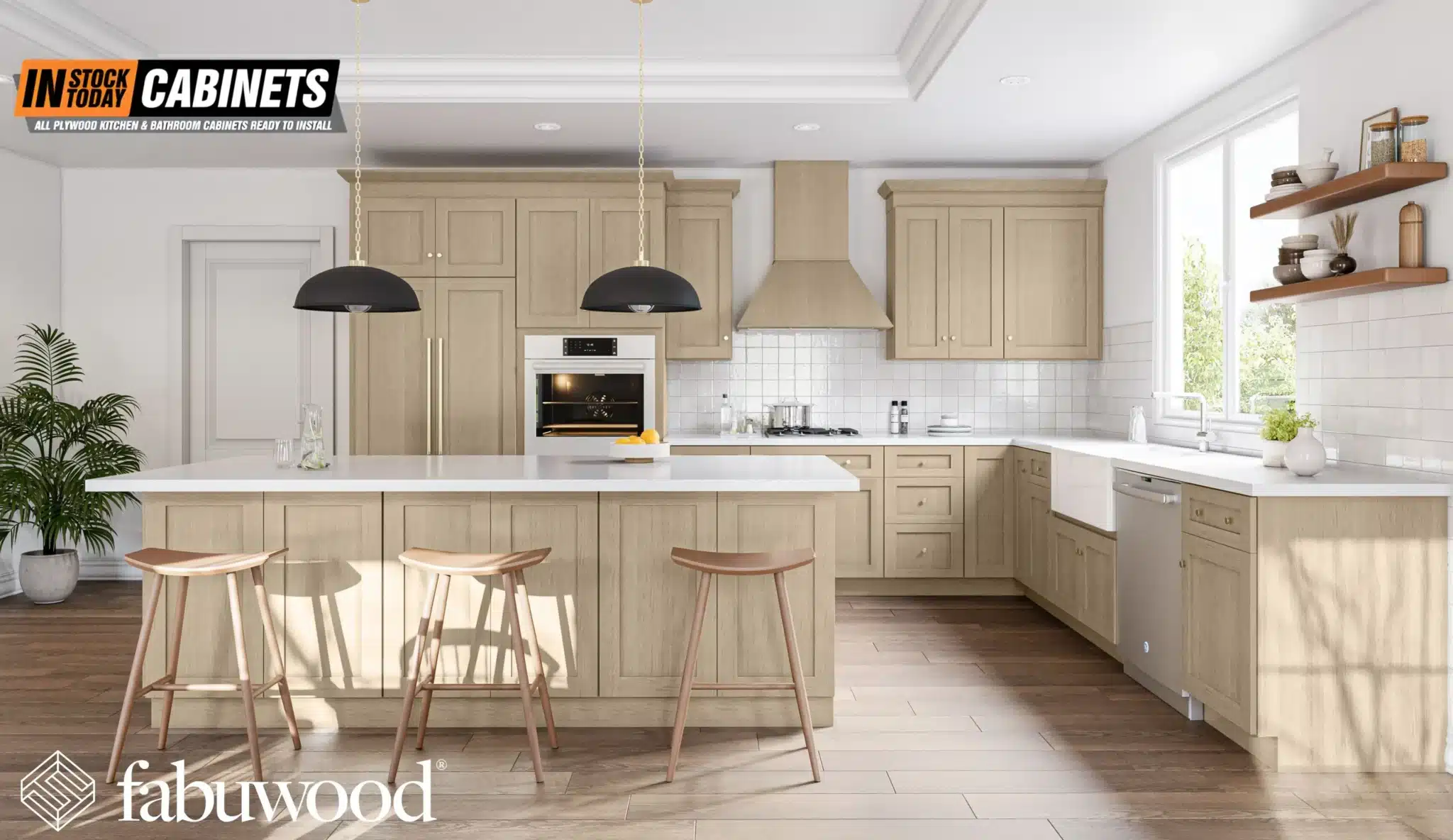
Cool tones create the strongest contrast: white, gray, and black are the most versatile. For a warmer approach, creamy off-whites and soft taupes complement oak without competing. Earthy greens — from sage to forest — are gaining popularity as a natural partner for oak’s warm grain. The key is matching the countertop‘s undertone to the oak’s: honey oak pairs best with cool-leaning colors, while white oak handles both warm and cool palettes equally well.
What color countertops are in for 2026?
Warm neutrals are leading 2026 countertop design — think creamy off-whites, taupes, soft golds, and warm beiges rather than stark whites. Matte and honed finishes are overtaking high-gloss polish across all materials. On the bolder end, deep veined natural stones, blue-toned slabs, and emerald green marble are emerging as statement choices. The overall direction is toward surfaces that feel natural, warm, and intentionally imperfect rather than clinical or perfectly uniform.
What is Joanna Gaines’ favorite kitchen color?
Joanna Gaines consistently gravitates toward earthy neutrals and nature-inspired greens for kitchens. Her go-to palette includes warm whites like “Shiplap,” golden-gray tones like “Gatherings” from her Magnolia Home paint line, and a range of moody greens — especially Magnolia Green and the deeper “Cottage Grove,” which she called one of her favorites in 2025. Her signature combination of creamy white walls with natural wood cabinetry mirrors exactly what designers are recommending for oak kitchens in 2026: let the wood’s warmth carry the room against a soft, nature-inspired backdrop.
How to update a kitchen with oak cabinets?
The single highest-impact change is replacing the countertop. Swapping dated laminate or tile for white quartz, honed quartzite, or matte porcelain immediately shifts the kitchen from inherited to intentional. Pair that with a clean backsplash (subway tile or a full-height slab), updated hardware in matte black or brushed nickel, and a fresh wall color in white or warm gray. The 2026 approach isn’t about hiding the oak — it’s about building a modern context where the wood shines as a design feature. Try our Kitchen Visualizer to see how different combinations look before committing.
At In Stock Today Cabinets, we’ve helped thousands of homeowners across Virginia, Maryland, Texas, and Delaware find the right cabinet and countertop pairings for their kitchens. Visit one of our showroom locations to see oak cabinetry from Fabuwood in person, or try our Kitchen Visualizer to experiment with countertop combinations from home.