
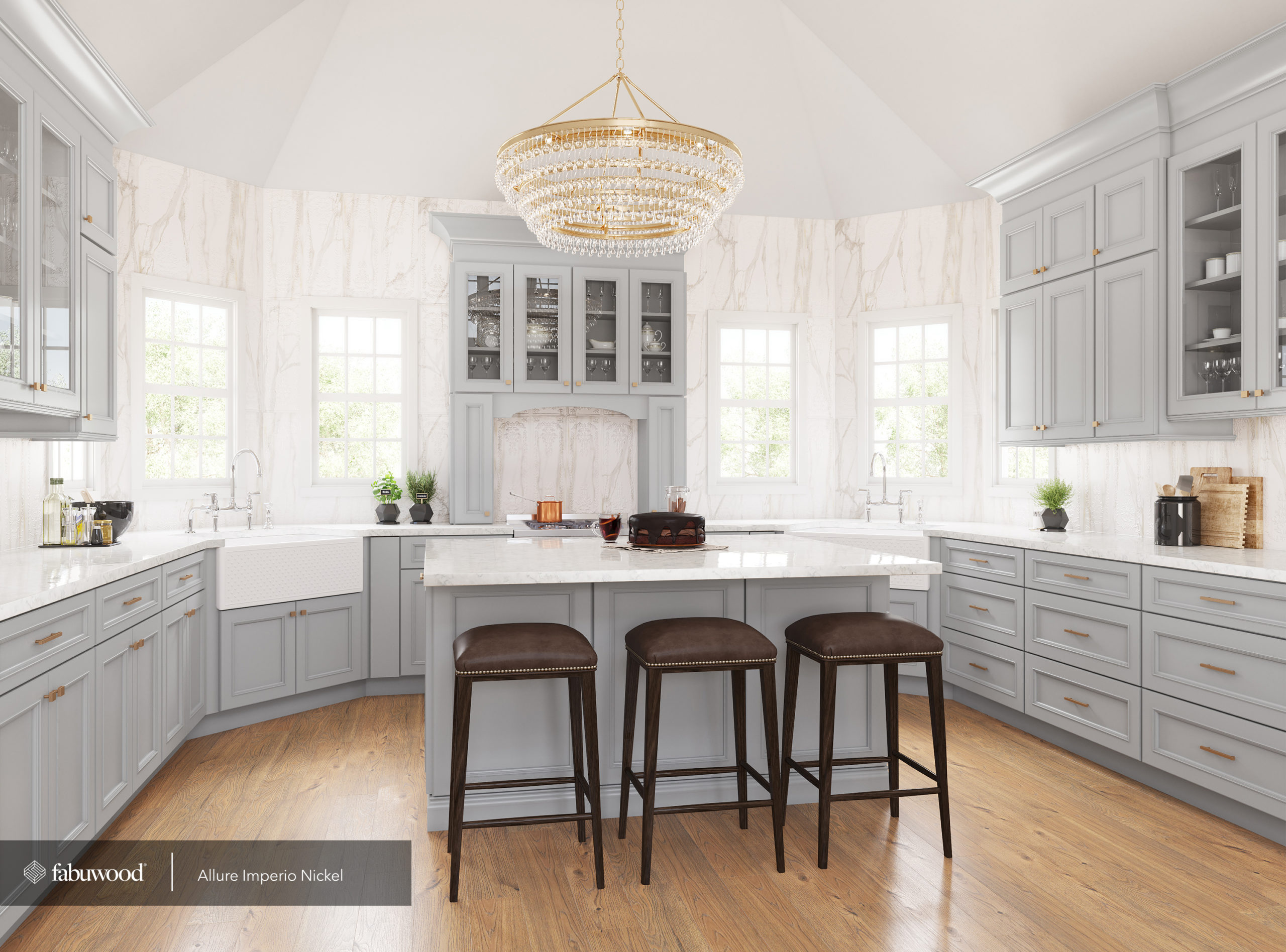
For the first time in years, the default kitchen isn’t white. Houzz’s 2026 Kitchen Trends Study of 1,780 homeowners found wood-toned cabinetry has edged ahead of white at 29% versus 28%, closing a decade-long gap. The National Kitchen & Bath Association’s 2026 report, surveying 634 design professionals, goes further. 69% of designers identify flat, slab cabinet doors as the style gaining the most ground over the next three years. Wood grain is surpassing paint. White oak is now the most requested wood species at 51%.
That’s a sharper shift than the cabinet industry has seen since Shaker took over from raised panels in the 2010s. If you’re choosing cabinets in 2026, the decision has gotten more specific. It isn’t just picking a style you like. There are three separate decisions that define how a kitchen looks, functions, and ages over time: construction type, door overlay, and door style.
This guide walks through all three and covers the 11 door styles worth knowing, plus the 2026 trends shaping what a modern kitchen actually looks like.
The Three Decisions Behind Every Kitchen Cabinet
Before you pick a style
The 3 Decisions Behind Every Kitchen Cabinet
Get these right and the style follows. Skip them and the style fights the box.
Decision 1
Construction
How the cabinet box is built. Determines overlay options, hardware, and usable interior space.
○ Framed
Face frame on front. Traditional. Most Shaker & raised-panel.
○ Frameless (European)
No face frame. 10–15% more interior space. Modern & slab.
Pick this based on door style direction.
Decision 2
Overlay
How the door sits on or in the face frame. Changes look, cost, and craftsmanship tier.
○ Partial Overlay
~2 inches of frame visible. Budget, traditional.
○ Full Overlay
Minimal gap. Modern default in 2026.
○ Inset
Door flush inside frame. Premium, heritage craftsmanship.
Budget → Mid → Premium pricing ladder.
Decision 3
Door Style
The most visible choice. 11 styles used in US kitchens today. Fashion risk sits here.
Shaker · Slab · Raised Panel · Beadboard · Glass-Front · Mullion · Inset · Louvered · Fluted · Distressed · Floor-to-Ceiling
Currently dominant
Shaker · 61%
Fastest growing
Slab · 69% designers
Source: Houzz 2025 (n=1,620), NKBA 2026 (n=634).
2026 Inversion
For the first time in the Houzz study’s tracking, wood (29%) beats white (28%) as the most-installed finish.
Most homeowners walk into a cabinet showroom and head straight for door styles, picking Shaker or slab because it looks good. That skips two earlier decisions that matter just as much:
- Construction: framed (with a face frame) or frameless (European)
- Overlay: how the door sits on or in that frame (partial, full, or inset)
- Door style: what the door itself actually looks like
Each of these decisions shapes how your kitchen feels, how much it costs, and how much storage you actually get. Start at the foundation.
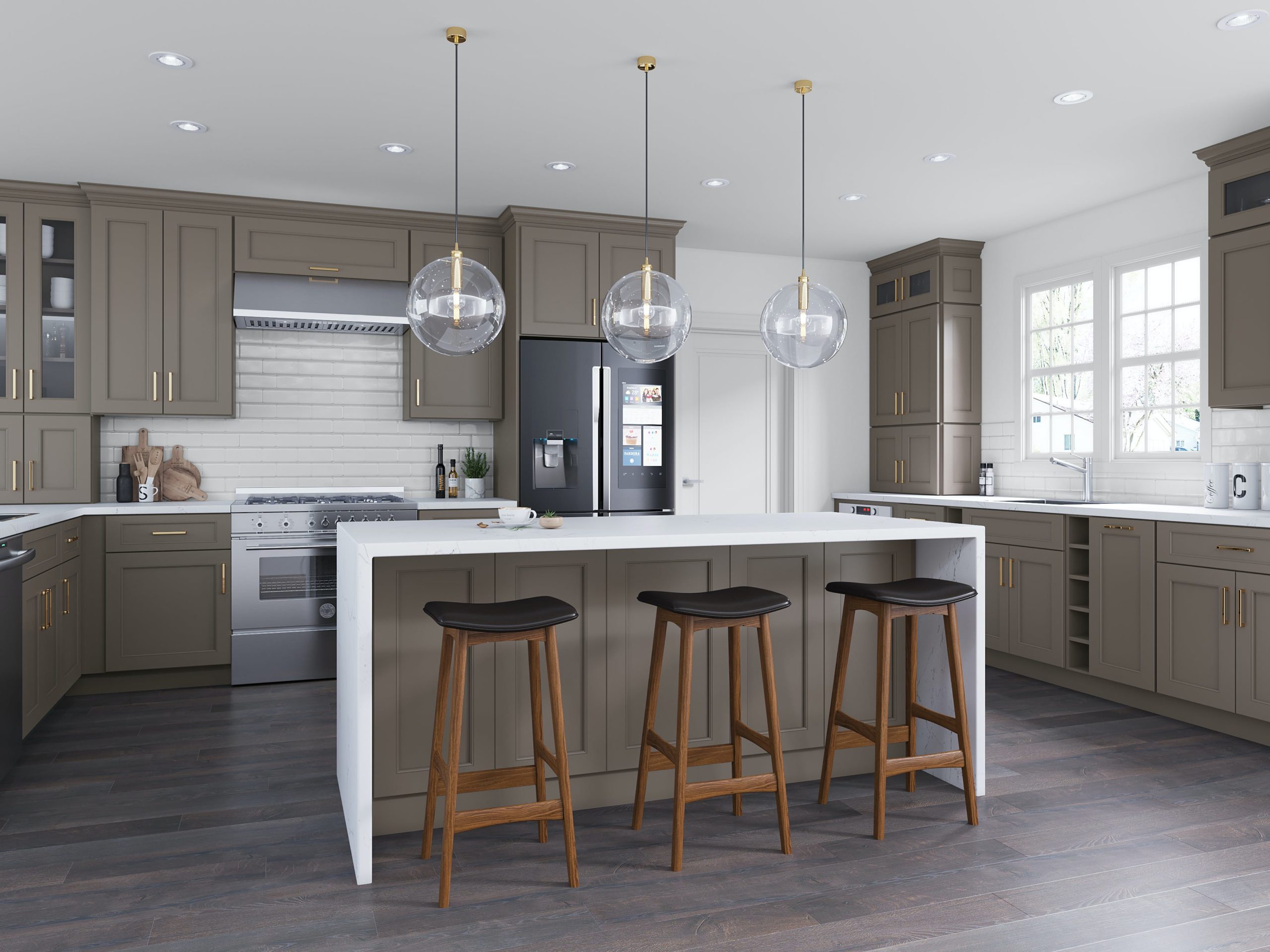
Part 1: Cabinet Construction: Framed vs. Frameless
Before a cabinet has a door, it has a box. How that box is built determines almost everything else: the overlay options you’ll have, the hardware that’s possible, and how much usable space lives behind the door.
Framed (Face-Frame) Cabinets
A framed cabinet has a solid wood frame attached to the front edge of the cabinet box. The doors hinge off this frame rather than directly off the box. This is the traditional American construction method, and it’s still the backbone of most Shaker, beadboard, and raised-panel kitchens.
Framed construction gives you structural rigidity, more hardware flexibility, and broader stylistic reach, especially for traditional and transitional aesthetics. The trade-off is interior space. That face frame eats into the cabinet opening, leaving you with less usable width inside each unit.
Frameless (European) Cabinets
Frameless cabinets skip the face frame entirely. Doors attach directly to the sides of the box, leaving a wide-open interior opening and a flush, continuous exterior. This is the European standard. It’s the construction style behind IKEA, most German and Italian kitchens, and the contemporary flat-front kitchens you’re seeing more of in 2026.
The headline benefit is storage. Frameless cabinets deliver roughly 10–15% more usable interior space than their framed equivalents, which adds up fast across a full kitchen. Visually, frameless also creates the flush, architectural look that pairs best with slab and handleless doors.
Which One to Choose
Framed construction still dominates the US market, but the NKBA 2026 report shows frameless gaining meaningful ground. That tracks with the broader move toward flat-panel doors and minimalist kitchens.
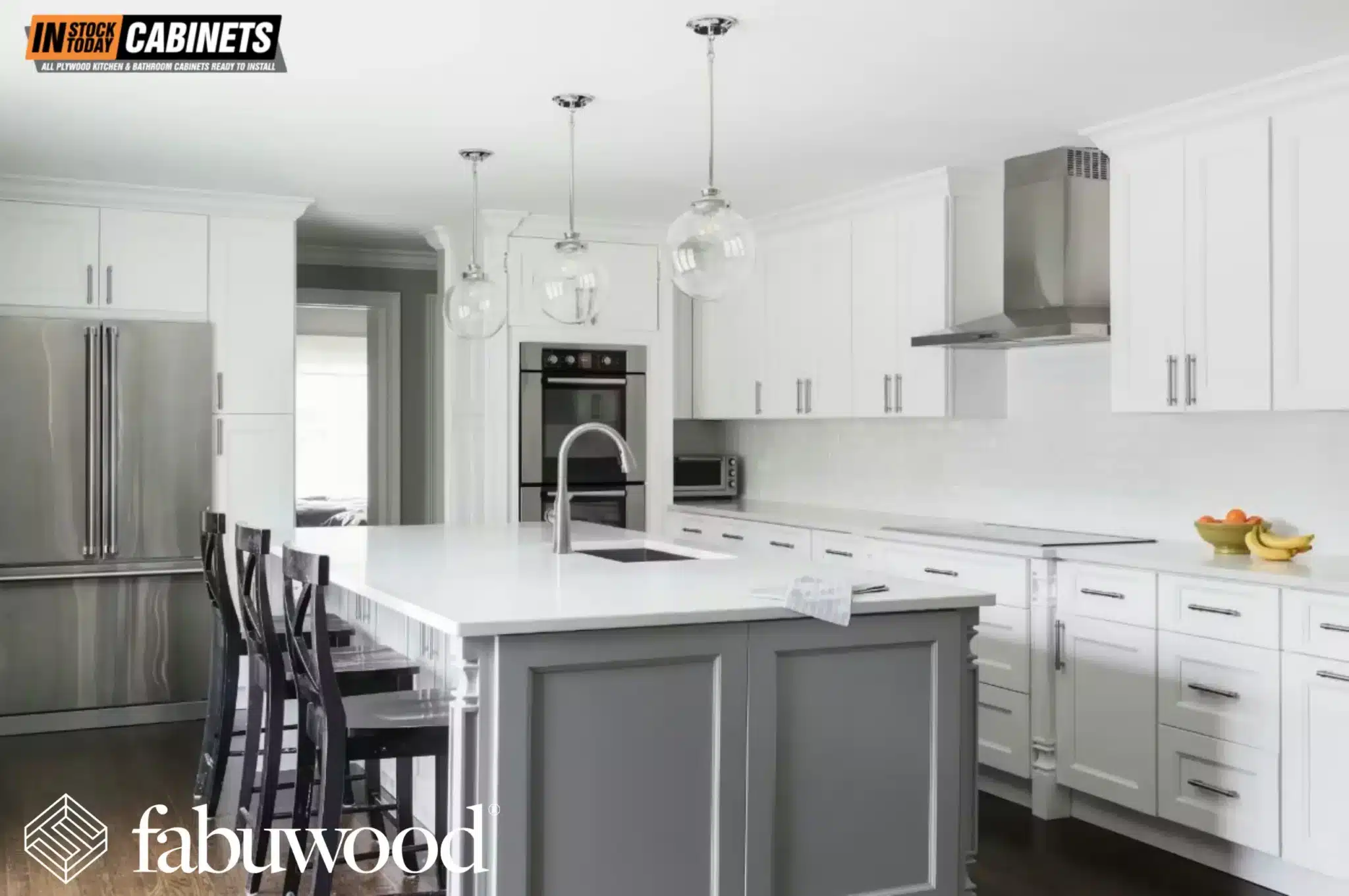
Part 2: Door Overlay: How the Door Sits on the Frame
Overlay describes how the cabinet door sits relative to the face frame. It’s a technical-sounding term for something you see immediately when you walk into a kitchen. There are three options, and they change both the look and the cost substantially.
Partial Overlay
The door covers roughly half the face frame, leaving about two inches of frame exposed around each door. This was the industry standard through most of the 20th century and remains the most budget-friendly option. Partial overlay reads as traditional, even dated depending on execution, and is rarely spec’d in new premium kitchens.
Full Overlay
The door covers nearly the entire face frame, with minimal reveal lines between doors. This is the dominant overlay in modern and transitional kitchens. It gives you the clean, continuous look of frameless cabinetry while preserving the structural benefits of a framed box. If you’re building a Shaker or slab kitchen in 2026, full overlay is the default.
Inset
Inset doors sit flush inside the face frame rather than over it. The frame stays visible around each door, and the doors and drawer fronts align precisely within their openings. This is the premium end of cabinet construction. It demands tighter tolerances and skilled installation, and pays for itself in a fitted-furniture look. MasterBrand identifies inset as a currently trending design at the high end of the market.
The trade-off with inset is two-fold: it costs substantially more to manufacture and install, and you lose a small amount of interior depth because the doors occupy frame space rather than sitting outside it.
Overlay Comparison
| Overlay Type | Reveal | Cost | Best For |
|---|---|---|---|
| Partial | ~2 inches of frame visible | Budget | Basic remodels, rentals |
| Full | Minimal gap between doors | Mid-range | Modern, transitional, contemporary |
| Inset | Doors flush inside frame | Premium | Craftsman, heritage, custom |
Part 3: The 11 Kitchen Cabinet Door Styles Worth Knowing
Door style is the most visible design decision you’ll make in a kitchen, and the one that dates fastest when chosen badly. What follows is the full taxonomy of cabinet door styles used in US kitchens today, with cost bands, maintenance reality, and the 2026 trend direction for each.
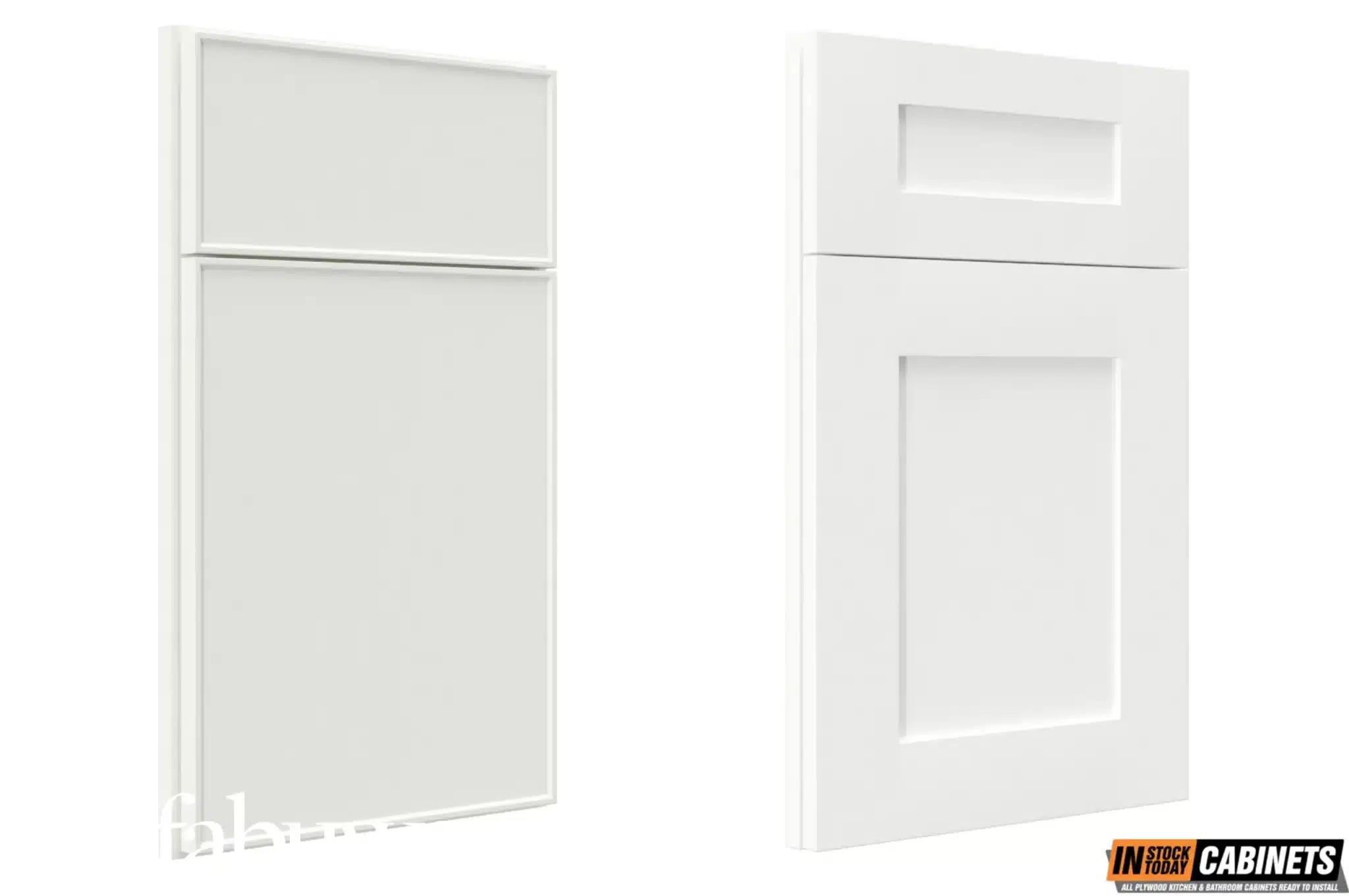
1. Shaker
The undisputed leader. Houzz’s 2025 US Kitchen Trends Study found Shaker commanded roughly 61% of upgraded cabinetry, more than every other style combined. The signature Shaker door is a five-piece construction: four flat rails and stiles framing a recessed center panel, all with square edges and zero ornament.
Shaker’s dominance comes from its adaptability rather than any particular look. The same door reads as farmhouse in cream, modern in matte black, industrial in walnut, and classic in bright white. It pairs with every hardware type, every countertop material, and every kitchen layout. It’s also the style most interior designers still recommend when a client wants to protect resale value.
2026 variant: Slim Shaker. The big update is a narrower rail-and-stile profile, roughly 1.5 inches versus the traditional 2.25. The effect is lighter and more contemporary, and it’s particularly strong in small or minimalist kitchens where the standard profile can feel heavy.
- Cost band: Budget to mid-range (high for inset or custom paint)
- Maintenance: Low to medium. The inner recess needs occasional wiping.
- Best for: Nearly any kitchen style, any layout, any budget
2. Slab (Flat-Panel)
A slab door is a single flat piece of material with no frame, no recessed panel, no ornament. It’s the cleanest form in kitchen cabinetry, and the foundation of most modern, contemporary, and European kitchens.
Slab is also the style with the biggest forward momentum in 2026. The NKBA’s 2026 report places flat/slab cabinet doors at 69% of designers’ predictions for what’s growing, the single highest-ranked style-level trend in the study. Slab commands roughly 22% current market share according to supplementary industry data, but the growth signal points much higher.
Slab’s practical advantages match its visual ones. Flat surfaces are the easiest to wipe, trap no dust, and cost less to manufacture than five-piece doors. Paired with bar pulls, push-to-open hardware, or integrated j-pulls, slab is also the foundation of every handleless kitchen.
- Cost band: Budget to mid-range (high for wood veneer or premium handleless systems)
- Maintenance: Low. Easiest style to clean.
- Best for: Modern, contemporary, European, small or open-plan kitchens
3. Raised Panel
Raised panel doors have a center panel that sits elevated above the surrounding frame, creating depth and shadow lines. This is the classical American cabinet door, most associated with formal, traditional, and colonial kitchens.
Raised panel comes in four distinct sub-styles worth knowing:
- Square raised: rectangular center panel, the most common variant, suits traditional and craftsman
- Arch raised: the top of the panel curves into an arch, reads farmhouse or cottage
- Cathedral raised: the arch comes to a soft point, echoing a cathedral window, fits Tuscan or formal traditional
- Double arched: arches on both top and bottom, the most ornate option
Traditional-style cabinets have seen renewed interest over the past two years, particularly among homeowners seeking “modern traditional” blends.[^11] Raised panel drives most of that return. But the NKBA data on 2026 direction is clear: momentum is with simpler profiles, not more ornate ones. If you’re choosing raised panel today, treat it as a deliberate heritage choice rather than a safe default.
- Cost band: Mid to high
- Maintenance: Medium to high. The routed profiles collect dust and grease.
- Best for: Traditional, colonial, craftsman, larger U-shaped or island kitchens
4. Beadboard
Beadboard doors have narrow vertical grooves across the center panel, echoing tongue-and-groove wall paneling. KraftMaid’s Wilmington line, for example, uses 1½-inch on-center bead spacing, a spec that’s become the cottage-coastal baseline. The style softens a kitchen without the visual weight of a raised panel.
Beadboard works hardest in cottage, coastal, farmhouse, and French country kitchens. It also works well as an accent. One run of beadboard on an island or a dresser wall inside an otherwise restrained kitchen can carry the whole texture story. Full beadboard kitchens remain niche, but textured panels are broadly having a moment heading into 2026, which lifts beadboard’s relevance alongside fluted and reeded styles.
- Cost band: Mid to high
- Maintenance: Medium to high. Grooves trap dust.
- Best for: Cottage, coastal, farmhouse, pantry accent zones
5. Glass-Front (Open Frame)
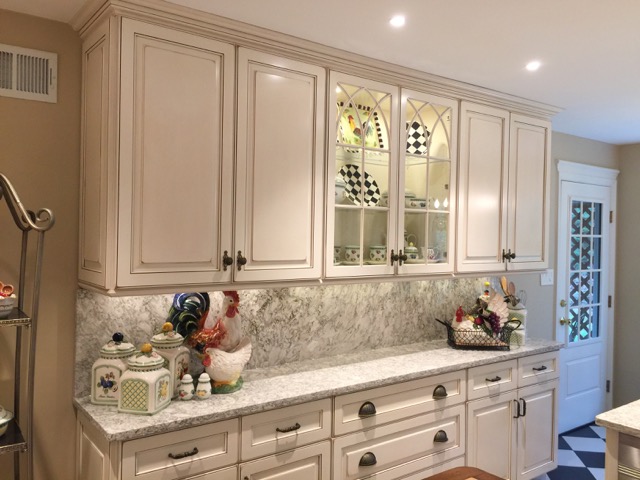
Glass-front cabinets replace the solid center panel with clear, frosted, seeded, or textured glass. They’re a light-amplifier and a display opportunity in one. Valuable in smaller kitchens, long cabinet runs that need visual relief, or dining-room-adjacent walls where you want dishware on view.
Glass-front is also 2026’s strongest accent trend. Houzz’s 2025 US study found 36% of renovators who added accent cabinets chose glass-front doors, the single leading accent door type. Fluted and reeded glass are the variants designers are reaching for in 2026: opaque enough to hide contents, textured enough to add architectural interest.
- Cost band: Mid-high
- Maintenance: Medium. Glass itself cleans easily, but contents must stay tidy
- Best for: Accent uppers, dresser runs, smaller or darker kitchens, butler’s pantry
6. Mullion
Mullion doors are a subset of glass-front where the glass panel is divided by decorative or structural strips, usually forming a grid, a cross pattern, or prairie-style lines. They’re the classic English-kitchen detail, and they’ve held up well across design cycles because the grid pattern carries its own architectural weight even behind plain glass.
Mullion fits across traditional, French country, and transitional kitchens. More recently it’s appearing in modern kitchens paired with slab lowers as an intentional contrast element.
- Cost band: Mid-high
- Maintenance: Medium
- Best for: Traditional, French country, transitional, statement upper cabinets
7. Inset (As a Door Style)
Distinct from the overlay type of the same name, inset-style doors refer to doors with a recessed panel, which technically makes Shaker a subset of this category. Used as a general term in some industry literature, “inset panel” door styles cover any door where the center panel sits slightly recessed below the surrounding frame.[^13] Shaker is the most popular specific variant. Others sit between Shaker’s total simplicity and raised-panel ornament.
8. Louvered
Louvered doors use fixed, angled horizontal slats (the same construction as window shutters) inside a rectangular frame. They’re specialty cabinetry with a very specific set of use cases: pantry doors, laundry cabinets, and coastal or farmhouse kitchens where the texture and implied ventilation reinforces the aesthetic. Conestoga Wood Specialties and WalzCraft both sell open and closed louver variants, typically in walnut or oak.
Louvered is rarely a whole-kitchen default. It’s a strong accent tool. One run, not ten.
- Cost band: High
- Maintenance: High. Slats are dust traps.
- Best for: Pantries, laundry cabinets, farmhouse or coastal accents
9. Fluted / Reeded
This is 2026’s breakout texture. Fluted doors have vertical grooves cut into the door face; reeded doors have the opposite, vertical ridges raised off the surface. Both add three-dimensional shadow play without the visual weight of raised-panel detail. Designers are using them most often on kitchen islands or as a contrast element against otherwise plain slab perimeter doors.
The Strategic Briefing data from NKBA confirms the momentum: fluted and reeded fronts are singled out as one of the defining tactile textures of 2026, alongside matte finishes and grain-forward wood species. If you want one “of this moment” detail in a kitchen you’re designing today, fluted is probably it.
- Cost band: Mid to high
- Maintenance: Medium. Grooves need careful wiping.
- Best for: Contemporary and transitional kitchens, especially on islands
10. Distressed / Rustic
Distressed cabinets use finish techniques (rub-through paint, glazing, brushed grain, knots, character species) to suggest age and wear. Wellborn Cabinet’s Vintage finish is a good reference for what current-generation distressing actually looks like: understated, warm, handled with restraint rather than faked.
The dated version of distressing (heavy faux-antique rub-through everywhere) has fallen out of style. The current version is subtler: warm woods, light brushing, character oak or alder. It lives comfortably inside the “modern rustic” and farmhouse categories. The 59% rise in walnut, mahogany, and smoked oak demand tracks with this broader move.
- Cost band: Mid-high
- Maintenance: Medium to high
- Best for: Farmhouse, cottage, modern rustic, cabin kitchens
11. Floor-to-Ceiling
Not a door style strictly, but a cabinetry configuration worth naming because it’s increasingly common in 2026 design. Floor-to-ceiling cabinets span the entire vertical space from base to soffit, maximizing storage and creating a unified, architectural wall. They work with any door style (slab, Shaker, or inset) and tie directly to the pantry-wall and hidden-storage trends that NKBA’s 2026 report highlights at 85% for beverage zones alone.
- Cost band: Varies with door style
- Maintenance: Depends on style chosen
- Best for: Modern kitchens, storage maximalists, kitchens with high ceilings
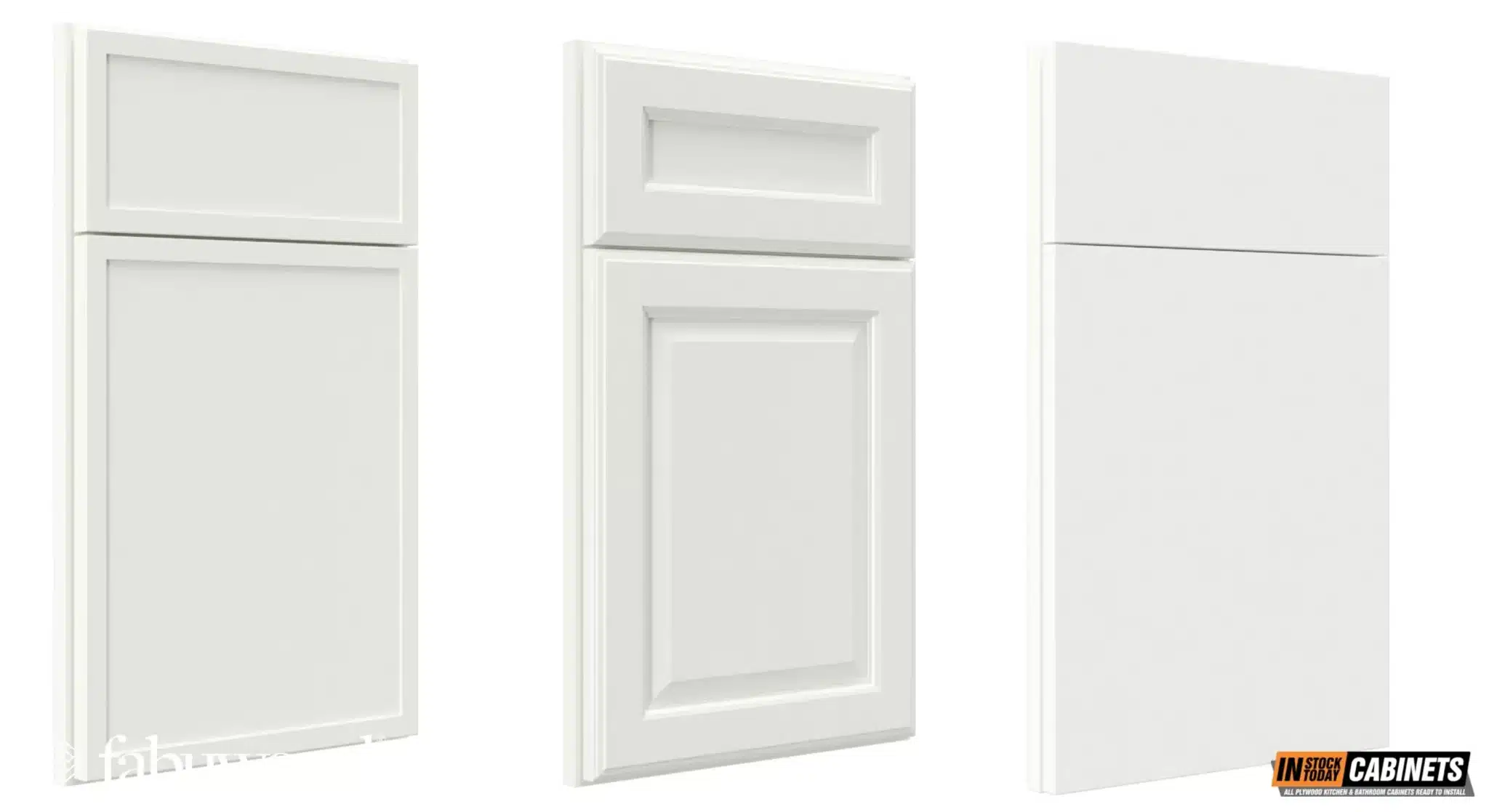
Kitchen Cabinet Door Style Comparison
↔ Scroll horizontally on mobile to see all columns
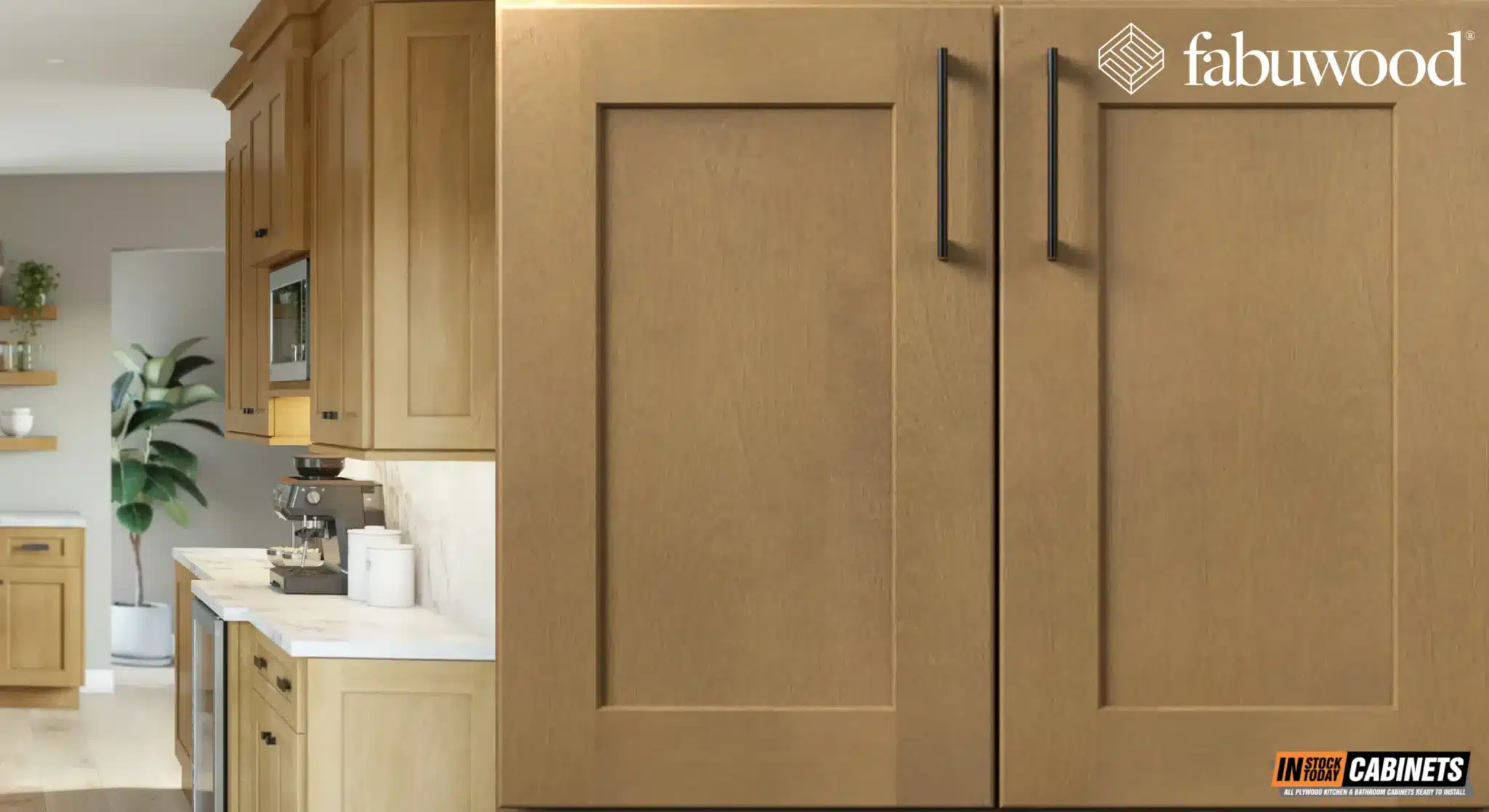
Part 4: The 2026 Inversion: What’s Actually Changed
The data across both the NKBA 2026 report (634 design pros) and the Houzz 2026 US Kitchen Trends Study (1,780 homeowners) lines up on a few clear shifts. These are substantial moves. They’re the biggest directional changes in cabinetry since all-white took over in the mid-2010s.
Wood is overtaking white
For the first time in the Houzz study’s tracking, wood-toned cabinetry (29%) has edged past white (28%) as the most-installed finish. The NKBA report reinforces the direction: 59% of design professionals identify wood grain as growing in popularity, with white oak specifically cited as the most popular species at 51%.
The shift also shows up in MasterBrand’s 2026 annual trend survey, which draws on designers across 7,000+ dealers. Stephanie Pierce, MasterBrand’s Director of Design and Trends, confirmed: “For the first time in the nine years we’ve been doing this survey, white is not the number one preferred finish. It’s not only not number one anymore, but it fell to number three.” Light stains now lead, followed by off-white.
Bill Darcy, Global President and CEO of NKBA | KBIS, framed the broader shift this way: “The integration between the kitchen and whole home is a really exciting opportunity… homeowners desire connection and cohesive design between spaces for entertainment, functionality and wellness.
Translation: the kitchen is no longer a utility room dressed in white paint. It’s part of the living space, and it’s expected to carry warmth.
Neutrals dominate, but they’re warmer now
96% of NKBA respondents identify neutrals as the most popular color category, but the neutrals themselves have shifted. Stark white is out. Warm neutrals (mushroom, taupe, clay, greige) are the new baseline. After neutrals, the top non-neutral color groups are greens (86%) and blues (78%). Millennial pink, bright orange, and bright red are all under 12%. The color energy has moved away from saturation, toward earthy and grounding.
Slab is the fastest-growing door style
While Shaker holds its 61% installed-base lead, slab is where designers see the biggest forward momentum. 69% of NKBA respondents identify flat, slab cabinet doors as gaining popularity in the next three years, the highest-ranked style-level trend in the report.[^2] Panel-faced refrigeration (72%) and dishwashers (85%), plus slab-style backsplashes (75%), all reinforce the same aesthetic direction: clean, continuous, hardware-light.
Style preferences are consolidating around “timeless”
When NKBA asked designers which kitchen styles they expect to be popular in the next three years, transitional/timeless took the top spot at 72%, followed by contemporary/modern/minimalism (60%) and organic/natural (58%).[^2] The story here: homeowners are buying once and keeping it, and they’re choosing cabinets that won’t look dated in five years.
What’s out for Kitchen Cabinets
Using NKBA and Houzz data together, here’s the clearest “trending out” list for 2026:
| Trending In (2026) | Fading Out |
|---|---|
| Wood grain, white oak, walnut, smoked oak | Stark white, cool gray |
| Warm neutrals (mushroom, taupe, greige) | Clinical high-contrast schemes |
| Matte and suede finishes | High-gloss lacquer |
| Slim Shaker, slab, fluted | Bulky raised panel, ornate detail |
| Living brass, aged bronze, matte black | Polished chrome and polished nickel |
| Panel-faced integrated appliances | Stainless-exposed appliance walls |
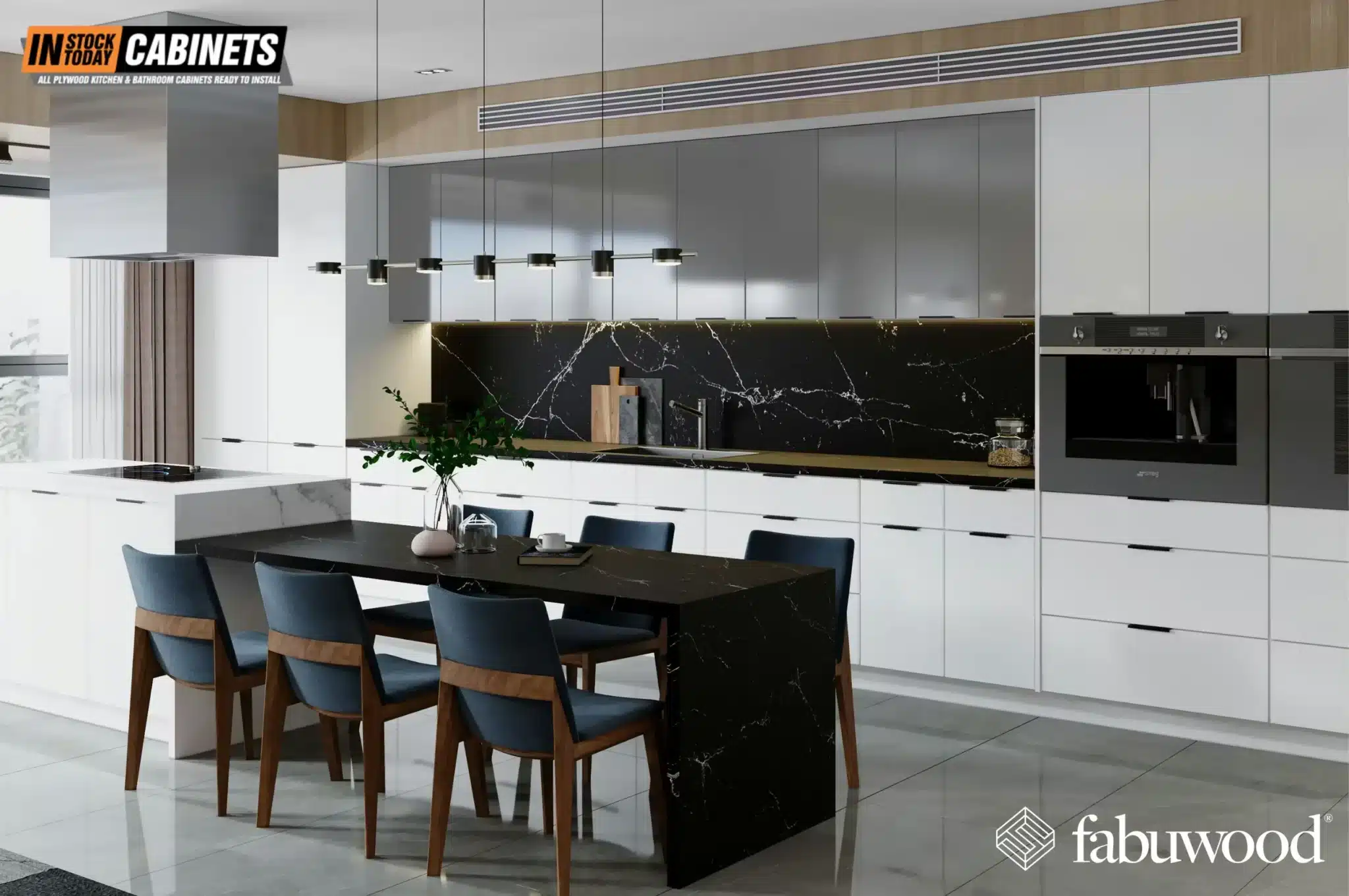
Part 5: Cabinet Construction Tiers: RTA, Stock, Semi-Custom, Custom
Door style and construction get most of the attention, but there’s a fourth decision that determines price more than anything else: how the cabinets are manufactured and customized.
Ready-to-Assemble (RTA)
RTA cabinets ship flat-packed and get assembled on-site, either by a contractor or a DIY homeowner. The trade-off is time versus cost: you spend 30–45 minutes per cabinet assembling, and you save roughly 15–30% versus pre-assembled equivalents. RTA is widely available from most stock and semi-custom lines. IST Cabinets stocks RTA kitchen cabinets from Fabuwood across all major door styles.
Stock Cabinets
Stock cabinets are pre-manufactured in fixed sizes and pulled from inventory. You pick from what’s available; sizes, finishes, and door styles are non-negotiable, but prices start around $80 per linear foot installed. Stock is the fastest option (typical delivery 5–7 days) and the most cost-effective. Fabuwood’s Allure, Quest, and Value collections are all stock-line options available at IST showrooms.
Semi-Custom Cabinets
Semi-custom starts with a base set of stock boxes and lets you modify dimensions, finishes, trim, and accessory options. You can adjust height and depth, pick from expanded door styles, and add pullouts or organizers that stock lines don’t offer. Pricing starts around $150 per linear foot and typically runs $150–$650 depending on specifications.
Custom Cabinets
Custom cabinets are built specifically for your kitchen. Every dimension, door style, wood species, and finish is your choice. Lead times run 6–12 weeks, and pricing starts around $500 per linear foot and runs to $1,200+ for premium wood species or inset construction.Custom is the right answer for oddly shaped kitchens, luxury builds, or projects where design precision matters more than budget.
Tier Comparison
Part 6: Two-Tone & Mixed Finishes
Two-tone kitchens (using different finishes for upper and lower cabinets, or for perimeter and island) have gone from trend to baseline. MasterBrand’s 2026 survey confirms the shift: “Most kitchens have at least two finishes now. In fact, many kitchens are starting to have three, four, and in some cases, even five finishes,” according to Stephanie Pierce, Director of Design and Trends at MasterBrand. The same survey recorded a 15% increase over two years in color being applied to the perimeter cabinetry, not just the island.
The dominant formula: lighter uppers with darker or woodier lowers and islands. White or creamy Shaker perimeter cabinets paired with a walnut or navy island is one of the most-installed combinations in 2026 kitchens. One IST customer recently ordered exactly this setup through our Columbia, MD showroom: white shaker cabinets for the perimeter with custom navy blue shaker cabinets for the island. It’s a pattern showing up on nearly every current Fabuwood order sheet.
A few design rules keep two-tone from looking scattered:
- Ground the room with the darker tone. Darker lowers or islands anchor the space. Reversing it (dark uppers, light lowers) makes a kitchen feel top-heavy.
- Stay within one color family or use one clear contrast. Three or more colors read as indecision. Two tones from the same family (warm beige with walnut) or one clear contrast (cream and charcoal) work. Cream plus olive plus navy plus walnut does not.
- Use the 80/20 rule. Let one finish carry about 80% of the cabinetry and use the second finish as a single accent: island, tall cabinet, or one upper run. Equal splits usually look more cluttered than intended.
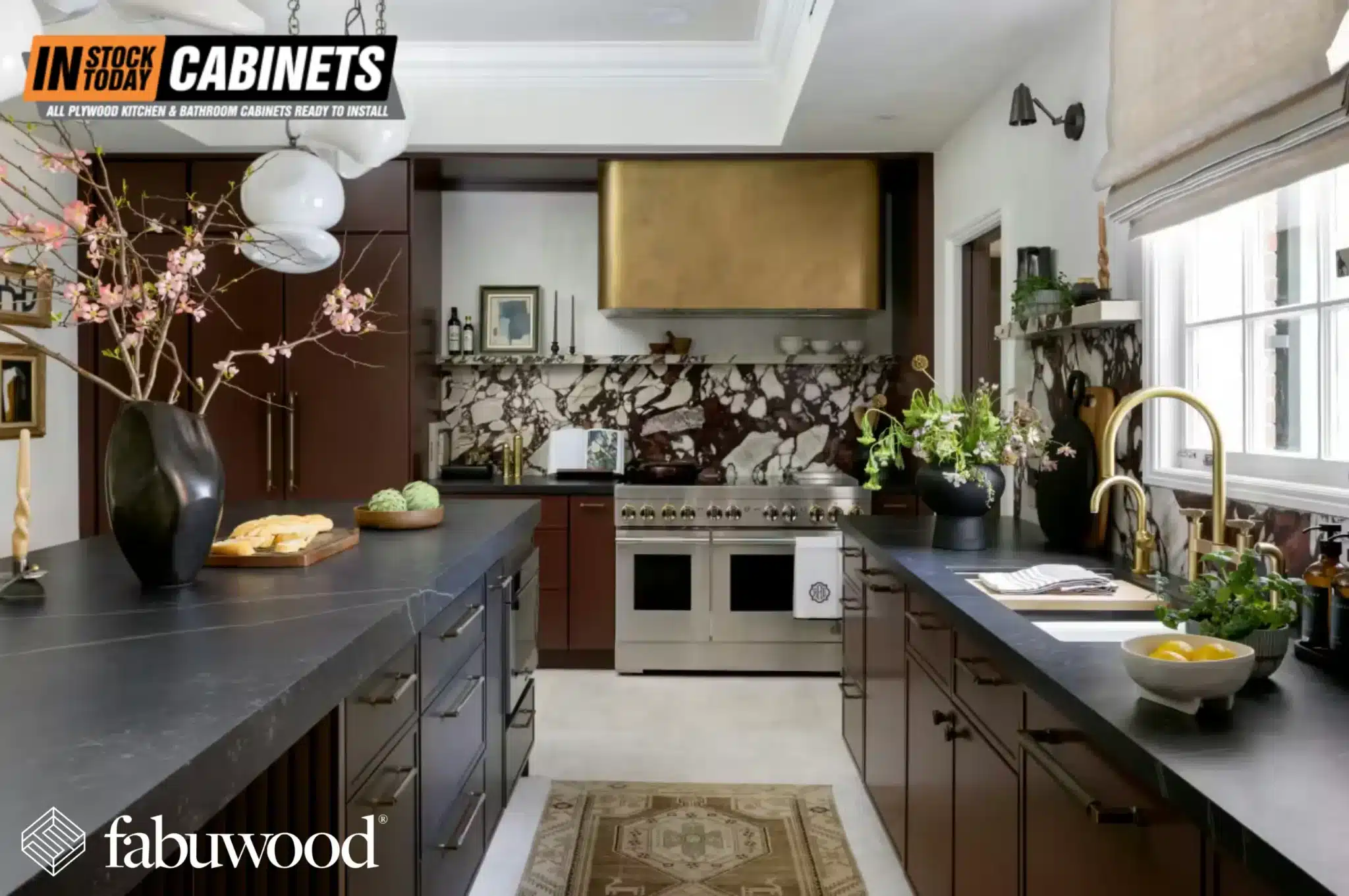
Part 7: Five Rules for Choosing the Right Cabinet Style
After working through construction, overlay, door style, and tier, the actual choice comes down to a handful of questions. Here are the five that matter most.
1. Match the style to the rest of the home. A shaker kitchen next to a modern minimalist living room reads as a renovation afterthought. A slab kitchen inside a traditional colonial looks misplaced. Your cabinets should continue the architectural language of the rooms around them.
2. Pick for cleaning reality, not aspiration. Slab is the easiest style to wipe down. Shaker is manageable. Beadboard, raised panel, fluted, and louvered all have crevices that trap dust and grease. If you cook five nights a week with kids in the house, don’t specify the style you’ll resent cleaning.
3. Spend on boxes before doors. A sturdy plywood or MDF cabinet box with quality soft-close hinges and full-extension drawer slides will outlast a beautiful door attached to a cheap carcass. If budget is tight, buy a simple door on a good box rather than the reverse.
4. Storage volume matters more than door style. A 10-foot run of frameless slab cabinets holds noticeably more than a 10-foot run of framed Shaker. If you’re working a smaller kitchen, the frameless storage advantage (10–15%) is worth serious consideration.
5. Don’t mix more than two styles. One dominant style plus one accent is almost always enough. Slab perimeter with a beadboard island. Shaker throughout with one glass-front upper. Three or more styles in the same kitchen reads as indecision and ages fast.
Part 8: 2026 Colors, Finishes & Hardware at a Glance
A quick reference for the finish-level decisions that go alongside door style:
Leading 2026 paint colors for cabinetry:
- Sherwin-Williams Universal Khaki (SW 6150): a warm, restorative neutral and the brand’s 2026 Color of the Year
- Benjamin Moore Silhouette (AF-655): a grounded burnt umber with charcoal undertones, Benjamin Moore’s 2026 Color of the Year
- Behr Hidden Gem (N430-6A): a smoky jade green-blue, Behr’s 2026 Color of the Year
Leading wood species (by 2026 designer preference): white oak (51%), walnut, mahogany, and smoked oak, with a 59% rise in demand for the darker three combined.
Finish textures trending up: matte, suede, wire-brushed, honed. Trending down: high-gloss lacquer, polished finishes.
Hardware trending up: living finishes (unlacquered brass, aged bronze), matte black, mixed metals within a single kitchen. Trending down: polished chrome, polished nickel, single-finish uniformity.
Frequently Asked Questions for Kitchen Cabinet Styles
What is the most popular kitchen cabinet style in 2026?
Shaker still holds the largest installed base at roughly 61% of upgraded cabinetry. But flat/slab is the style with the strongest forward momentum. 69% of NKBA 2026 designers identify it as growing in popularity over the next three years. The answer depends on whether you’re asking “what’s most common right now” (Shaker) or “what’s gaining share” (slab).
What are the three types of cabinet construction?
The three manufacturing tiers are stock, semi-custom, and custom. Stock cabinets come in fixed sizes from inventory. Semi-custom allows dimension and finish modifications. Custom is built from scratch to your specifications. Separately, there are two structural construction types: framed (with a face frame) and frameless (European).
What’s the difference between framed and frameless cabinets?
Framed cabinets have a solid wood face frame on the front of the box. Frameless cabinets have no face frame; doors attach directly to the box. Frameless delivers roughly 10–15% more usable interior space and a sleeker exterior look, while framed offers more structural rigidity and broader hardware flexibility.
What’s the difference between inset, partial overlay, and full overlay?
Overlay refers to how the door sits on the face frame. Partial overlay leaves about two inches of frame exposed (budget, traditional). Full overlay covers almost the entire frame (most common in modern kitchens). Inset sits flush inside the frame (premium, heritage craftsmanship).
Are Shaker cabinets still in style in 2026?
Yes. Shaker remains the dominant door style in US kitchens at around 61% market share. The 2026 update is a shift toward slimmer rails and stiles (Slim Shaker) and warmer colors: stained oak, creamy whites, and jewel tones like navy, forest green, and deep plum.
Are white kitchen cabinets outdated?
Not outdated, but no longer dominant. Houzz’s 2026 study is the first in which wood-toned cabinetry (29%) outpolled white (28%). White still works, particularly in warm, creamy whites, but the default has moved. If you want a kitchen that reads as 2026 rather than 2016, consider warm neutrals, wood grain, or a two-tone scheme with white uppers over a wood or painted island.
What’s the 1/3 rule for kitchen cabinets?
The 1/3 rule is a design guideline stating that in a kitchen with a feature wall (like a backsplash slab, a statement hood, or a tall cabinet), roughly one-third of the visible cabinetry should draw the eye while two-thirds stays quiet. It keeps focal points from competing and helps two-tone kitchens land with clear hierarchy.
How much do kitchen cabinets cost per linear foot?
Stock cabinets start around $80 per linear foot installed. Semi-custom runs $150–$650. Custom starts at $500 and can exceed $1,200 per linear foot for premium wood species, inset construction, or specialty finishes.
What wood is most popular for cabinets in 2026?
White oak, at 51% of NKBA designer mentions. Walnut, mahogany, and smoked oak are showing the fastest growth, up 59% in combined demand. Maple, cherry, and hickory remain common in stock lines but are being overtaken by oak and walnut in premium builds.
What’s the fastest-growing cabinet trend for 2026?
Flat/slab cabinet doors. 69% of NKBA designers identify them as gaining popularity. Paired trends: panel-faced refrigerators (72%), panel-faced dishwashers (85%), and slab-style backsplashes (75%), all reinforcing the clean, hardware-light aesthetic.
Can I mix cabinet door styles in the same kitchen?
Yes, but stay disciplined. The strongest mixed-style kitchens use one dominant style (about 80% of the room) plus one accent (20%). Shaker perimeter with a fluted island. Slab throughout with glass-front upper accents. Three or more styles usually reads as scattered rather than layered.
How do I know if I want framed or frameless cabinets?
Start with your door style. Traditional, transitional, beadboard, and inset kitchens are almost always framed. Modern, contemporary, handleless, and European kitchens are almost always frameless. If your style sits in the middle (like Shaker), either works. The decision then comes down to whether you value more storage (frameless) or traditional rigidity and hardware flexibility (framed).
See Your Cabinet Styles in Person
Every door style in this guide lives inside a Fabuwood collection on the showroom floor at In Stock Today Cabinets. Allure covers Shaker, slim Shaker, and slab in both framed and frameless constructions. Quest brings the modern flat-panel and handleless range. Value is the workhorse for contractors and flip projects that need Shaker at entry-level pricing.
Come see the differences with your hands: the overlay gaps, the grain on white oak, the weight of inset versus full overlay. Our design team at Fairfax, Alexandria, Columbia MD, Delaware, Houston, and Roselle IL showrooms can walk you through every decision in this guide and pull samples the same visit. You can also try combinations on the Kitchen Visualizer before you commit.